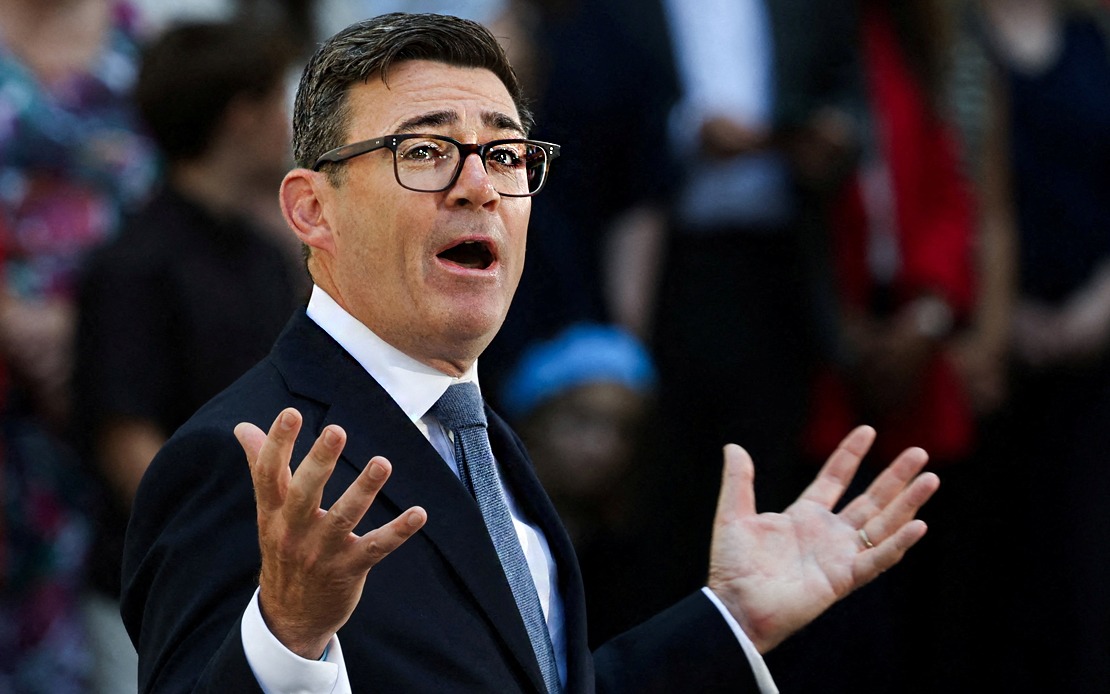
Andy Burnham has taken office as Prime Minister of the United Kingdom, succeeding Keir Starmer after King Charles III accepted the latter's resignation on Monday, July 20. In his inaugural address delivered from the steps of Downing Street, Burnham articulated an ambitious vision for national renewal, framing his administration as a deliberate rupture with existing policy frameworks and political conventions that he contends have failed substantial segments of the British population.
The new Prime Minister characterised his government's mission as delivering transformative change on a scale not witnessed since the early 1980s. Speaking with evident conviction, Burnham declared: "We will make this moment a circuit breaker for Britain, bringing forward the biggest changes in the last 40 years, a new political model and a new economic model." This rhetoric signals intentions to fundamentally reconfigure how power operates within the British state and how economic activity is organised across the kingdom, marking a decisive break from the incremental reform that has characterised recent administrations.
Central to Burnham's diagnosis of Britain's contemporary malaise is his assessment of decisions taken during the 1980s, a period he identifies as a critical juncture where the nation took "several wrong turns." He specifically critiqued the simultaneous centralisation of political authority and privatisation of economic assets that occurred during that decade, consequences that he argues remain embedded in the British economic landscape nearly half a century later. This framing resonates with longstanding critiques from across the political spectrum regarding deindustrialisation and regional inequality.
The geographical dimension of Burnham's vision merits particular attention for Malaysian observers, as it reflects tensions between concentrated metropolitan power and peripheral regional interests that mirror challenges within Southeast Asian federations. Burnham noted that vast swathes of the country experienced deindustrialisation without subsequent economic recovery, creating communities where residents harbour deep reservations about their ability to influence their own circumstances or generate meaningful improvement. This sense of abandonment and powerlessness has become a defining feature of contemporary British political life, with significant electoral consequences.
Beyond diagnosis, Burnham articulated a governance philosophy explicitly oriented toward collaboration and problem-solving rather than adversarial point-scoring. His pledge to remake UK politics in this image represents a rejection of Westminster's traditionally combative parliamentary culture, where prime minister's questions and legislative battles are conducted with theatrical aggression. This aspiration toward cooperative governance reflects evolving global trends toward consensus-building approaches, though whether such a transformation can be achieved within Britain's deeply institutionalised adversarial structures remains an open question.
For Southeast Asian policymakers and observers, Burnham's ascension and agenda carry instructive implications. The British electorate's apparent appetite for radical change after decades of what many perceive as policy stagnation underscores broader global dissatisfaction with establishment approaches to economic management and political organisation. The specific grievances Burnham identifies—regional inequality, loss of economic dynamism, citizen disempowerment—manifest across developed and developing economies alike, suggesting his administration's successes or failures may offer relevant lessons for neighbouring governments wrestling with similar challenges.
The mechanism by which Burnham intends to operationalise his "new political model" remains largely unspecified in his opening remarks, though his emphasis on collaboration hints at possible devolution of authority to regional bodies or creation of corporatist structures involving business, labour, and civil society. The "new economic model" similarly lacks granular detail, though historical context suggests potential interest in strategic state intervention, industrial policy, or stakeholder capitalism approaches that diverge markedly from the free-market orthodoxy dominant since the 1980s.
The transition from Starmer's administration to Burnham's represents the second leadership change in recent British political history where established norms and expectations proved insufficient to retain power. This pattern of leadership instability, repeated across democracies globally, reflects deepening alienation between governing elites and citizenries. Burnham's electoral mandate and the scale of public expectation he now faces will determine whether his promises of transformative change translate into concrete policy achievements or recede into familiar patterns of incremental adjustment and compromise.
For Britain's international relationships and influence, Burnham's domestic agenda carries strategic implications. A government preoccupied with internal restructuring and regional rebalancing may necessarily recalibrate its engagement with global affairs, including its role in European security arrangements, Commonwealth relationships, and bilateral ties with major powers. Malaysia's government and regional partners would benefit from careful monitoring of how Burnham's administration navigates these dimensions, particularly given Britain's historical significance in Asian affairs and ongoing defence partnerships.
The immediate challenge facing Burnham extends beyond rhetorical commitment to substantive institutional and legislative action. Converting electoral victory into durable policy transformation requires navigating Parliament, managing departmental bureaucracies, accommodating divergent interests within his own coalition, and sustaining public support through the inevitable compromises that governance entails. His opening address establishes ambitious benchmarks against which subsequent performance will be measured, creating both opportunity and vulnerability as his administration confronts the complex realities of governing a large, diverse, economically interdependent democracy with deeply entrenched interests and established practices.

