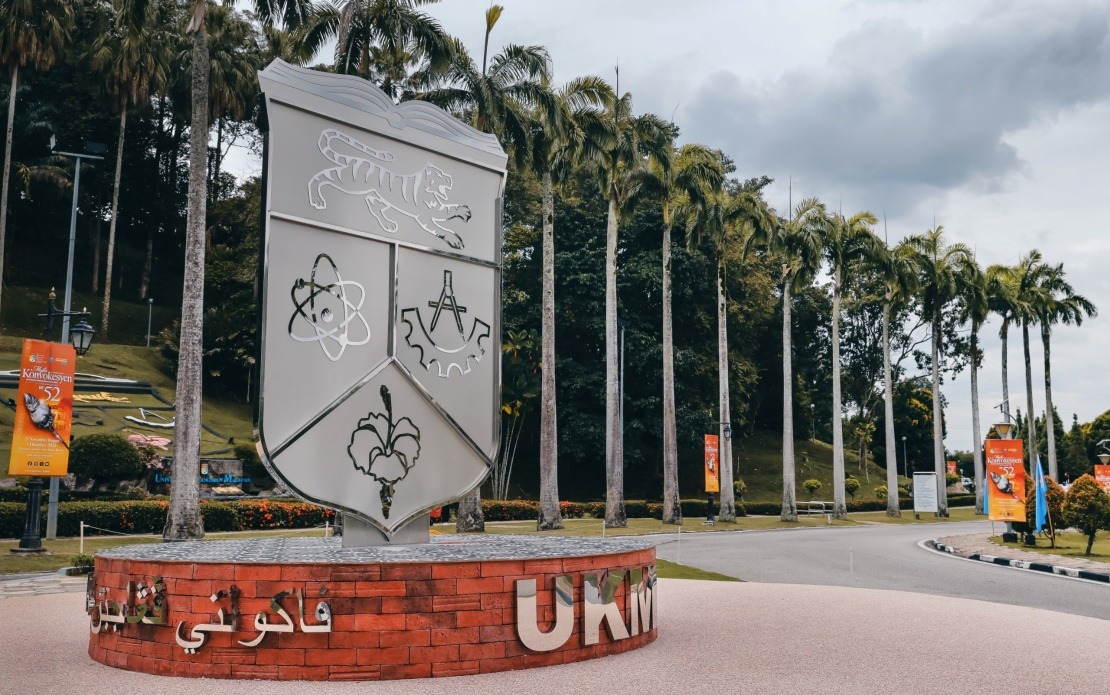
Universiti Kebangsaan Malaysia has moved swiftly to counter misinformation circulating on social media that portrays the institution as overwhelmingly populated by international students. A video circulating online made the startling assertion that the university maintains a ratio of five international students for every local student enrolled, a claim that the university flatly rejected in a statement released on July 4.
The disputed assertion strikes at sensitivities around university admissions and the perceived prioritisation of foreign enrollments over domestic opportunities. For Malaysian parents and students already concerned about higher education accessibility, such claims tap into anxieties about institutional priorities. UKM's robust response reveals the extent to which misinformation can gain traction in the digital space, particularly when touching on sensitive education policy matters that affect prospective students and their families across the nation.
According to the latest comprehensive data compiled by UKM's Academic Management Centre and the Centre for Continuing Education and Professional Studies, the university's total enrolled student population stands at 46,151. Among this cohort, only 3,917 are classified as international undergraduates. These figures paint a markedly different picture from the viral allegations, with international undergraduates representing a mere eight per cent of the overall student population rather than the claimed dominance implied by a 5:1 ratio.
When converted to actual proportions, the official numbers reveal that the genuine ratio approximates one international student for every 12 students in the university's rolls. This substantial discrepancy between the claimed and actual figures underscores how misinformation can distort public perception of institutional policies. The mathematical reality demonstrates that domestic students overwhelmingly comprise UKM's undergraduate enrolment, suggesting that concerns about international recruitment displacing local opportunities lack empirical foundation in this instance.
UKM has indicated its willingness to pursue legal remedies against those responsible for spreading what it characterises as defamatory and inaccurate claims. The university's strong language reflects the reputational stakes involved when false narratives about institutional composition gain currency among prospective students, parents, and the broader public. Such legal positioning is not uncommon among Malaysian universities seeking to protect their standing in an increasingly competitive higher education landscape where perception shapes recruitment outcomes.
The university emphasised that international student admissions operate within carefully controlled parameters established in consultation with the Ministry of Higher Education. This regulatory framework ensures that the internationalisation of Malaysia's higher education sector—a stated government aspiration—does not compromise opportunities for qualified Malaysian applicants. The distinction between strategic internationalisation and institutional capture by foreign enrollments appears to be a key message UKM wishes to convey through its response.
Central to UKM's rebuttal is the assertion that accepting international students does not occur at the expense of local student opportunities. This claim warrants scrutiny within the context of Malaysia's higher education sector, where questions about resource allocation and admission competition remain pertinent. By providing specific numerical evidence, UKM seeks to ground this assertion in verifiable fact rather than general assurance, though debates over quota systems and merit-based admission across Malaysian universities persist among stakeholders.
The incident illustrates broader challenges facing Malaysian institutions in an era of rapid information dissemination. Social media platforms enable rapid circulation of unverified claims that can shape public opinion before institutional responses materialise. UKM's experience demonstrates that even prestigious research universities with strong reputational standing require active communication strategies to counter narratives that, however factually baseless, resonate with public concerns about education access and opportunity.
UKM has appealed to the public to rely exclusively on official university communication channels when seeking information about institutional policies and statistics. This guidance reflects frustration with the proliferation of secondary and tertiary sources that may distort original information. In the context of Malaysian universities competing for enrollments and public trust, maintaining communication authority through official channels becomes increasingly important for institutional credibility.
The university's response also signals broader sensitivity within Malaysia's higher education sector to perceptions regarding international versus domestic student composition. Universities across the nation are simultaneously pursuing internationalisation objectives and managing expectations among Malaysian families regarding access to places. This balancing act, complicated by budget pressures and the desire to enhance global rankings through diverse cohorts, creates space for misunderstandings and deliberate misinformation to flourish.
For prospective students and families considering UKM, the dispute carries practical implications regarding actual admission competitiveness and resource availability. The official figures suggest that admission primarily reflects Malaysian demographic patterns rather than systematic international prioritisation. This distinction matters considerably for students calibrating their higher education choices and understanding realistic pathways to enrollment at one of Malaysia's leading public universities.
Moving forward, the incident may prompt Malaysian universities more broadly to enhance transparency regarding enrollment data and international student policies. Proactive disclosure of accurate statistics through official channels could help prevent misinformation from establishing narratives before institutions have opportunity to respond. For readers evaluating claims about university composition and admission practices, the UKM case demonstrates the value of seeking official sources and requesting specific numerical evidence rather than accepting assertions at face value.

