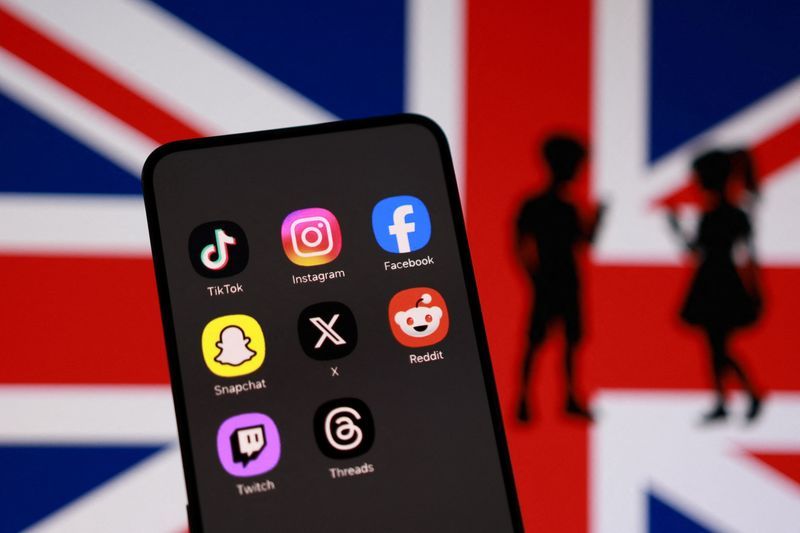
Britain's government has signalled its intention to introduce mandatory overnight restrictions on social media platforms frequented by older teenagers, marking the latest escalation in efforts to protect young people from the perceived harms of digital engagement. Under the proposed safeguarding framework, users aged 16 and 17 will find their access to social media applications automatically blocked between midnight and 6 a.m., unless they actively choose to change this default setting—a mechanism designed to reduce late-night usage without imposing an outright prohibition.
This initiative arrives just weeks after the government unveiled its more sweeping proposal to ban social media access entirely for children under 16, signalling a comprehensive approach to teenage online safety that extends beyond complete restrictions. The midnight curfew represents a middle ground that acknowledges the reality of older teenagers' digital lives while attempting to minimise potential disruption to their sleep patterns and daytime responsibilities. The scheme also targets engagement mechanics, with addictive features designed to encourage prolonged scrolling automatically deactivated unless users deliberately reactivate them.
The government's rationale centres on the mounting evidence that unregulated late-night social media consumption undermines adolescent wellbeing. Technology Minister Liz Kendall framed the restrictions as essential interventions enabling young people to obtain adequate rest, maintain academic focus in schools and colleges, and cultivate meaningful relationships with family members and peers. This argument resonates across multiple policy domains—sleep disruption in teenagers is increasingly recognised as contributing to broader mental health challenges, academic underperformance, and physical health complications.
Implementation of these restrictions will carry legal weight, with Online Safety Minister Kanishka Narayan emphasising that technology companies will face mandatory compliance requirements. In remarks to LBC Radio, Narayan stated that regulators would compel adherence rather than relying on voluntary industry cooperation, whilst simultaneously demanding that platforms strengthen age verification mechanisms. Firms failing to implement adequate age-checking protocols face severe regulatory penalties, underscoring the government's determination to move beyond previous soft-touch approaches.
The regulatory timeline indicates a staged implementation, with detailed legislation to be presented to parliament by year's end, with the measures themselves taking effect in spring 2027. This extended window provides technology companies nearly two years to adjust their systems and compliance frameworks, though it also raises questions about whether such delays might dilute political momentum or allow industry lobbying to soften eventual requirements.
The proposals have drawn criticism from the Opposition Conservative Party, with education policy spokesperson Laura Trott questioning the logical coherence of the approach. Trott contended that if the government genuinely believes 16- and 17-year-olds should remain offline, then permitting users to circumvent the curfew by altering settings undermines the policy's protective intention. Her critique highlights a fundamental tension between paternalistic regulation and respecting teenage autonomy—a dilemma that policymakers across democracies continue to wrestle with as they contemplate digital restrictions.
The UK's initiative builds upon growing international momentum to regulate teenage social media access. Australia's recent ban on social media for children under 16 has become a reference point for comparative analysis, though emerging evidence raises implementation challenges. An advisory team that examined Australia's approach discovered that major platforms have struggled even with the basic prerequisite of age verification, with current technologies proving insufficient to prevent underage users from circumventing restrictions. This concerning finding suggests that technical obstacles may hamper enforcement of Britain's proposals regardless of the stringency of legal frameworks.
Tech giants including Meta, which operates Instagram, ByteDance, which controls TikTok, and Google, which owns YouTube, have not yet publicly responded to the UK's regulatory announcements. Their silence is notable given their typical practice of engaging with major policy proposals, particularly those imposing significant compliance costs. The companies may be assessing the political likelihood of the measures becoming law or calculating how to minimise disruption whilst maintaining platform appeal to young users.
Recent litigation in the United States has underscored mounting legal jeopardy facing social media companies over youth mental health impacts. Both Google and TikTok recently resolved lawsuits brought by a minor alleging that platform design deliberately damaged his psychological wellbeing. These settlements, whilst typically involving no admission of wrongdoing, signal courts' receptiveness to claims linking social media to adolescent mental health deterioration—a development that strengthens the political case for regulatory intervention in the UK and potentially across Southeast Asia, where rapid digital adoption among youth populations presents analogous policy challenges.

