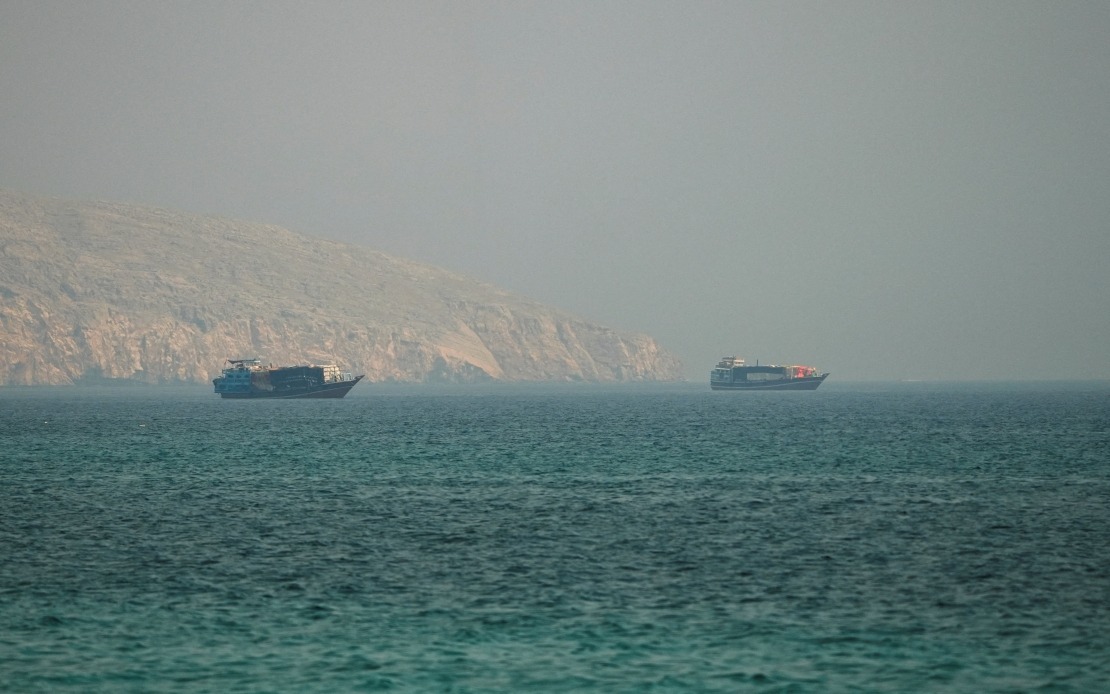
The Strait of Hormuz continues to pose significant risks to international shipping, with the UK Maritime Trade Operations maintaining a 'severe' threat designation following a spate of attacks on merchant vessels transiting one of the world's most strategically vital waterways. The Joint Maritime Information Centre, operating under UKMTO authority, reaffirmed the alert status on Friday, underscoring the persistent instability plaguing the critical chokepoint through which roughly one-third of global seaborne oil trade passes daily.
Despite the deteriorating security environment, maritime authorities have expanded the southern transit route through the Strait and confirmed its continued availability to all commercial traffic. The expansion represents an effort to provide mariners with additional navigational options and designated corridors that may offer marginally improved safety conditions, though the underlying threat environment remains fundamentally unchanged. Vessel operators are being advised to maintain heightened vigilance and prepare for potential interactions with naval forces patrolling the waterway.
Shipping companies and mariners face multiple operational challenges when navigating the region. The UKMTO notice specifically instructs captains to anticipate radio contact from military vessels operating on very high frequency communication channels and to remain aware of designated mine-danger zones. These precautions reflect the layered security challenges posed by both conventional military activity and the lingering presence of explosive hazards that complicate safe passage through the strategic waterway.
The escalating cycle of attacks and counter-attacks between the United States and Iran has fundamentally destabilised the security calculus in the Persian Gulf. The United States has conducted multiple military operations targeting Iranian military installations and infrastructure assets, framing these strikes as proportional responses to attacks on commercial shipping. Washington's strategy appears designed to impose costs on Iranian activities while attempting to deter further harassment of merchant vessels, though the efficacy of this approach remains disputed among regional analysts.
Iran's position on maritime traffic through the Strait reflects its assertion of sovereign control over shipping operations in waters it considers critical to its national security. Tehran has consistently demanded that vessels coordinate transit arrangements directly with Iranian authorities and has rejected the use of alternative routes that bypass Iranian-designated corridors. This insistence on compliance with Iranian protocols, combined with the country's deployment of drone assets against US military facilities in the Gulf and broader region, signals Tehran's determination to maintain leverage over maritime commerce.
The military confrontation extends beyond the Strait itself, with Iranian drone attacks targeting American military installations not only in the Persian Gulf but also in Jordan, demonstrating the geographic scope of escalating hostilities. These operations suggest Iran's willingness to project power across the region and strike at US military capabilities far from the immediate Strait of Hormuz environment. The attacks underscore the interconnected nature of Middle Eastern security challenges and the difficulty of containing localised confrontations within discrete geographic boundaries.
Recent diplomatic efforts suggest a potential pathway toward de-escalation, though their prospects remain highly uncertain. Last month, Iran and the United States reached a memorandum of understanding brokered through Pakistani mediation, with both parties ostensibly committing to halt military operations and pursue a durable peace settlement. However, the continuation of hostile actions by both sides since the agreement's conclusion raises serious questions about the commitment of either party to the accord or the mechanisms available to enforce compliance.
For Malaysian and Southeast Asian economies, the precarious situation in the Strait of Hormuz represents a tangible threat to regional prosperity. Malaysia's trade relationships depend substantially on maritime commerce flowing through this bottleneck, and any sustained disruption to shipping would have immediate repercussions for supply chains, energy costs, and economic growth across the region. The insurance premiums applied to vessels transiting the area have already risen substantially, effectively imposing a hidden tax on regional commerce and increasing the cost of imports and exports for Malaysian enterprises.
The international maritime community faces mounting pressure to address the underlying drivers of insecurity rather than simply managing symptoms through expanded transit corridors and enhanced navigational protocols. Sustainable resolution requires direct engagement between Washington and Tehran on the fundamental grievances fueling the confrontation, as well as buy-in from regional states capable of influencing both parties' calculations. The current trajectory, characterised by military strikes followed by retaliatory operations, appears structurally incapable of producing lasting stability.
Shipping companies operating in the region must balance commercial imperatives against accumulating security risks. Many international operators have begun routing vessels around the Cape of Good Hope rather than transiting the Strait, accepting significantly longer transit times and higher fuel costs as preferable to the existential risks posed by military confrontation. This rerouting imposes substantial inefficiency costs on global supply chains and reflects the degree to which the US-Iran dispute has become an impediment to normal international commerce.
The diplomatic ambitions reflected in the Pakistani-mediated memorandum of understanding cannot succeed without parallel security arrangements that address the legitimate concerns of both parties. The United States seeks freedom of navigation and protection of merchant shipping from Iranian harassment, while Iran demands recognition of its security interests and constraints on hostile military operations near its borders. Bridging this gap requires creative diplomacy and willingness to move beyond the current cycle of tit-for-tat escalation.
Looking forward, the situation in the Strait of Hormuz will likely remain a defining factor in regional stability and global energy security for the foreseeable future. Malaysian policymakers should monitor developments closely and consider how regional organisations might contribute meaningfully to conflict resolution efforts. The alternative—continued military escalation and disruption to maritime commerce—carries costs far exceeding the diplomatic investments necessary to pursue genuine de-escalation.

