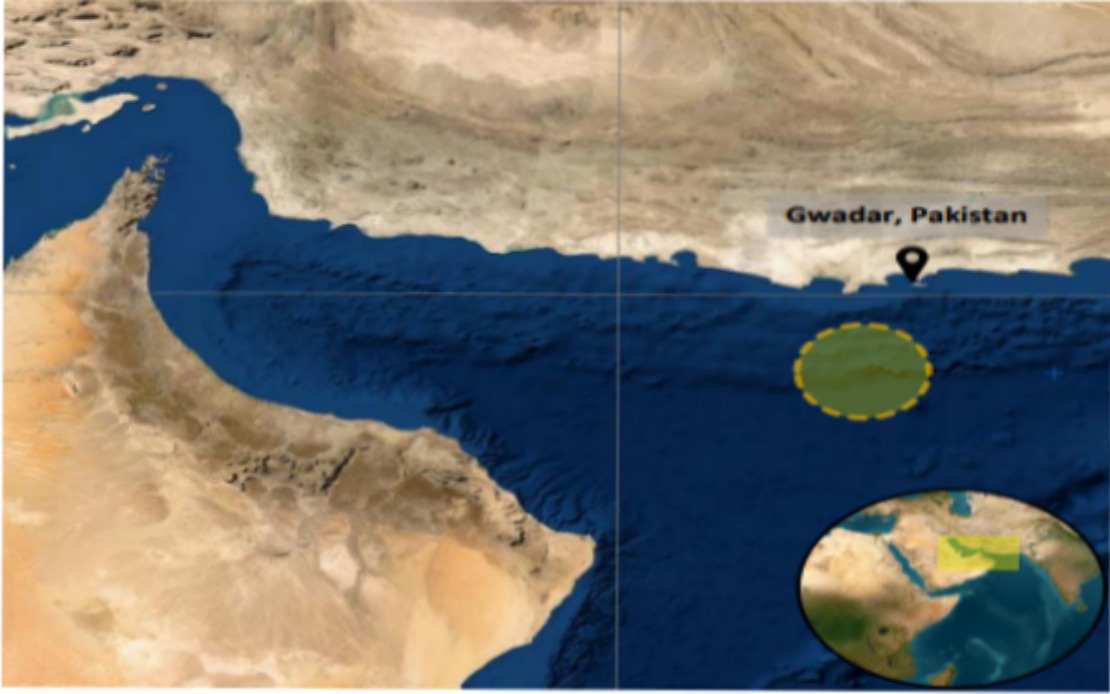
Shipping operators and vessel captains have been put on heightened alert following a reported maritime incident in the Gulf of Oman, a critical chokepoint that channels a significant portion of the world's oil trade. The UK Maritime Trade Operations (UKMTO), which monitors and reports on shipping activity in the region, disclosed the incident on Tuesday involving a tanker and military forces operating near Gwadar on Pakistan's southwestern coast. While details remain sparse, the advisory underscores the escalating security challenges facing commercial vessels traversing one of the world's most strategically important maritime zones.
The UKMTO issued formal guidance to all merchant vessels in the vicinity, recommending they remain cognisant of the latest maritime security intelligence and adapt their operational procedures to account for the unstable environment. Such advisories, though not unusual in the region, carry significant weight within the shipping industry, as they influence routing decisions, insurance premiums, and the broader calculus of navigating through the Arabian Sea and its approaches. The agency stopped short of releasing comprehensive information about the specific vessel involved, the nature of the military forces present, or whether the encounter resulted in any casualties or structural damage to the ship.
Authorities monitoring the incident have confirmed that investigations are ongoing, though the investigation's scope and expected timeline have not been disclosed. This opacity is typical when incidents involve sensitive military dimensions or when the relevant governments are still establishing the facts of what transpired. For shipping companies and insurers, this lack of clarity compounds the uncertainty already present in an environment where maritime security incidents have become almost routine occurrences.
The incident occurs against a backdrop of persistent geopolitical friction in the Arabian Peninsula and broader Gulf region. The Strait of Hormuz, which lies adjacent to the Gulf of Oman and serves as the gateway for roughly one-fifth of global petroleum exports, has repeatedly become a flashpoint between the United States and Iran. Over the past several years, this waterway has witnessed multiple confrontations involving naval assets, drone activity, and commercial shipping incidents that have raised insurance costs and forced vessel operators to employ security escorts or adopt costly detour routes.
For Southeast Asian readers, this development carries particular significance given the region's heavy reliance on uninterrupted crude oil and liquefied natural gas supplies flowing through these Middle Eastern passages. Malaysian refineries, petrochemical plants, and power stations depend substantially on energy imports transiting the Gulf of Oman and Strait of Hormuz. Any sustained disruption to shipping lanes in this corridor directly affects fuel prices, manufacturing costs, and economic activity across the Association of Southeast Asian Nations.
The Pakistan connection adds another dimension to the security calculus in the region. Gwadar, the location referenced in the incident report, represents a significant investment point for China's Belt and Road Initiative and has become increasingly important as a strategic port facility. Heightened military activity near Gwadar reflects broader competition for influence and control in the North Arabian Sea, with ramifications extending to India, Iran, China, and the United States. Any incident that occurs near such a strategically contested location attracts immediate international attention and complicates an already delicate balance of power.
The frequency of reported maritime incidents in the Gulf of Oman has intensified considerably since tensions between Washington and Tehran escalated following the United States' withdrawal from the Joint Comprehensive Plan of Action regarding Iran's nuclear programme. Incidents have ranged from suspected drone attacks on vessels to naval confrontations and reports of mines or suspicious objects affecting shipping routes. Each incident, regardless of attribution, serves to deepen concerns among commercial operators about the sustainability of current maritime security arrangements and the adequacy of naval protection available to civilian vessels.
Shipping insurers have responded to this volatile environment by substantially raising premiums for vessels traversing the region, effectively placing a financial surcharge on international trade flowing through the Arabian Sea. Larger vessel operators and international shipping companies have absorbed these costs as a business expense, but smaller carriers and developing nation-flagged ships face more acute pressure. The economic burden of enhanced security measures extends beyond insurance to include the cost of employing armed security personnel aboard vessels, implementing advanced navigation and surveillance systems, and accepting longer transit times resulting from route deviations.
The UKMTO advisory, though measured in tone, represents a formal acknowledgement that the maritime environment in this region continues to deteriorate from a security standpoint. The agency functions as a critical early-warning system for international shipping, and its assessments carry weight with vessel masters and shipping company executives who must make real-time decisions about navigation routes and operational procedures. The recommendation that vessels maintain awareness of evolving conditions essentially codifies what many operators already practice: treating the region with considerable caution and maintaining contingency plans for rapid responses to emerging threats.
Investigations into the specific incident near Gwadar will likely take weeks or months to complete, depending on the cooperation of relevant governments and the complexity of establishing precisely what occurred. In the interim, commercial shipping will continue operating through the Gulf of Oman, albeit with heightened vigilance and elevated costs. For Malaysia and other Southeast Asian nations dependent on stable maritime trade flows, developments in this distant but critically important waterway merit close monitoring, as disruptions reverberate quickly through global energy markets and international supply chains that sustain regional economic activity.

