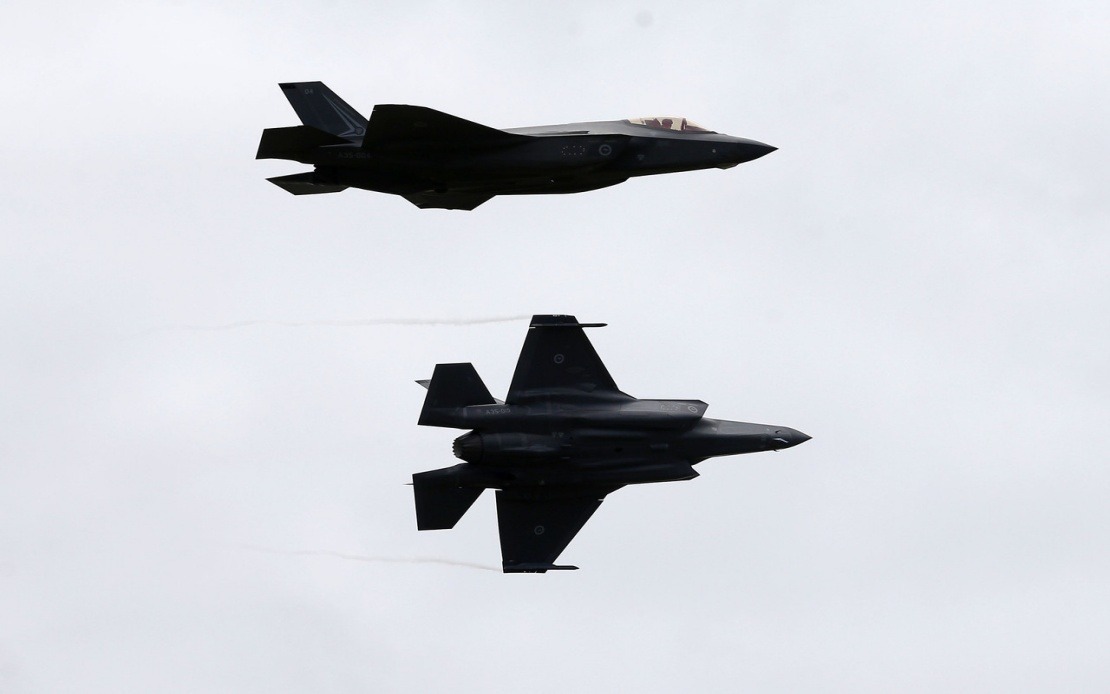
Three major military powers have entered into a substantial partnership to develop an advanced stealth fighter aircraft for deployment in the coming decade. The United Kingdom, Italy, and Japan announced a £4.6 billion (US$6.1 billion) investment on July 4 through a formal contract agreement, signalling their commitment to establishing air superiority capabilities well into the 21st century. The initiative, known as the Global Combat Air Programme (GCAP), represents a coordinated effort among three technologically advanced democracies to create what officials describe as a sixth-generation combat system intended to achieve operational readiness by 2035.
The contract award represents a pivotal moment in the multi-year effort, moving the project from the conceptual and feasibility phases into substantive development work. Edgewing, a newly formed industrial consortium established specifically for this undertaking, has received the mandate to oversee the next critical phase of the programme. This joint venture brings together three renowned defence manufacturers: BAE Systems from Britain, Leonardo from Italy, and Japan Aircraft Industrial Enhancement Co. Ltd. (JAIEC), each contributing substantial expertise in aerospace engineering and military systems integration. The equal partnership structure reflects the balanced commitment of all three nations to a shared vision of air defence capabilities.
The British government has framed this milestone within the broader modernisation strategy for the Royal Air Force, emphasising that the emerging fighter will operate as a component within a comprehensive ecosystem of combat systems. Rather than replacing existing platforms immediately, the next-generation aircraft will operate alongside current Typhoon fighters and F-35 Lightning II jets, supplemented by autonomous systems designed for reconnaissance and support functions. This integrated approach allows for a measured transition period where proven platforms continue protecting airspace while new technologies undergo rigorous validation and operational testing.
Design and engineering excellence form the cornerstone of the GCAP project's philosophy. The planned aircraft will incorporate cutting-edge digital engineering capabilities and artificial intelligence systems intended to provide operational advantages in modern air combat scenarios. British officials emphasise that the resulting platform will represent the most technologically sophisticated fighter jet ever operated by the RAF, incorporating breakthrough innovations across sensor systems, propulsion, materials science, and autonomous capabilities. The focus on artificial intelligence integration suggests the designers envision a platform capable of managing complex threat environments with minimal human intervention in certain tactical scenarios.
The current contract phase concentrates specifically on translating conceptual designs into detailed engineering specifications. Technical teams across all three nations will establish precise performance requirements, conduct extensive computer modelling and simulation activities, and perform ground-based testing of critical systems and components. This methodical approach to development reduces technical risk and ensures that final production specifications reflect realistic manufacturing capabilities and operational requirements. By completing this phase thoroughly before moving to prototype construction, the partnership aims to avoid costly design revisions later in the programme.
From a regional perspective, this Anglo-Italian-Japanese partnership carries significant implications for the strategic balance in Indo-Pacific security affairs. Japan's participation in a major Western air defence programme alongside established NATO members signals deepening security integration and technological collaboration across the democratic alliance system. As China and Russia continue advancing their own military aircraft capabilities, Japan's involvement in developing a sixth-generation fighter demonstrates Tokyo's commitment to maintaining technological parity and securing its airspace against potential threats. The programme also positions Japanese industry as a full participant in cutting-edge defence technology development rather than a subordinate technology purchaser.
For Malaysia and other Southeast Asian nations, this development introduces a new variable into regional military planning and procurement considerations. While GCAP aircraft will serve British, Italian, and Japanese air forces directly, the technological principles and systems integration approaches pioneered through this programme will likely influence future fighter jet designs available on global markets. Nations evaluating air defence modernisation will observe closely how the GCAP programme addresses contemporary challenges in sensor fusion, artificial intelligence integration, and network-centric warfare concepts. Additionally, Malaysian defence planners may monitor how allied nations strengthen their air capabilities, as this affects the broader security architecture within which Southeast Asia operates.
The programme's investment structure, with costs distributed equally among three major economies, demonstrates confidence in the project's viability and necessity among democratic governments facing evolving security threats. The decision to fund this substantial venture reflects assessments by British, Italian, and Japanese defence establishments that legacy fighter aircraft will become inadequate against future adversaries equipped with advanced air defence systems and hypersonic weapons. By beginning development now with a 2035 service entry target, the partnership aims to position these nations' air forces with competitive capabilities during the critical mid-2030s period when geopolitical tensions are projected to intensify.
The industrial collaboration framework supporting GCAP creates potential opportunities and challenges for defence sectors across participating nations. British, Italian, and Japanese companies will establish supply chains, technology-sharing protocols, and joint manufacturing arrangements to execute the programme. This deepens cross-border defence industrial integration among democratic allies and creates long-term relationships between companies that may extend into future military and civilian aerospace projects. However, coordinating complex engineering efforts across three nations with different regulatory frameworks, labour standards, and manufacturing traditions requires sophisticated programme management and diplomatic flexibility.
The contractual structure through Edgewing represents an evolution in how major democracies organise international defence cooperation. Rather than establishing a separate multinational government agency, the three nations created a private-sector led consortium with clear responsibility for delivering specified outputs. This approach leverages commercial disciplines and project management expertise while maintaining government oversight through funding and contract terms. Future defence partnerships may follow similar models, recognising that complexity and technical specialisation increasingly demand private-sector leadership within structured government frameworks.
Looking toward implementation, the coming years will test whether the three-nation partnership can maintain cohesion and momentum despite inevitable technical challenges and changing political circumstances. Fighter jet development programmes regularly encounter unexpected technical hurdles, cost overruns, and scheduling delays. The success of GCAP will depend substantially on how effectively Edgewing manages these challenges while keeping participating governments informed and committed. Any significant delays or cost escalations could threaten political support, particularly if budgetary constraints force hard choices among competing defence priorities.
The 2035 service entry target, while achievable given current technology maturity levels, requires sustained commitment spanning multiple political cycles in all three countries. Changes in government, shifts in threat assessments, or emerging budget pressures could alter schedules or specifications. However, the scale of investment already committed and the strategic rationale underlying the partnership suggest that all three nations view GCAP as a long-term priority unlikely to face fundamental disruption. For Malaysia and regional observers, this programme merits continued attention as a bellwether of how advanced democracies approach military modernisation challenges and as an indicator of likely capabilities that will influence regional security dynamics in the 2030s.

