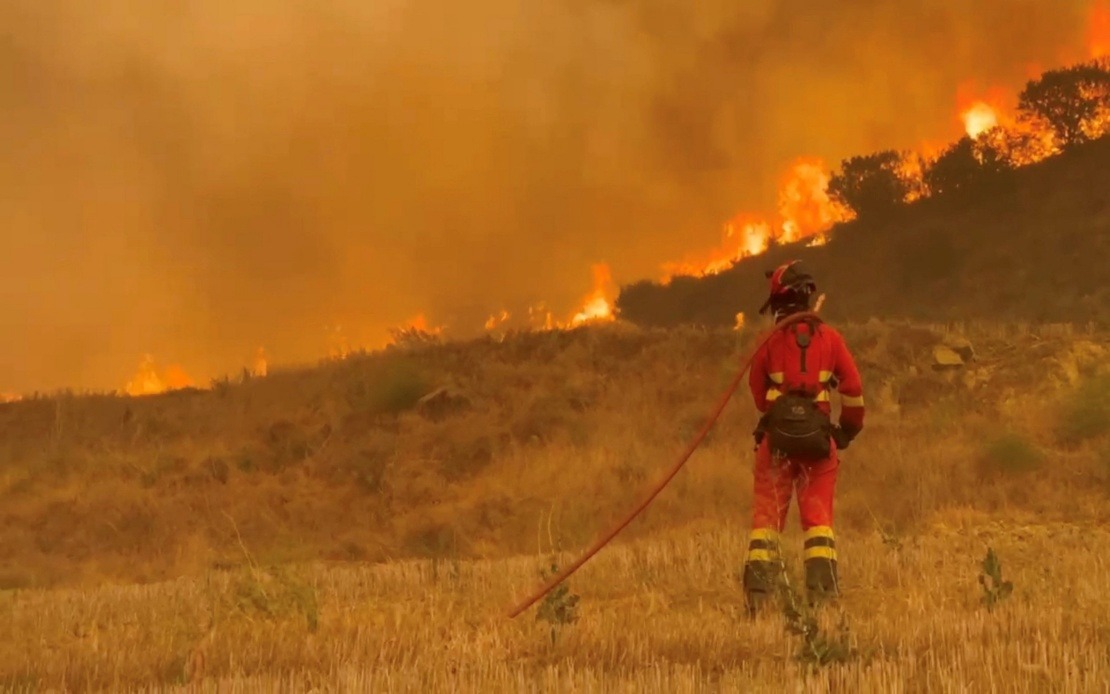
Britain is mobilising its highest-level crisis response machinery as the country grapples with an unprecedented convergence of climate-related emergencies. Prime Minister Andy Burnham will chair an urgent Cobra meeting on Wednesday to coordinate the government's response to extreme heat, spreading wildfires, and expanding drought conditions that are simultaneously overwhelming firefighting services, disrupting agricultural operations, and straining the National Health Service. The decision to convene such a high-stakes gathering underscores the severity with which senior officials now view the interconnected threats facing multiple sectors of British society.
The timing of the emergency convocation reflects rapidly deteriorating conditions across the United Kingdom. England has witnessed additional areas slip into official drought status as of Monday, while firefighters remain locked in battle with a major wildfire consuming the New Forest in Hampshire. Simultaneously, the Met Office has issued a rare amber extreme heat warning for Thursday, signalling meteorologists' exceptional concern about the temperature forecast. These simultaneous crises highlight how climate-related challenges no longer emerge in isolation but rather compound one another, creating cascading pressures across infrastructure and services designed for more temperate conditions.
The breadth of the emergency's impact cannot be overstated. Firefighting personnel are exhausting resources responding to increasingly frequent and intense blazes. Agricultural communities face crippling conditions from sustained drought, threatening food production and rural livelihoods. Healthcare workers confront surging demand from heat-related illnesses and complications while simultaneously managing workforce challenges during extreme conditions. By bringing these disparate crises under one emergency framework, the government implicitly acknowledges that sectional responses are insufficient and that coordinated national action is required.
Wales declared a formal drought in late July, triggered by concerning water shortages stemming from prolonged high temperatures and inadequate rainfall. England followed suit last month when drought status was declared across half the country following record-low precipitation and persistent heat. These designations carry significant practical implications, signalling water restrictions, agricultural challenges, and potential impacts on electricity generation that depends on cooling water supplies. The geographic spread of drought across both Wales and half of England represents an unusually extensive environmental condition for Britain's climate.
Meteorological data increasingly suggests the current period may constitute Britain's hottest summer on record when measured by average temperature across the season. The Met Office, the nation's official weather authority, released this projection on Tuesday, adding weight to the assessment that current conditions transcend typical summer variability and represent genuinely exceptional circumstances. Such records carry psychological and policy significance beyond their technical meaning, often catalysing public recognition of climate change and strengthening political will for mitigation measures.
The human toll from recent heat waves has proven sobering. The UK Health Security Agency documented 2,877 excess deaths during the May and June heat waves, nearly doubling the 1,504 excess deaths recorded during summer 2025. These mortality figures, drawn from comprehensive health surveillance systems, demonstrate that extreme heat in Britain translates directly into life-threatening risks, particularly affecting vulnerable populations inadequately prepared for sustained temperatures above historical norms. The significant year-on-year increase in excess deaths suggests either worsening heat intensity or reduced population adaptation capacity, or both.
The Green Party's response, articulated by leader Zack Polanski, frames the crisis as an opportunity for transformative policy rather than mere crisis management. His proposal to tax fossil fuel companies to fund firefighting helicopter capacity represents an effort to connect climate causation to climate response through fiscal mechanisms. His additional suggestions—establishing cool spaces in communities, setting maximum working temperatures, and halting new North Sea oil and gas extraction—constitute a comprehensive climate action agenda embedded within the crisis moment. The assertion that "we cannot negotiate with the science" reflects a more confrontational stance toward climate policy, implying that half-measures prove inadequate against exponential climate risk.
For Malaysian and Southeast Asian observers, the British experience carries instructive implications. While tropical nations possess different baseline climates than temperate Britain, the capacity of extreme heat to overwhelm services, inflate mortality, and disrupt multiple economic sectors simultaneously represents a universal threat. Malaysia's own experiences with floods, though distinct from drought crises, demonstrate how climate extremes expose system vulnerabilities across healthcare, agriculture, and emergency services. The British example suggests that climate resilience requires not sectional responses but integrated national mobilisation across multiple government agencies and sectors.
The interconnected nature of the British crisis—where heat triggers both wildfires and drought, which then stress agriculture, healthcare, and emergency services—reflects how climate impacts propagate through complex modern economies. A single meteorological anomaly cascades into failures across multiple sectors unless coordinated response mechanisms exist. The Cobra meeting represents recognition that traditional departmental silos prove inadequate when confronting systemic climate threats. This lesson resonates across Asia-Pacific nations where tropical agriculture, megacity healthcare systems, and water supplies face mounting climate pressures that existing institutions may be structurally unprepared to manage.
Looking forward, the British government's emergency response signals both the severity of current conditions and the potential trajectory for climate impacts in coming decades. If such extremes are now requiring Prime Ministerial-level crisis coordination in a developed nation with sophisticated infrastructure, the implications for developing economies with fewer resources demand serious consideration. The UK's experience suggests that climate change increasingly transcends environmental policy portfolios and demands integration into core governance structures, resource allocation, and national security planning.
The political and scientific framing of this crisis will likely influence British climate policy for years ahead. Whether the emergency response catalyses genuine mitigation investments, adaptation infrastructure development, or merely temporary measures to weather the immediate crisis will depend on political will beyond the emergency meeting itself. For regional observers, the British case study offers both cautionary lessons about climate vulnerability and potential models for mobilising institutional responses when climate impacts accelerate.

