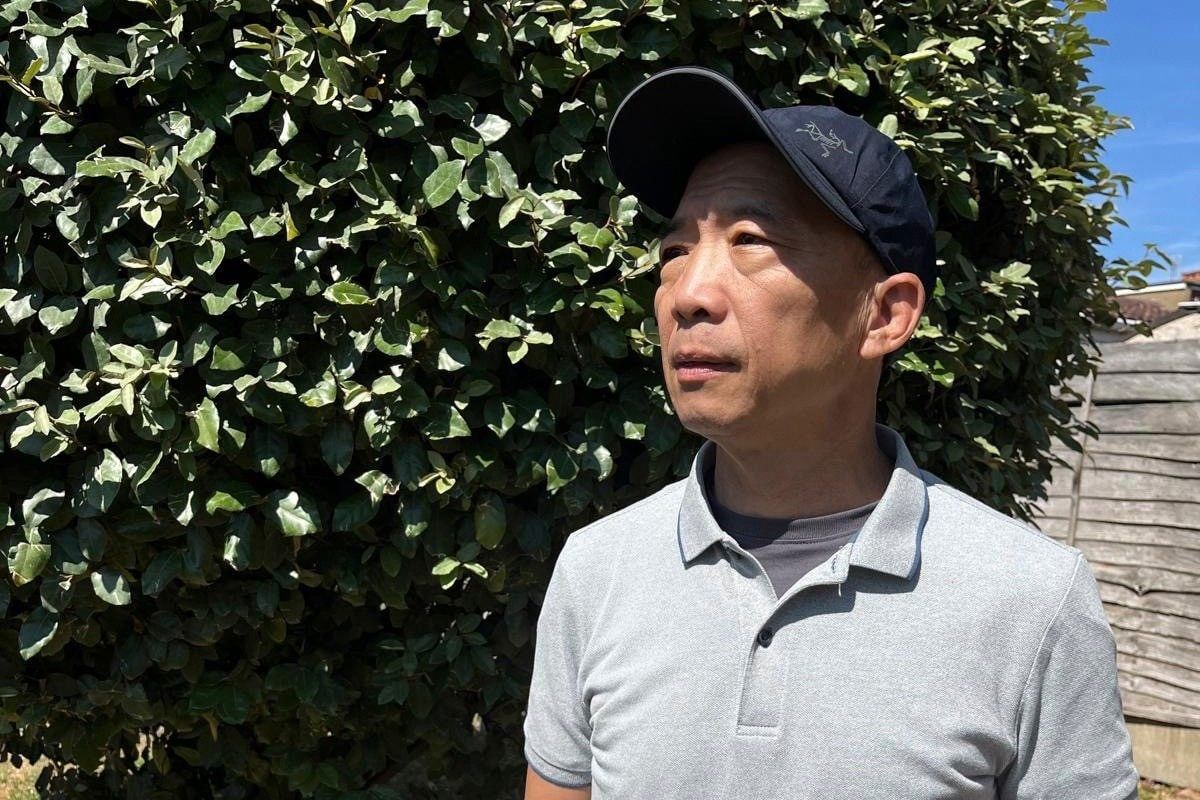
Britain's immigration authorities have formally ruled out deporting Wu Chi-wai, the prominent Hong Kong opposition figure who encountered unexpected difficulties at Heathrow Airport this month before eventually gaining entry to the country. The confirmation comes through a written response from UK Minister for Migration and Citizenship Jo White to former Hong Kong governor Chris Patten, signalling a significant reversal in the handling of the former Democratic Party chairman's case and providing clarity on how similar politically sensitive asylum situations will be managed going forward.
Wu's arrival in the United Kingdom represents a watershed moment in the debate over how Britain interprets its obligations to Hong Kong's persecuted political class. The 63-year-old spent over four years in a Hong Kong prison after pleading guilty to conspiracy to subvert state power under the territory's national security law. His conviction stemmed directly from his central role in organising the 2020 pan-democratic primary election, an unofficial vote intended to maximise opposition representation in the legislature. That he has now been permitted to remain despite carrying such a conviction reflects a deliberate policy recalibration by Westminster, one with implications for how other Hong Kong activists and former officials facing similar circumstances might expect to be treated.
The initial refusal of entry at London's principal international airport appeared to follow standard immigration protocols, yet it provoked immediate concern among human rights advocates and British political figures. Wu was granted only seven days of temporary admission initially, creating uncertainty about his long-term prospects. However, intensified diplomatic pressure, particularly from Patten—who served as Hong Kong's last colonial governor and retains considerable influence on cross-party committees scrutinising Asia policy—prompted the Home Office to reconsider its stance. Within weeks, Wu received approval to remain as a visitor for six months, substantially broadening his options for pursuing settlement.
The distinction between standard criminality assessments and political persecution forms the crux of White's policy statement. She emphasised that overseas convictions, particularly those stemming from offences not recognised under British law or those carrying disproportionately severe sentences compared to equivalent UK crimes, should not automatically trigger rejection of settlement applications. This principle proves especially relevant for Hong Kong dissidents prosecuted under the national security law, legislation implemented in 2020 that criminalises vaguely defined offences like subversion with penalties far exceeding what comparable democratic protest would attract in Britain.
For Wu and others in similar circumstances, the British National (Overseas) pathway offers a structured route to permanent residency and citizenship. Introduced in 2021 following the crackdown in Hong Kong, the BN(O) scheme represents Britain's most significant immigration concession to former colonial subjects since decolonisation. Eligible applicants and their dependents can live, work and study in the UK with access to healthcare and education systems, progressing to citizenship after five years of continuous residency. Given that Wu's family already resides in Britain, this route directly addresses his primary motivation for seeking UK sanctuary.
The procedural flexibilities outlined by White address a genuine tension within immigration law. Border officials and case handlers operate within rigid frameworks, yet applying those frameworks uniformly to individuals fleeing political prosecution risks perpetuating the very injustices those individuals sought to escape. White's guidance instructs caseworkers to consider whether applicants have raised concerns about the political motivation behind their convictions or the circumstances in which those convictions were obtained. Crucially, she notes that evidence supporting such claims should be weighed alongside all other material, including relevant court findings, before reaching determinations. This approach acknowledges the complexity of cases where legal guilt and political injustice coexist.
Wu's successful navigation through the initial obstacles carries significance extending beyond his individual circumstances. His case establishes a precedent for how British authorities will evaluate applications from the hundreds of Hong Kong activists, former lawmakers and civil society leaders who have migrated to the UK since 2020. Some, like Wu, carry convictions under the national security law. Others face potential prosecution if they return home. The clarity provided by White's statement reduces uncertainty and suggests that political credentials and evidence of genuine persecution will receive serious consideration rather than automatic disqualification.
The broader context of Hong Kong's political transformation informs the urgency surrounding Wu's case. The 2020 primary election that triggered Wu's prosecution represented the final major mobilisation of democratic opposition in Hong Kong before the national security law effectively froze political contestation. Among the 45 former politicians and activists convicted alongside Wu, charges similarly rest on allegations of conspiring to use the primary to secure legislative dominance that would enable blocking government legislation—a constitutionally legitimate democratic tactic rebranded as subversion under the new legal regime. Two others were acquitted, highlighting the subjective application of the law.
For Malaysia and other Southeast Asian nations observing British immigration policy, Wu's case illuminates the evolving relationship between human rights advocacy and state sovereignty in asylum determinations. Britain's decision to extend welcome to those persecuted under the national security law, despite their criminal convictions in their home jurisdiction, represents a clear statement that political persecution overrides conventional criminality considerations. This stance contrasts sharply with approaches adopted by some regional governments, which have demonstrated reluctance to offer sanctuary to critics and activists, preferring to maintain diplomatic relationships with Beijing and Hong Kong authorities.
Wu's journey from imprisonment to refuge in Britain also underscores the deeper fracture within the international order regarding Hong Kong. China views the BN(O) scheme itself as an affront to sovereignty, and individual approvals of politically sensitive applicants intensify that grievance. Britain, conversely, invokes historical responsibility and commitment to the Joint Declaration lodged with the United Nations to justify intervention on behalf of those it views as victims of political injustice. This fundamental disagreement will likely persist regardless of individual case outcomes.
As Wu transitions from the precarious status of a visitor facing potential deportation to a prospective BN(O) applicant with realistic prospects of British citizenship, his experience demonstrates both the resilience of liberal asylum principles and their vulnerability to administrative caprice. His case also highlights the importance of sustained advocacy by figures like Patten, who leveraged political standing to challenge initial decisions and force policy reconsideration. For the numerous other Hong Kong activists and dissidents navigating British immigration processes, the confirmation that political persecution will not be subordinated to overseas criminal convictions represents a meaningful safeguard, even as deeper questions about Britain's capacity to offer refuge to the many thousands displaced by Hong Kong's political transformation remain incompletely resolved.

