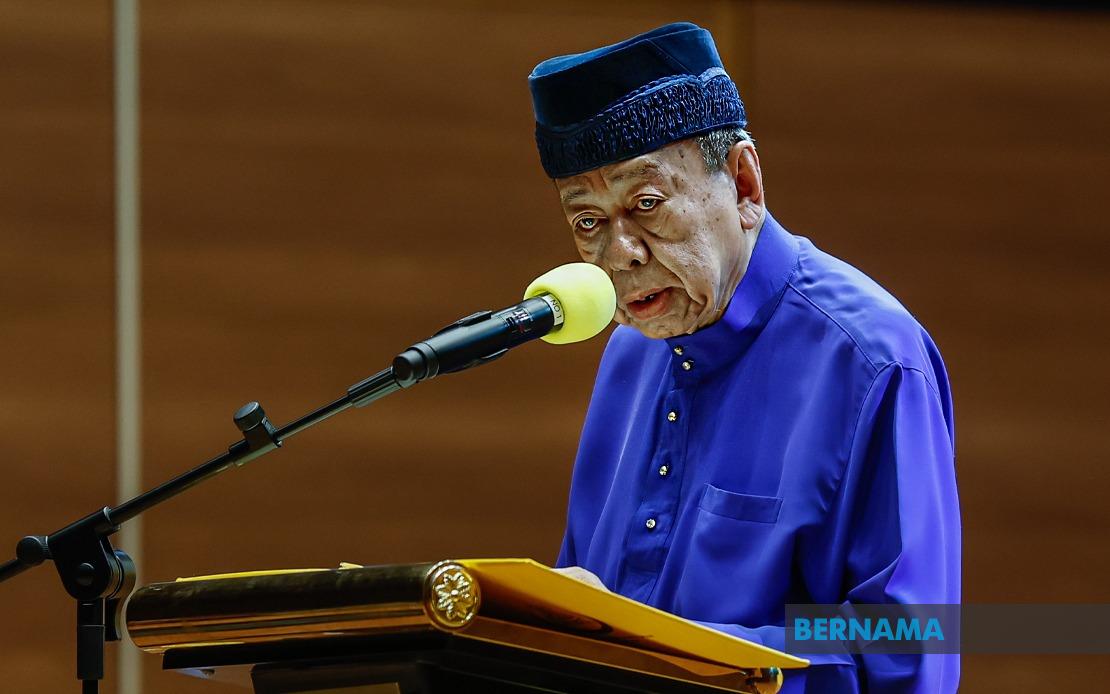
Sultan Sharafuddin Idris Shah has pressed Universiti Teknologi MARA to keep its academic offerings aligned with evolving global demands, stressing that graduates must possess the competitive edge needed to thrive in today's demanding employment landscape. Speaking at the UiTM Royal Address 2026 at the Seri Budiman Concert Hall in Shah Alam, the Selangor sovereign highlighted the fundamental shift in higher education priorities—moving away from merely securing university admission towards ensuring that alumni can excel in an increasingly fierce global marketplace.
The Sultan identified several critical disciplines that will shape Malaysia's economic trajectory going forward. These encompass digital technology and artificial intelligence, as well as traditional fields like science, engineering, medicine, finance, accounting, and law, alongside emerging creative industries. His emphasis on these sectors reflects recognition that Malaysia's future competitiveness depends not on resting upon previous educational accomplishments but on continuous adaptation to technological and economic disruption. The broader context here matters: Southeast Asia is experiencing rapid digital transformation, and nations that fail to produce graduates equipped with cutting-edge skills risk losing talent to more innovation-focused economies.
Crucially, Sultan Sharafuddin reframed UiTM's foundational mission without abandoning it. While affirming the institution's constitutional obligation to uplift Malay and Bumiputera populations, he rejected complacency masquerading as tradition. The Sultan's framing—that honouring UiTM's original mandate does not require ignoring institutional weaknesses—represents a delicate political balance. It acknowledges both the legitimate historical purpose of affirmative action in higher education and the practical reality that credentials alone no longer guarantee success. This distinction carries implications across Southeast Asia, where several nations grapple with similar tensions between inclusive access policies and excellence standards.
A particularly pointed element of the Sultan's address concerned the composition of UiTM's graduate output. Rather than celebrating the institution's track record in producing professionals occupying corporate and leadership positions, he redirected attention toward economic ownership and entrepreneurship. This shift suggests dissatisfaction with a model that primarily supplies talent to existing employers rather than generating new enterprises and wealth creation. The emphasis on producing job creators rather than job seekers reflects broader regional anxieties about graduate unemployment and underemployment, particularly among Bumiputera cohorts who, despite tertiary qualifications, struggle to establish independent economic ventures.
The Sultan explicitly called for strengthened partnerships between UiTM and the private sector, cautioning against the production of degree-holders lacking practical capabilities that industry demands. This concern resonates across Malaysia and the region, where employers frequently report misalignment between academic training and workplace requirements. Graduates may possess theoretical knowledge but lack soft skills, technical proficiency, or the adaptive thinking necessary for modern workplaces. By advocating for closer industry engagement, the Sultan implicitly critiqued a potential disconnect between campus and commerce that can leave even well-credentialled alumni struggling to find suitable employment or launch ventures.
Language proficiency emerged as another specific competency gap. The Sultan urged every UiTM student and graduate to master at least two foreign languages beyond Malay and English, recognising that linguistic capability directly enhances employability in regional and international contexts. For Malaysia, a country aspiring to position itself as a Southeast Asian hub for commerce, technology, and services, this imperative extends beyond individual earning potential. It reflects national-level competition with Thailand, Vietnam, and Indonesia for skilled talent and investment. Graduates fluent in Mandarin, Spanish, or other major languages enjoy expanded career mobility and can facilitate Malaysia's deeper integration into global value chains.
The Sultan's remarks on UiTM's constitutional foundation deserve careful attention. By anchoring the institution's Bumiputera-focused mandate in Article 153 of the Federal Constitution and the Universiti Teknologi MARA Act 1976, he elevated discussion above administrative policy into constitutional law. Section 1A of Act 173 and Article 153(8A) provide explicit legal grounds for reserving places in higher education for Malays and natives of Sabah and Sarawak. This constitutional positioning means that proposals to alter UiTM's fundamental character cannot be treated as routine policy adjustments but must be examined within the broader constitutional architecture. For Malaysian readers following ongoing debates about educational inclusivity and affirmative action, this framing reasserts institutional and legal limits on potential reform.
Simultaneously, the Sultan defended UiTM's specific mission against interpretations suggesting that supporting the institution denies educational opportunities to other communities. He noted that Malaysia hosts diverse higher education institutions serving all citizens, and that UiTM's existence does not preclude meaningful educational access for non-Bumiputera populations. This clarification addresses a persistent tension in Malaysian public discourse, where defenders of UiTM's mandate sometimes face accusations of exclusionism, while critics occasionally mischaracterise affirmative action as wholesale denial of opportunity. The Sultan's balanced articulation—that UiTM was established to address a genuine historical gap and that this gap remains incompletely closed—provides nuance often absent from polarised debates.
The historical framing also carries regional resonance. Several Southeast Asian nations have grappled with similar questions: how to extend educational opportunity to previously marginalised communities while maintaining institutional quality and relevance. Thailand, Indonesia, and the Philippines all wrestle with tensions between inclusive access policies and excellence standards. Malaysia's experience with UiTM, including both genuine successes in producing Bumiputera professionals and ongoing questions about competitiveness, offers lessons for neighbours developing their own affirmative action frameworks in higher education.
From a practical standpoint, the Sultan's address functions as a directive to UiTM leadership and faculty to pursue simultaneous excellence and inclusion—perhaps the most demanding institutional challenge. The university must maintain relevance in rapidly evolving fields like artificial intelligence and digital entrepreneurship while sustaining its constitutional commitment to Bumiputera advancement. It must strengthen industry partnerships and produce entrepreneurs without abandoning the foundational mission of expanding professional opportunities for populations historically underrepresented in higher education. These objectives require not incremental adjustment but substantial institutional evolution.
The presence of Higher Education Minister Datuk Seri Dr Zambry Abd Kadir at the ceremony signalled government receptiveness to the Sultan's message. Ministry response to these concerns, whether through funding adjustments, curriculum reform initiatives, or revised metrics for measuring institutional success, will determine whether UiTM can genuinely fulfil this dual mandate. The coming years will reveal whether the institution can produce graduates who are simultaneously proud inheritors of UiTM's inclusionary mission and competitive participants in the global knowledge economy.

