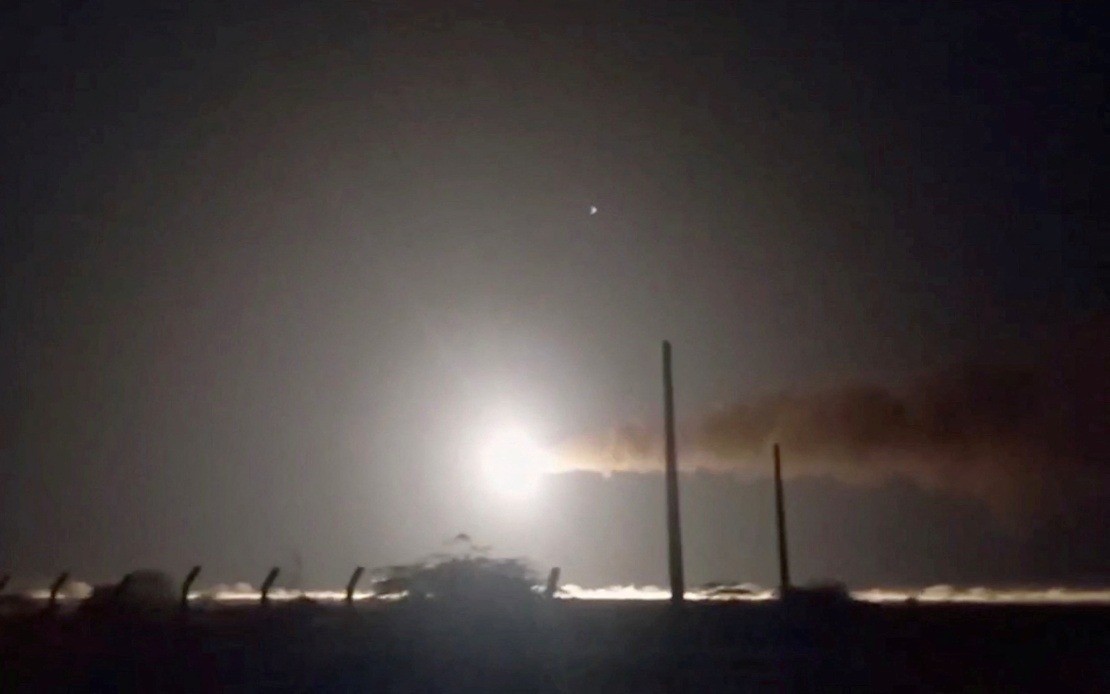
Two American military personnel lost their lives when Iranian forces unleashed a barrage of ballistic missiles and unmanned aerial vehicles against a US military installation in Jordan on July 17, according to announcements by the United States Central Command. The attack also left one service member unaccounted for, prompting ongoing search and rescue operations. CENTCOM disclosed the casualties on Saturday, emphasizing that allied forces mounted a coordinated defensive response to repel the incoming Iranian strike, marking one of the most significant direct confrontations between American and Iranian military assets in the region in recent years.
The incident represents a sharp escalation in Middle Eastern tensions at a time when regional stability remains precarious. Iran's decision to deploy both ballistic missiles and drone swarms demonstrates a willingness to employ its full suite of available weaponry, signaling heightened determination to press its strategic objectives in the region. For Southeast Asian observers, this development underscores how Middle Eastern conflicts can reverberate across global supply chains, particularly given the critical importance of the Strait of Hormuz to international shipping and energy markets that directly affect economies throughout Asia.
Four additional American service members sustained injuries significant enough to warrant medical evacuation to hospitals within Jordan, though all four were subsequently released to return to their units. This casualty pattern suggests the strike achieved some penetration of defensive systems, though the overall scale of destruction remained limited relative to the volume of ordnance deployed. Other personnel who sustained minor wounds have already resumed their operational duties, indicating that most of the base's functional capacity remained intact following the attack.
CENTCOM's formal statement emphasized that identifying and accounting for all personnel remained an active priority. The command indicated it would withhold public disclosure of the fallen service members' identities until families had been formally notified, respecting established military protocol for casualty announcements. This procedural caution reflects the gravity with which the US military treats notifications to next of kin, recognizing that families deserve to receive such devastating information through official channels rather than discovering it through media reports.
The broader context of this attack involves escalating proxy warfare and direct military posturing between Washington and Tehran across the Middle East. The US maintains multiple military installations throughout the region, including bases in Iraq, Syria, Saudi Arabia, and the United Arab Emirates, all of which have become increasingly vulnerable to Iranian missile and drone capabilities that have improved substantially over the past decade. Jordan's geographic position adjacent to Syria and Iraq places its American military presence in a particularly exposed location, making the country a logical target for Iranian demonstrations of resolve.
Regional analysts have interpreted Iran's targeting decisions as a calculated response to American military activities in the region, though the specific trigger for this particular attack remains subject to interpretation. The Islamic Republic has consistently characterized its military actions as defensive responses to American and Israeli operations that it views as threatening. Understanding this perspective is crucial for comprehending Iranian strategic calculus, even while recognizing that such justifications do not diminish the severity of actions that result in loss of life.
For Malaysia and other Southeast Asian nations, the implications of this incident extend beyond immediate humanitarian concerns. Instability in the Middle East directly threatens the security of sea lanes through which a substantial portion of regional trade passes. Any escalation that might prompt broader American military responses or Iranian counter-actions could disrupt global energy supplies and commodity chains upon which Asian economies depend heavily. Additionally, the proliferation of sophisticated Iranian drone and missile technology raises concerns about potential acquisition by non-state actors or transfer to regional allies in ways that could eventually affect Asian security environments.
The incident also highlights the technological asymmetry that increasingly characterizes Middle Eastern conflicts. Iran's ability to launch coordinated missile and drone strikes demonstrates that advanced weaponry is no longer the exclusive domain of wealthy Western militaries. This democratization of military capability has profound implications for regional power balancing and suggests that smaller or less wealthy nations might achieve military leverage through acquisition of sophisticated systems from Iran, Russia, or China—a development that complicates strategic calculations across Asia and beyond.
The operational response by CENTCOM and its partners showcased integrated air defense capabilities, though the successful penetration of those defenses by at least some Iranian ordnance suggests room for improvement in protective systems. This tactical lesson will likely inform future American force posture decisions throughout the region, potentially including increased air defense deployments, enhanced early warning systems, or broader repositioning of vulnerable assets to less exposed locations. Such adjustments could further militarize the region and increase tensions rather than provide stabilizing solutions.
As investigations into the attack continue and families receive notification of their loved ones' fates, the incident will almost certainly become a focal point in broader debates about American military presence in the Middle East. Congressional discussions regarding force levels, mission parameters, and overall strategic objectives in the region will likely intensify, with implications for how the United States allocates resources between Middle Eastern and Indo-Pacific commitments—a competition that directly affects regional security dynamics affecting Southeast Asia.

