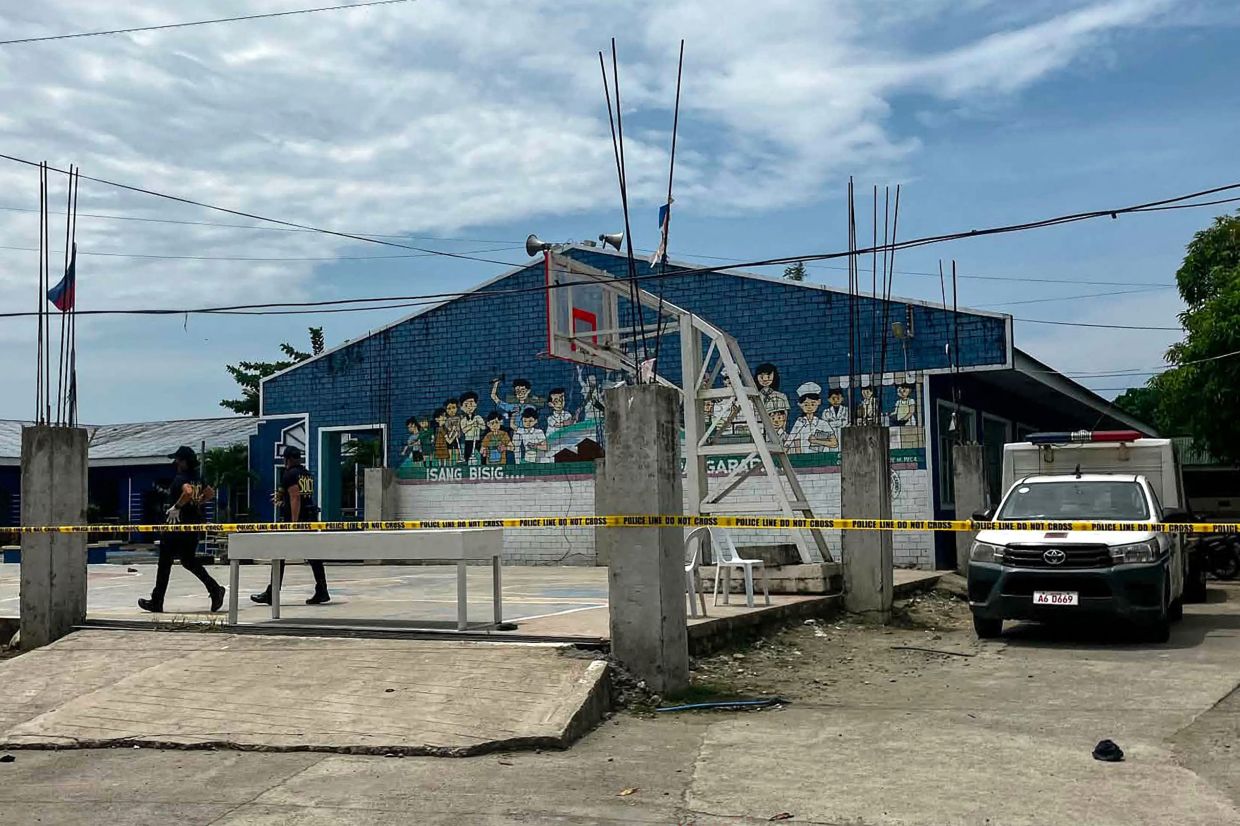
The Philippines reeled from a rare but devastating school shooting on Monday morning when two teenage students armed with handguns opened fire inside San Jose National High School in Tacloban city, a densely populated urban centre in the central region. The attack claimed three lives and wounded seven others, with most of the casualties being female students, according to regional police chief Brig. Gen. Jason Capoy. The two suspects, aged 14 and 15, were both arrested following the incident at the government-run school, which serves more than 1,500 students.
The assault unfolded during mid-morning hours when the school was in full session. According to police accounts, the suspects initially fired on students in one classroom before pursuing fleeing victims into a second room. Investigators recovered at least 40 shell casings scattered across the scene, underscoring the intensity of the gunfire. Video evidence captured by students hiding under desks shows the terror that gripped the campus, with audio recordings documenting screams, weeping, and gunshots ringing through hallways. Other footage depicts panicked students streaming from the school building, many clinging to one another as they fled the grounds.
One suspect remained on campus and was taken into custody by responding police officers. His accomplice managed to escape the school grounds initially but was discovered hiding in a nearby residential home after residents alerted authorities to his presence. The swift response prevented further tragedy, though the psychological toll on the student body and broader school community remains immeasurable. Students were recorded on their mobile phones calling their mothers and other family members, conveying the horror of the unfolding crisis.
The sourcing of the firearms reveals critical gaps in the security systems surrounding weapon management. The 14-year-old suspect obtained a 9mm pistol from an aunt who worked as a police officer, a revelation that has triggered an investigation into the officer's handling of her service weapon. The 15-year-old suspect carried a caliber 38 revolver. Security vulnerabilities at the school compound facilitated the introduction of these weapons onto campus; Capoy noted that only a single security guard was stationed to monitor multiple entrance and exit points, allowing the armed teenagers to slip through without detection.
In their initial police interrogations, both suspects cited bullying as a motive for the violence. They are close friends with no prior criminal records, suggesting that school-based conflicts may have festered beneath the surface before erupting in tragic fashion. Police have launched a comprehensive investigation to determine whether grievances escalated to the point of planning a coordinated attack. The investigation will likely examine communications between the two teenagers, their interactions with victims and other students, and the timeline of events leading up to Monday's shooting.
Philippine law will significantly constrain the criminal justice response to these young offenders. A 2006 statute establishes fifteen as the minimum age for criminal liability, meaning the 14-year-old suspect cannot be prosecuted in the ordinary criminal system regardless of the severity of the crime. The 15-year-old may face charges only if authorities determine that the teenager possessed full awareness of the criminal nature of the act and understood its legal consequences. Both minors will ultimately be transferred to government welfare officers overseeing juvenile cases rather than the conventional court system.
The incident prompted an immediate response from the highest levels of government. President Ferdinand Marcos Jr. ordered a comprehensive investigation into the shooting and instructed law enforcement to heighten security protocols across all schools, workplaces, and public gathering spaces nationwide. Communications Undersecretary Claire Castro conveyed the president's emotional reaction to the tragedy, acknowledging the grief and terror experienced by the victims' families and broader society. The presidential directive signals concern that the incident may represent a harbinger of broader security challenges.
School shootings remain statistically uncommon in the Philippines despite the nation's well-documented struggle with firearm-related violence. The country contends with widespread proliferation of unregistered and illegally modified weapons, contributing to elevated rates of armed crime across urban and rural areas. However, mass shooting incidents at educational institutions have not emerged as a recurring pattern, making Monday's attack particularly shocking to a public accustomed to different categories of criminal violence. The rarity of such incidents may partly reflect lower rates of school firearm access compared to some other nations, though the events in Tacloban underscore that determined teenagers with family connections to law enforcement can circumvent such barriers.
The most recent comparable incident occurred in 2022 when a gunman opened fire at an upscale university in the Manila metropolitan area preceding a graduation ceremony. That attack killed a retired municipal mayor with whom the shooter maintained a longstanding dispute, along with two additional victims. The perpetrator was apprehended, and that case proceeded through the criminal justice system. The intervening years between that university shooting and Monday's high school attack suggest that institutional and social factors preventing frequent recurrence of such violence remain partially in place, though clearly insufficient.
The security implications for Philippine schools extend beyond Tacloban. Educational administrators nationwide must now confront uncomfortable questions about campus access protocols, visitor screening procedures, and coordination between school security personnel and local law enforcement. The reliance on minimal security staffing at San Jose National High School—a facility serving over 1,500 adolescents—will likely face scrutiny from parents and education officials. Broader questions about firearm storage practices among law enforcement families, access to weapons by teenagers, and early warning systems for identifying at-risk youth will dominate subsequent policy discussions.
The psychological recovery of the surviving school community will require sustained intervention from counsellors, mental health professionals, and supportive institutions. Classrooms where violence erupted, hallways where students fled in panic, and the entire campus geography have been traumatized by the event. Teachers and administrators must navigate the delicate balance between returning to normal operations and acknowledging the profound disruption that occurred. Parents of students at San Jose National High School now face decisions about whether their children feel safe returning to the campus.
National police authorities have called for public cooperation with ongoing investigative efforts, urging citizens to provide any information that might illuminate the circumstances surrounding the shooting. The broader investigation will likely examine whether additional individuals possessed knowledge of the planned attack, whether any social media communications or other digital evidence reveals planning activities, and what specific bullying incidents may have motivated the suspects. Understanding these factors could inform prevention strategies for detecting and intervening with at-risk adolescents before violence occurs.
The incident underscores persistent challenges in Philippine society regarding firearm security, school safety, mental health support for adolescents experiencing social difficulties, and the mechanisms through which teenagers access weapons despite legal prohibitions. While the nation has not experienced the epidemic of school shootings documented in some other countries, Monday's tragedy demonstrates that the necessary conditions for such violence exist and can manifest suddenly. The coming weeks will determine whether this incident catalyzes meaningful security and policy reforms or recedes into memory without lasting institutional change.