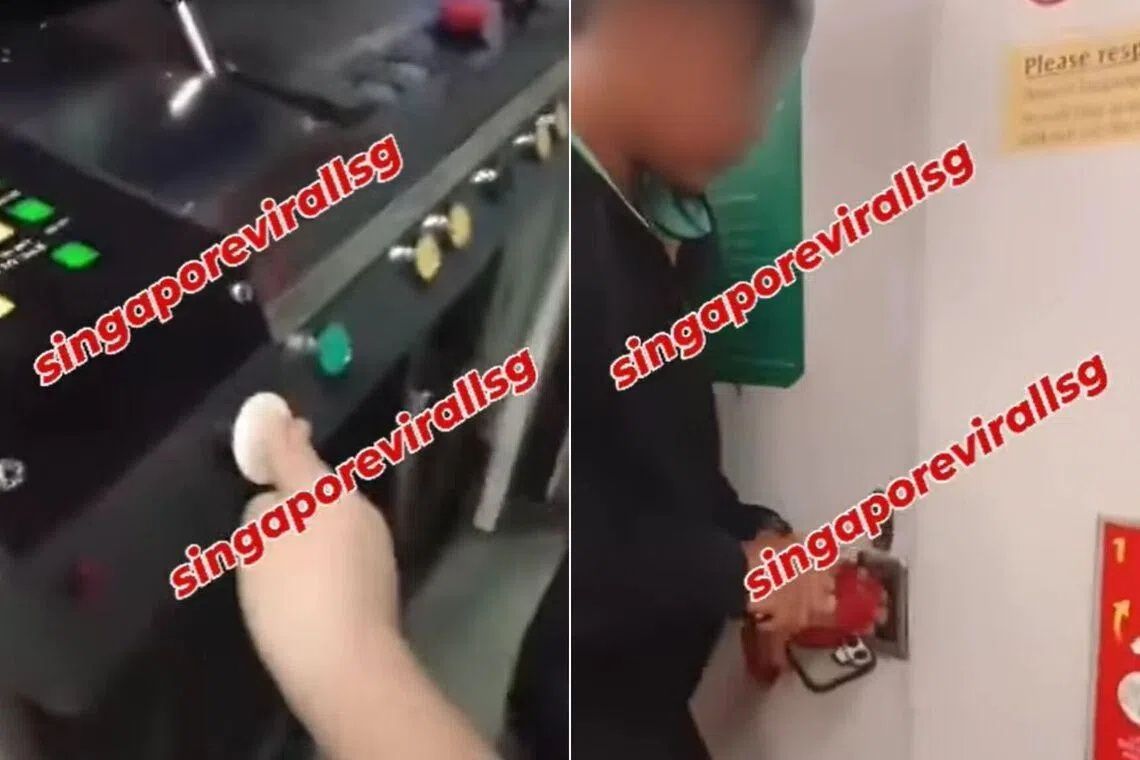
Two pre-teenage boys who forcibly entered a restricted cabin aboard a Singapore MRT train in February have avoided prosecution, receiving conditional warnings instead after police and the Attorney-General's Chambers determined that formal charges were not warranted. The February 21 incident on the North-South Line has since become a viral internet sensation, with video evidence spreading across social media platforms and garnering substantial public attention months after the unauthorised access occurred.
The pair, aged 11 and 12, managed to pry open the cabin partition door using a tool before venturing into the off-limits operational area. Once inside the restricted space, they repeatedly pressed what appeared to be a white button, actions captured clearly on video and subsequently shared widely online. The button press activated an onboard alarm, immediately alerting the train captain operating from the front cabin to the breach. SMRT's Operations Control Centre, which coordinates daily rail operations across the network, was notified of the incident, triggering a coordinated response from station staff at the next stop.
The viral video, posted on the singaporevirallsg Instagram account, accumulated more than 281,000 views and nearly 140 comments within weeks, and was reposted over 200 times across various social media platforms. The extensive online circulation demonstrates how incidents involving children and potential safety risks can rapidly capture public interest and spread beyond traditional news channels. The delayed media attention—with official responses coming months after the actual incident—reflects how social media virality often forces authorities to publicly address situations that might otherwise remain administrative matters.
According to SMRT Trains president Lam Sheau Kai, the train captain's immediate notification of the control centre enabled swift intervention. Staff stationed at the subsequent station were dispatched to investigate, and a formal police report was lodged the same day. Crucially, closed-circuit television footage captured the entire sequence of events, providing law enforcement with clear documentation of the boys' actions and identities. The two boys alighted at the next station, ensuring they could be identified and located for questioning.
Singapore's police force confirmed they had received the report on February 21 and subsequently completed their investigation. In their response to media queries, officers stated that the two boys were issued conditional warnings under the Rapid Transit System Regulations, a regulatory framework governing conduct on the public rail network. The decision to issue warnings rather than pursue prosecution reflects a nuanced approach to juvenile offences, particularly when deliberating between accountability and proportionality.
The choice not to prosecute followed careful consultation between the police and Singapore's Attorney-General's Chambers, the constitutional office responsible for all prosecutorial decisions in the country. The AGC reviewed the police investigation findings and the circumstances surrounding the incident before concluding that conditional warnings represented the appropriate outcome. This regulatory mechanism allows authorities to formally address misconduct while providing young offenders an opportunity to correct their behaviour without a permanent criminal record, an approach increasingly recognised across jurisdictions as beneficial for juveniles.
LAM's formal statement underscored the seriousness with which SMRT regards any breach of restricted areas aboard its trains. He emphasised that unauthorised access to operational cabins and restricted zones creates genuine safety hazards and security vulnerabilities that extend beyond the immediate risk to the trespassing individuals. Such incidents can compromise train operations and affect thousands of commuters relying on punctual, reliable service. The statement reflected institutional concern about copycat behaviour, particularly given the video's viral circulation among younger audiences who might be tempted to replicate the act.
The incident raises broader questions about railway security, juvenile behaviour online, and the relationship between viral content and public safety. For Malaysian readers and broader Southeast Asian contexts, this case illustrates how modern social media can amplify relatively isolated incidents into widespread phenomena, potentially influencing other children to engage in similarly dangerous behaviour. The restricted cabin of an MRT train contains sensitive operational equipment, and unauthorised access poses legitimate risks beyond simple trespassing.
Singapore's response—combining investigation, parental involvement through conditional warnings, and public explanation of safety concerns—demonstrates a measured approach that acknowledges both the seriousness of the breach and the age of those involved. The decision to avoid prosecution while still issuing formal warnings sends a clear message about accountability without imposing lasting legal consequences on minors whose judgment remains developmentally incomplete. However, the case also highlights the need for ongoing railway safety education among younger passengers and the responsibility of social media users in amplifying content that might inadvertently encourage imitation.
For the broader Southeast Asian region, where rapid urban development has led to expanded rapid transit networks in major cities including Kuala Lumpur, Bangkok, and Manila, this incident serves as a cautionary example of how security protocols must balance accessibility with protection of restricted areas. Parents and educators throughout the region might use this case as a teaching moment about the dangers of trespassing in operational railway environments and the potential consequences of virally sharing content that showcases rule-breaking, even among peers.

