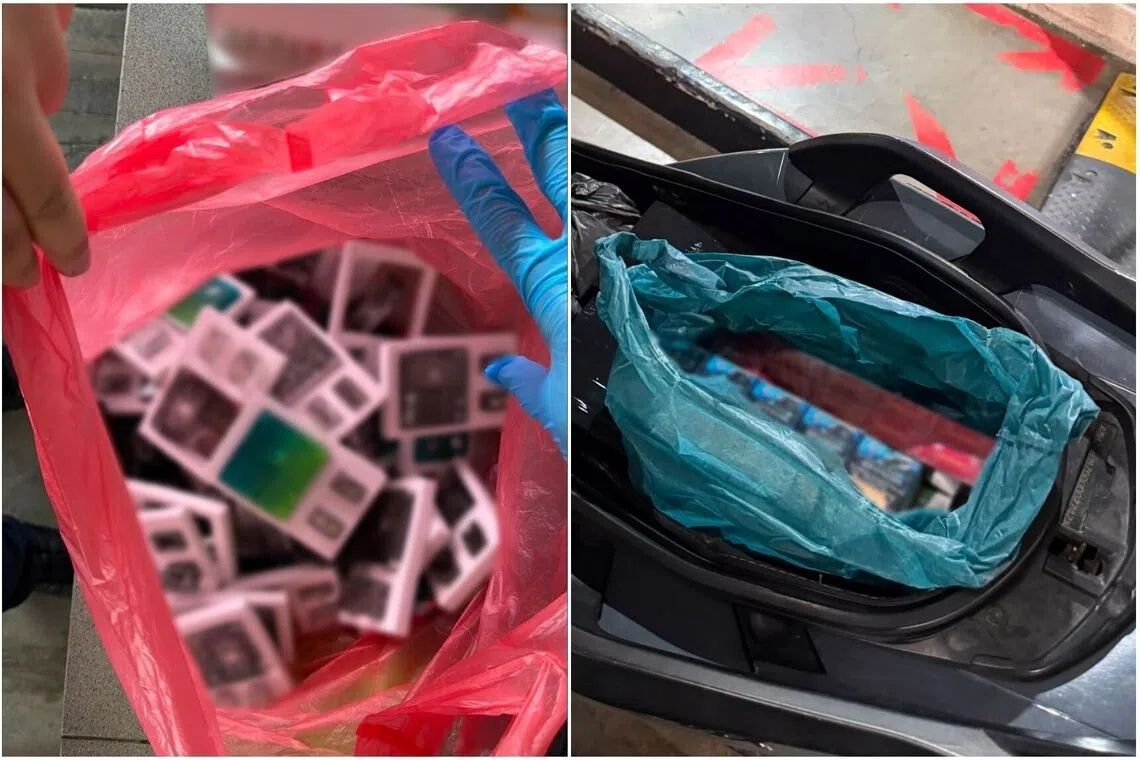
Singapore's Immigration and Checkpoints Authority has arrested two men caught attempting to smuggle duty-unpaid cigarettes and vaping devices into the island via motorcycle over consecutive days in early August. The arrests underscore ongoing enforcement challenges at one of Southeast Asia's busiest land borders, where officers regularly intercept contraband moving between Malaysia and Singapore across the Causeway.
The first incident occurred on August 3 when ICA officers conducting routine enhanced screening of a Malaysia-registered motorcycle discovered over 30 packets of duty-unpaid cigarettes concealed within the vehicle's storage compartment. Officers also recovered more than 60 vaping devices and associated components from the same location. The haul demonstrated the sophisticated concealment methods smugglers employ to evade detection at checkpoints processing thousands of vehicles daily.
Just 24 hours later, on August 4, authorities apprehended a second offender operating a Singapore-registered motorcycle attempting to transport contraband through the same checkpoint. This seizure yielded 25 full cartons and an additional 30 packets of duty-unpaid cigarettes, alongside more than 60 vaping products strategically hidden beneath the motorcycle's seat and storage box. The back-to-back incidents highlight a persistent smuggling pattern targeting Singapore's strict tobacco and nicotine regulations.
The arrested individuals—a 46-year-old Malaysian national and a 51-year-old Singaporean resident—have been handed to Singapore Customs and the Health Sciences Authority for further investigation. The coordination between border enforcement agencies and downstream investigators reflects Singapore's multi-layered approach to combating illicit trade in controlled substances, a challenge that extends across the broader region where duty differentials and regulatory disparities create commercial incentives for cross-border smuggling operations.
For Malaysian readers, these arrests illustrate how enforcement mechanisms at the Singapore border directly impact cross-border commerce and traveller behaviour. The confiscations represent significant economic value in contraband—estimates suggest illicit cigarette markets across Southeast Asia represent billions in lost tax revenue annually. The targeting of motorcyclists specifically reflects enforcement intelligence suggesting two-wheelers offer smugglers advantages in speed and manoeuvrability compared to larger vehicles, though increased checkpoint scrutiny has made this route progressively riskier.
Singapore's stance on vaping remains among the world's strictest. Unlike many nations where vaping occupies a regulatory grey zone, Singapore has classified all vaping products as illegal substances. This blanket prohibition transforms any possession or sale into a criminal matter rather than a regulatory infringement, creating a stark contrast with neighbouring jurisdictions where vaping remains either legal or lightly regulated. Consequently, Singapore represents a high-risk destination for contraband vaping devices originating from Malaysia and other regional suppliers.
The legal consequences facing the accused reflect Singapore's hardline approach. Those convicted of cigarette smuggling face fines up to 40 times the evaded duty and tax amount, imprisonment for up to six years, or both penalties combined. The forfeiture of vehicles used in smuggling operations imposes additional financial deterrence beyond criminal sanctions. For vaping-related offences, the penalty structure escalates substantially—sellers confront fines reaching $200,000 and six-year sentences, while smugglers face maximum fines of $300,000 and nine years imprisonment. Foreign nationals caught repeatedly with vapes face revocation of entry passes and permanent re-entry bans.
These severe penalties reflect Singapore's broader public health strategy prioritising youth protection and maintaining strict consumer product controls. Government health agencies view vaping as a gateway nicotine addiction mechanism targeting younger demographics, motivating the comprehensive legal prohibition. However, the severity of penalties creates a legal environment where ordinary travellers carrying vaping devices face life-altering consequences, distinguishing Singapore's approach from more gradated enforcement models elsewhere in Asia.
The checkpoint interdictions raise questions about detection methodologies and smuggler adaptation patterns. Enhanced screening protocols—referenced in the ICA statement regarding the first incident—typically involve physical inspection, scanning technologies, and behavioural profiling. That officers successfully detected contraband in both cases suggests current checkpoint capabilities remain reasonably effective, though smugglers continuously innovate concealment techniques. The concentration of seizures within 24 hours may indicate either intensified enforcement periods or coordinated smuggling attempts where networks test checkpoint vulnerabilities.
For cross-border commuters and legitimate business operators, these arrests reinforce that enforcement intensity fluctuates at major checkpoints. While the Woodlands Checkpoint processes approximately 300,000 vehicles weekly, random enhanced screening means travellers cannot predict which journeys will involve intensive inspection. This creates compliance uncertainty even for legitimate passengers, potentially influencing travel patterns and commercial logistics routing decisions across the region.
The referral of cases to specialized authorities demonstrates Singapore's systematic approach differentiating between immigration enforcement and substantive criminal investigation. ICA's role terminates at checkpoint interdiction; downstream prosecution responsibility falls to agencies with jurisdiction over customs and health matters. This institutional separation ensures specialized expertise applies to each dimension of these contraband cases. For Malaysian authorities, these seizures provide intelligence about trafficking routes and methods potentially affecting domestic enforcement priorities, particularly regarding vape supply chains serving illicit markets across the region.

