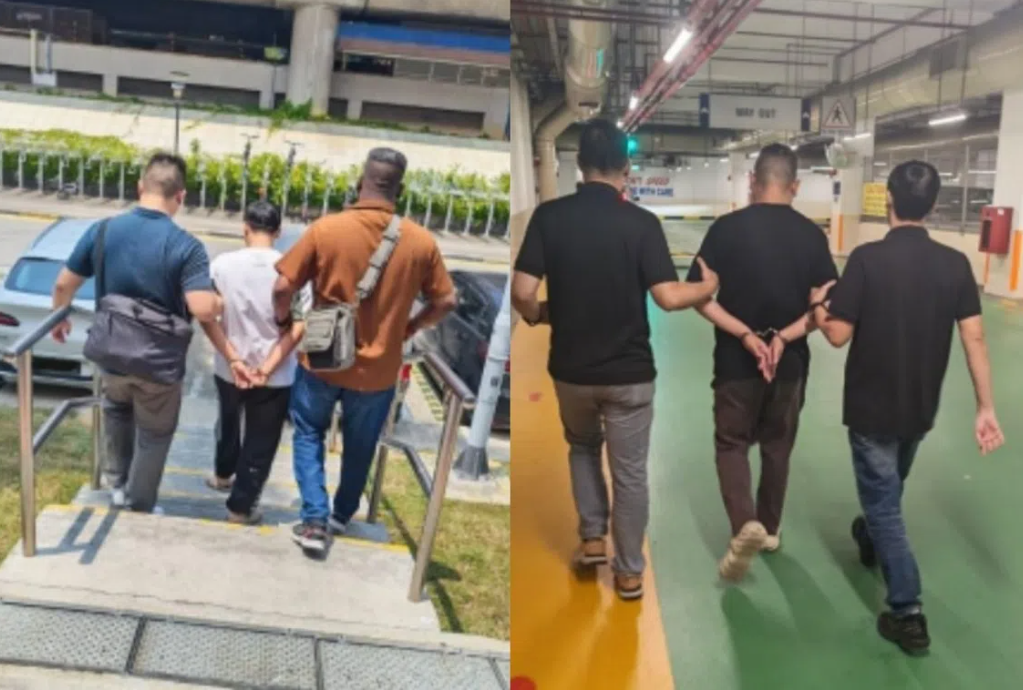
Singapore's police force has detained two Malaysian men employed at mobile phone retailers for their alleged role in a sophisticated identity fraud operation targeting digital payment accounts. The suspects, aged 25 and 47, were apprehended on Tuesday, August 25, as part of an investigation into a broader syndicate exploiting Singapore's national digital identity system to launder scam proceeds through fraudulent e-wallet registrations.
The pair is suspected of having systematically harvested Singpass login credentials from their customers without authorization, leveraging their proximity as shop assistants to gain access to sensitive authentication information. In at least one documented case, one suspect capitalized on a customer's request for assistance updating Singpass details while purchasing a SIM card, using that opportunity to surreptitiously establish a LiquidPay digital wallet account. This pattern of exploitation underscores how trusted commercial relationships can become vectors for organized fraud when employees prioritize financial gain over customer protection.
The digital wallet platform at the centre of the scheme, LiquidPay, operates as a payment and financial services application managed by Singapore-based fintech enterprise Liquid Group. The platform's integration with Singpass, Singapore's government authentication system, inadvertently created a vulnerability when account holders' credentials were compromised. The fraudulent accounts subsequently funnelled illicit earnings from various scam operations into these unauthorized wallets, making them difficult for legitimate account holders to trace or recover.
The investigation's scope reveals the scale of the criminal operation. Police discovered that more than 170 Singaporeans and foreign workers had their Singpass accounts implicated in suspicious activity linked to this syndicate. The perpetrators succeeded in establishing over 160 additional LiquidPay accounts by misusing these compromised credentials, meaning that for every legitimate Singpass account seized, the criminals created nearly one new fraudulent wallet. This multiplication effect demonstrates how a single point of vulnerability can cascade into hundreds of compromised accounts.
Financial damages attributed to this particular cell of the broader conspiracy amount to at least S$110,063. These funds originated from various scam schemes—potentially spanning romance fraud, investment schemes, or other common online deceptions—and flowed through the unauthorized LiquidPay accounts. Since March 2026, authorities have investigated at least 20 Singapore citizens and work permit holders for their involvement in registering the compromised LiquidPay accounts, indicating that the criminal network extends beyond the two arrested Malaysians to include local accomplices within Singapore.
The operation that led to these arrests represents coordinated effort between Singapore's Cyber Command division and the Singpass Trust & Safety team at the Government Technology Agency of Singapore. This inter-agency collaboration highlights how modern financial crimes require specialized expertise spanning cybersecurity, digital identity systems, and law enforcement. The partnership enabled investigators to trace patterns of account compromise back to specific points of origin and identify the Malaysian shop workers as key nodes in the criminal infrastructure.
The legal ramifications for the accused are substantial. Both men face charges related to assisting another person to retain benefits derived from criminal conduct, an offence carrying imprisonment of up to 10 years, a fine reaching S$500,000, or both. This charging approach targets their facilitating role in money laundering rather than the underlying scams themselves, though such auxiliary charges often prove easier to prosecute when direct evidence of scam perpetration remains diffuse across multiple jurisdictions.
Beyond the two arrested individuals, investigators are pursuing leads into a parallel category of potential offenders. Singaporean citizens and work permit holders who voluntarily shared their Singpass credentials with the syndicate face their own legal exposure. These account holders, whether motivated by financial desperation, coercion, or deception, could face charges carrying maximum penalties of three years' imprisonment and S$10,000 in fines. This distinction between those who had credentials stolen and those who willingly surrendered them reflects the investigation's recognition that some participants were passive victims while others were complicit accomplices.
For Malaysian readers, this incident carries particular resonance given that the two arrested individuals are nationals. The case underscores how organized crime networks increasingly exploit cross-border employment opportunities to conduct transnational fraud. Mobile phone retail positions, which naturally involve handling customer documentation and payment systems, provide ideal cover for identity theft operations. The arrests also highlight the vulnerability of Southeast Asian workers abroad who might be pressured or recruited into such schemes, sometimes without fully understanding the consequences of their actions under foreign legal systems.
The incident reveals structural vulnerabilities in how digital identity systems integrate with financial services across Singapore and the broader region. While Singpass itself is a robust authentication platform, its linkage with third-party fintech applications creates potential friction points where compromised credentials can generate significant damage. Similar vulnerabilities likely exist in Malaysia's digital identity infrastructure and those of other ASEAN nations, suggesting that this case may prompt regional governments to reassess how citizen authentication systems interface with financial technology providers.
Singapore's law enforcement response demonstrates the city-state's commitment to protecting its digital financial ecosystem from sophisticated syndicate operations. The involvement of Cyber Command officers and government technology agency specialists indicates that authorities view identity theft and scam-related money laundering as strategic threats warranting institutional resources. For the broader Southeast Asian business community, particularly those operating in retail and customer-facing sectors, the arrests serve as a reminder that employment vetting and internal security protocols remain essential safeguards against infiltration by criminal elements seeking to exploit legitimate commercial relationships.

