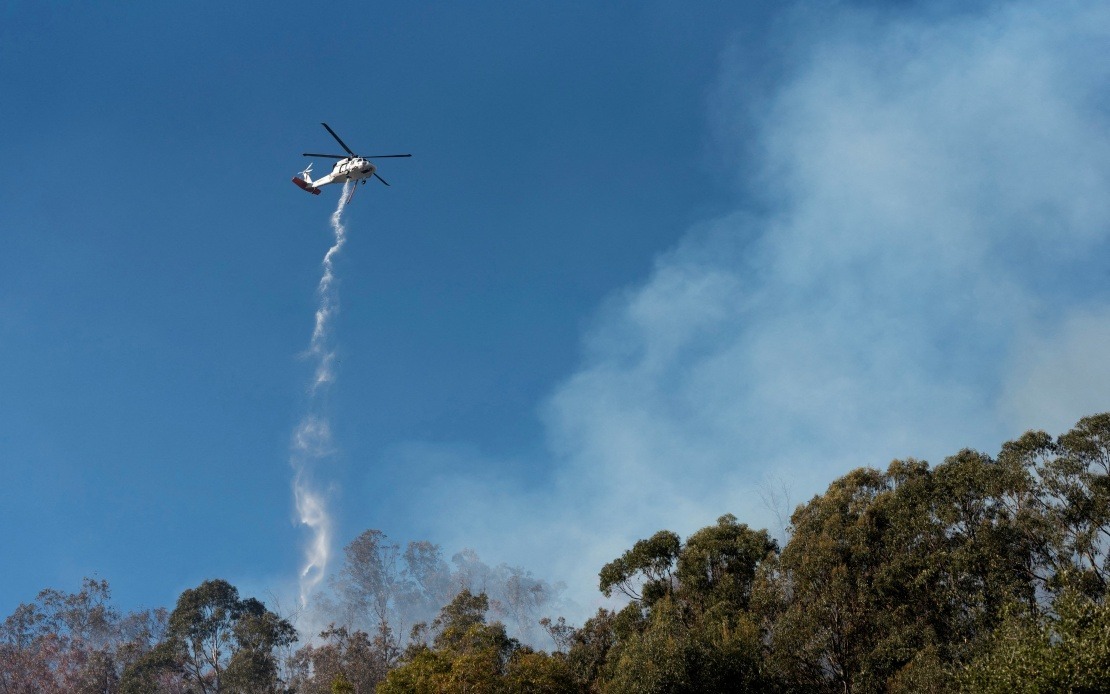
A helicopter supporting wildfire suppression efforts in central Utah has crashed, resulting in the deaths of two crew members, authorities confirmed on Saturday. The accident occurred on Friday morning near Richfield as personnel worked to contain the Widemouth 2 Fire, one of the state's most significant blazes this season. The National Interagency Fire Centre disclosed that the contracted aircraft, a Sikorsky S-64 operated under agreement with the US Forest Service, went down at approximately 10 am local time. Neither the pilot nor the additional crew member killed in the incident have been publicly identified at this stage.
The crash location presented immediate challenges for emergency responders tasked with accessing the wreckage and launching a comprehensive investigation. Authorities noted that the remote, mountainous terrain combined with active fire conditions severely hampered initial rescue and recovery efforts. The Federal Aviation Administration confirmed the aircraft type and general location, while the National Transportation Safety Board assumed lead investigative authority to determine the causes of the accident. Early assessments suggested the helicopter encountered unknown circumstances during active firefighting operations, though detailed findings remain pending from the formal investigation process.
Complicating the response further, the helicopter impact itself ignited additional flames in the surrounding area, expanding the immediate hazard zone and creating safety risks for personnel attempting to reach the crash site. Fire management officials acknowledged these dual threats—the original wildfire and newly ignited fires from the crash—required careful tactical decisions to protect responders while maintaining overall incident control. The combination of rugged geography, active fire behaviour, and wreckage hazards meant authorities prioritised systematic access over rushed rescue attempts.
Utah Governor Spencer Cox released a statement acknowledging the tragedy and emphasising the inherent dangers faced by wildland firefighting professionals. His remarks reflected broader recognition within state leadership that those engaged in fire suppression operations accept extraordinary risks to protect communities and property. Cox's message urged the public to provide investigators and emergency personnel with appropriate space and patience as the response progressed, a common appeal during complex incident investigations that require uninterrupted focus.
The Widemouth 2 Fire originated on July 27 following a lightning strike that ignited vegetation across the Fishlake National Forest near Kanosh, a modest community situated in central Utah's fire-prone region. The blaze expanded with considerable speed during a period characterised by severe drought conditions, elevated temperatures, and unpredictable wind patterns typical of late summer in the American West. The expanding fire zone prompted mandatory evacuations affecting multiple communities and resulted in documented property damage including at least six destroyed structures.
By the time of the helicopter crash, the Widemouth 2 Fire had consumed more than 114,000 acres—equivalent to approximately 461 square kilometres—according to data from Utah Fire Info, the interagency coordination resource for wildfire information across the state. Containment efforts had achieved roughly 24 percent control of the fire perimeter, indicating substantial ongoing work remained to fully suppress the incident. The scale of this fire positions it among Utah's most destructive events of the current year, reflecting both the severity of conditions and the magnitude of resources mobilised for suppression.
Helicopter operations represent a critical component of modern wildfire management in the United States. Aerial assets like the Sikorsky S-64 specialise in water and fire retardant delivery, reconnaissance missions, and emergency personnel transport to remote locations inaccessible by ground vehicles. These aircraft operate in some of the most challenging environments firefighters encounter, navigating rugged terrain, smoke-filled skies, and unpredictable wind conditions while carrying substantial loads. The loss of trained crews underscores the genuine occupational hazards embedded within this essential service.
For Malaysian and Southeast Asian observers, this incident resonates within the broader context of regional wildfire management and disaster response capabilities. While Malaysia's tropical climate differs significantly from the arid American West, the country faces its own seasonal fire challenges particularly during extended dry periods. The technological infrastructure and inter-agency coordination demonstrated in Utah's response—including rapid investigation protocols and transparent public communication—offer instructive models for enhancing regional preparedness. The tragedy also reflects the universal human costs associated with environmental management operations across diverse geographic contexts.
The investigation led by the National Transportation Safety Board will examine multiple potential factors contributing to the crash, including mechanical systems performance, weather conditions, pilot decision-making, and communication protocols. Such investigations typically require weeks or months to complete comprehensively, involving detailed reconstruction of the aircraft's final moments, examination of wreckage evidence, and analysis of communications records. The findings from this investigation will likely inform future operational procedures and safety protocols within the helicopter firefighting community nationally.
Wildland firefighting remains statistically among the most hazardous occupations in North America, with personnel facing risks ranging from burns and smoke inhalation to traumatic injuries from falling trees, explosions, and vehicle accidents. The addition of aerial operations adds further complexity and danger, as pilots and crew operate aircraft in marginal weather conditions over unfamiliar terrain while concentrating on mission-critical tasks. The death of helicopter crew represents a stark reminder of the human dimension underlying environmental crisis response and disaster management operations.

