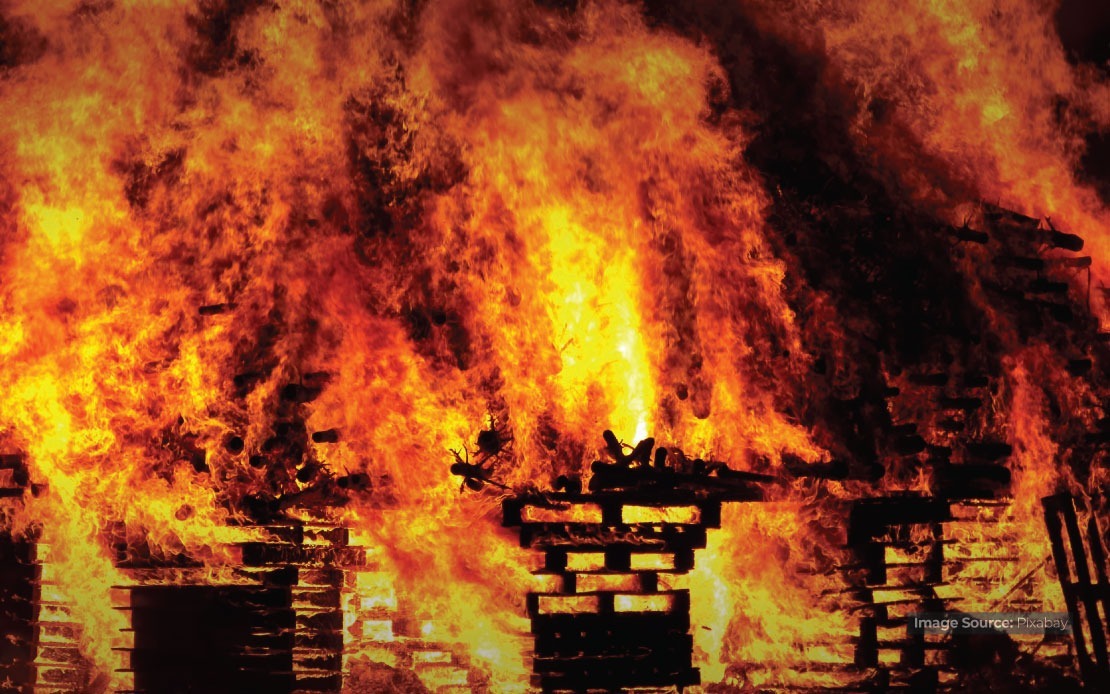
Two members of France's firefighting service have lost their lives while battling a significant blaze in the vicinity of Bordeaux Airport in southwestern France, French Interior Minister Laurent Nuñez disclosed to parliament in Paris on Tuesday. The fatal incident underscores the mounting dangers faced by emergency personnel responding to fires as western Europe grapples with escalating heat-related hazards and wildfire threats.
The firefighters died while combating a fire that engulfed two structures, according to statements made by Nuñez during parliamentary proceedings. The exact circumstances surrounding their deaths remain under investigation, though authorities have confirmed that both personnel were engaged in active firefighting operations when the tragedy occurred. Such incidents highlight the inherent risks that first responders face daily, particularly during periods of elevated fire danger.
According to regional media outlet Sud Ouest, the fire originated on land bordering the airport's long-term vehicle parking facility. The location adjacent to airport infrastructure suggests potential complications for emergency response efforts, as firefighting teams must balance containing the blaze with maintaining airport operations and ensuring public safety in an area where aviation activities overlap with emergency zones.
The Gironde region, administratively centered on the city of Bordeaux, is currently operating under France's most severe red-level wildfire alert designation. This heightened threat assessment reflects meteorological conditions that have created exceptional risks for uncontrolled fires spreading through forested areas throughout the region. The red alert status typically indicates that conditions favour rapid fire propagation and that resources are stretched across multiple simultaneous incidents.
Bordeaux Airport experienced partial operational disruption as a direct consequence of the emergency. Outbound flights faced temporary suspension of departures while the fire service managed the situation, though the airport maintained its capacity to accept arriving aircraft. This measured approach allowed the facility to continue receiving flights while preventing additional aircraft from becoming trapped on the tarmac during the emergency response phase. An evening departure bound for Munich proceeded as originally scheduled, demonstrating the airport's ability to resume limited operations relatively swiftly.
The firefighting effort involved a collaborative response structure encompassing multiple agencies. Beyond the primary local fire service, Bordeaux Airport's dedicated on-site firefighting unit participated in suppression efforts. Such integrated approaches leverage specialized resources stationed at major transportation hubs, which are trained specifically for incidents occurring within airport boundaries and understand the unique operational constraints of airport environments.
To enhance containment capacity, authorities deployed a specialized firefighting aircraft to assist ground crews. These aerial assets, equipped with water-dropping or fire retardant capabilities, provide critical support during large-scale incidents by attacking fires from above and creating defensive perimeters that complement ground-based suppression efforts. The deployment of such resources indicates the scale and severity of the incident.
Visible manifestations of the emergency extended across considerable distances. Massive plumes of smoke rose from the fire site and remained visible from Bordeaux city itself, several kilometres distant. Such visible smoke columns often serve as indicators of fire intensity and can be seen by residents across broader regions, creating widespread public awareness of the emergency and potentially triggering additional emergency service activations from concerned citizens.
The incident represents a tragic reminder of occupational hazards within France's emergency response sector. Firefighting remains among the most dangerous professions, combining exposure to extreme heat, structural collapse risks, toxic fumes, and unpredictable fire behaviour. For Malaysian readers familiar with tropical fire seasons and emergency service operations, the incident resonates with Southeast Asian experiences of seasonal fire emergencies that regularly claim first responder lives across the region. France's experience managing infrastructure-adjacent fires amid heightened wildfire alert periods offers relevant precedents for airport and transportation hub emergency planning throughout Asia-Pacific regions facing similar climatic pressures and infrastructure vulnerabilities.

