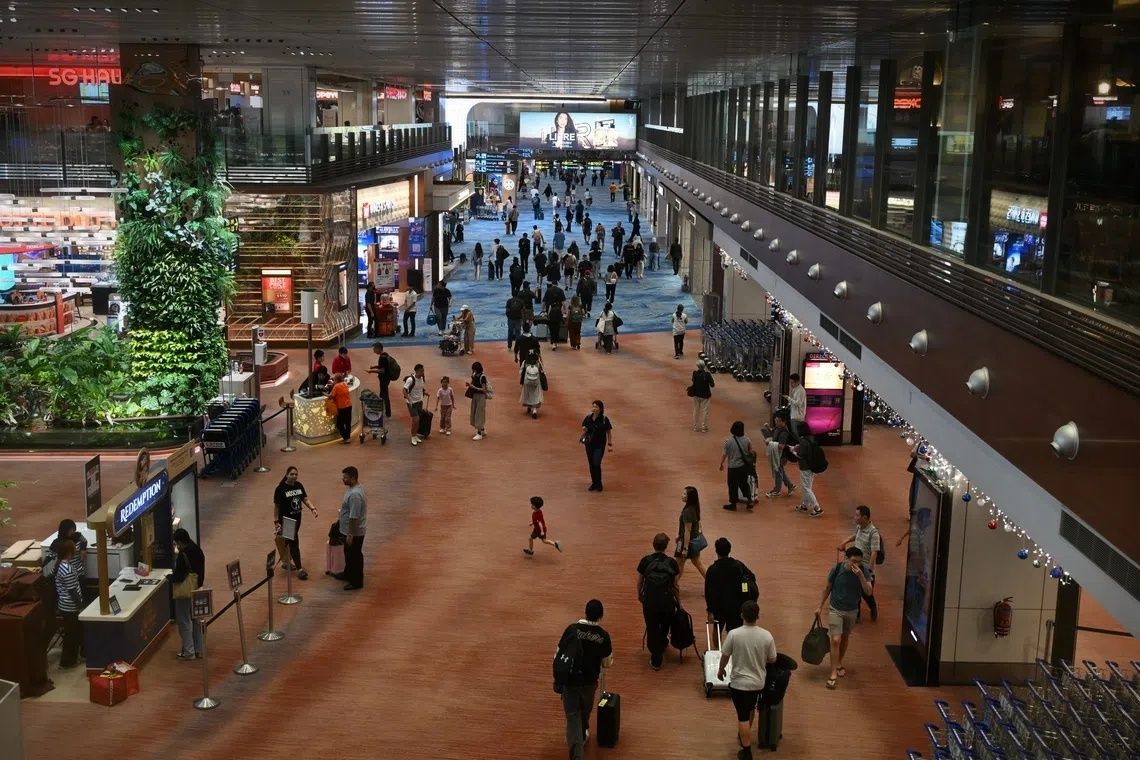
Authorities in Singapore have made arrests in two separate perfume theft cases at Changi Airport, highlighting the persistent challenge of retail crime at the island's major aviation hub. A 37-year-old Australian man and a 50-year-old American man face court charges on August 17 after being caught in incidents that occurred months apart, demonstrating how modern surveillance technology continues to catch offenders long after they believe they have evaded detection.
The first incident unfolded in November 2025 when a retail worker at a store in the transit area of Changi Airport Terminal 2 discovered two boxes of perfume missing from a display shelf. Upon reviewing security footage, investigators identified a man removing the fragrances—valued at approximately $430—at 4:50 pm without payment. The suspect departed Singapore before officers could act, seemingly vanishing into the international travel stream. However, the case remained active on police records, and persistence paid dividends when the Australian man returned to transit through Changi Airport eight months later on August 4, at which point he was immediately taken into custody.
The second case progressed with considerably greater urgency. In the early hours of August 5, staff at a perfume retailer in the Terminal 1 transit zone noticed missing merchandise and reported the theft. CCTV footage captured the American suspect taking a box of perfume valued at more than $310 around 12:40 am without completing a transaction. Unlike his Australian counterpart, this individual did not manage to leave the airport undetected—police officers successfully apprehended him before he could board his flight, preventing his escape and enabling immediate action.
What began as what appeared to be a single theft quickly escalated in severity as investigators reviewed additional security recordings. The American man's activities that evening proved far more extensive than initially apparent. Beyond the perfume taken from the first store, further examination of footage revealed he had also stolen a box of fragrances worth approximately $170 and a perfume tester bottle valued at more than $230 from two additional retail outlets within the transit area. The cumulative value of his alleged thefts exceeded $717, with all items subsequently recovered by authorities. This pattern of targeting multiple retailers during a single visit suggests either brazen opportunism or a deliberate shopping expedition focused on acquiring high-value merchandise without payment.
The charges that both men face carry substantial legal consequences under Singapore's criminal code. The offence of theft in dwelling—which applies to theft committed within any building or residence, including airport retail spaces—carries potential penalties of up to seven years imprisonment, monetary fines, or both. This severity reflects Singapore's stringent approach to property crime and its particular concern about maintaining security and order at critical infrastructure facilities like Changi Airport, which processes millions of passengers annually and serves as a crucial economic asset for the nation.
From a law enforcement perspective, these arrests underscore the evolving landscape of airport security and retail crime prevention. The eight-month interval between the Australian man's initial theft and his arrest illustrates a critical point: modern travel patterns mean that suspects may circle back to the same location, sometimes years later, presenting repeat opportunities for detection. This reality has prompted airports globally to maintain comprehensive digital records and share information across international law enforcement networks. For transit hubs in Southeast Asia—including Kuala Lumpur International Airport and Changi—the implications are significant. Criminal networks may target these facilities because of high passenger volumes and valuable duty-free merchandise, yet the same surveillance infrastructure that makes these airports attractive to retailers also creates comprehensive accountability mechanisms.
ACP M. Malathi's public statement on August 16 framed these arrests within a broader strategy of retail crime deterrence. The officer emphasized that police take shop theft with utmost seriousness and that offenders will face prosecution regardless of initial success in evading immediate detection. Critically, he highlighted how advances in closed-circuit television technology and its extensive deployment by retailers have fundamentally altered the risk calculus for would-be thieves. Unlike decades past, when poor image quality or limited camera coverage might have allowed shoplifters to disappear, contemporary systems capture high-definition footage that enables identification and prosecution long after the fact.
Malathi's comments carried an implicit warning directed at the travelling public and criminal elements alike: the perception of getting away with airport theft is increasingly illusory. Even when offenders manage to leave a jurisdiction, investigations persist, international databases are consulted, and subsequent border crossings—whether at airports, sea ports, or land crossings—generate opportunities for apprehension. For frequent international travellers, the message is particularly relevant: every movement through an airport leaves a digital trail that law enforcement can exploit if criminal activity has occurred.
The partnership between Changi Airport's dedicated police unit and retailers represents a standard model now adopted across Southeast Asia's major aviation hubs. These collaborations involve real-time communication about suspicious activity, shared access to surveillance systems, and coordinated training on loss prevention. For Malaysian readers and businesses, the approach offers valuable lessons as domestic airports and shopping centres grapple with similar challenges. The integration of security forces directly into commercial spaces, rather than maintaining them as purely external observers, has proven effective in reducing both theft and the deterrence value it provides.
Looking forward, these cases highlight why airport operators and retail stakeholders in the region must continue investing in security infrastructure despite the significant capital costs involved. The fact that the Australian suspect was ultimately apprehended validates years of surveillance investment and demonstrates that technological solutions, when properly maintained and staffed, function as effective crime prevention tools. For Changi Airport, which faces intense competition from regional alternatives including Kuala Lumpur International Airport, maintaining a reputation for security and order is essential for attracting premium retailers and passenger confidence.
The broader implications for Southeast Asian aviation extend beyond individual criminal cases. As the region experiences rapid growth in passenger traffic and increasingly sophisticated retail offerings at airports, organised retail crime becomes an emerging concern. Duty-free perfumes, cosmetics, and luxury goods represent attractive targets precisely because they are legal to purchase but valuable enough to justify theft and smuggling. The cooperation between Singapore's police and airport management in addressing these challenges offers a template for other regional authorities to consider as they upgrade their own security frameworks and retail crime prevention strategies.

