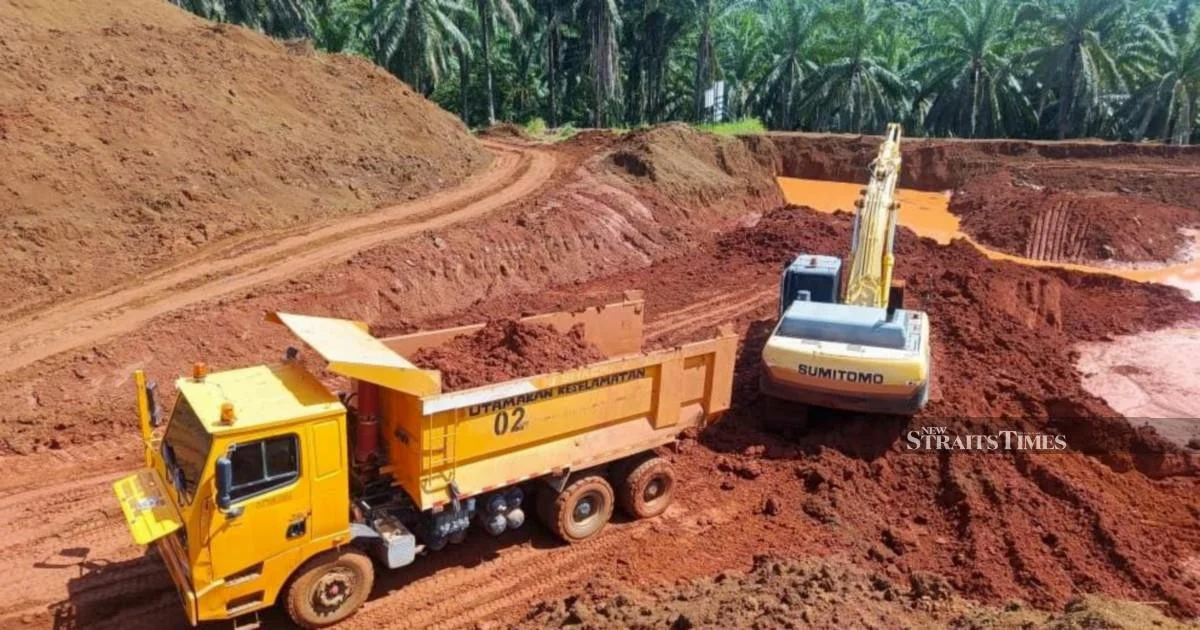
Authorities in Terengganu have moved to crack down on illegal mining operations after apprehending two men suspected of involvement in the unauthorised transfer and processing of silica sand in Marang. The arrests, made yesterday, represent another enforcement action against unregulated extraction activities that have increasingly concerned state officials and environmental watchdogs across Malaysia's east coast.
The confiscation of machinery valued at RM1.8 million underscores the scale of industrial operations being conducted outside regulatory frameworks. Such equipment seizures often indicate well-organised ventures rather than isolated incidents, suggesting a network of suppliers, processors, and distributors operating with coordination and financial backing. The significant asset value implies the suspects may have invested substantially in establishing their production capacity.
Silica sand represents a commercially valuable commodity across Southeast Asia, with applications spanning construction, glass manufacturing, foundry operations, and semiconductor production. Malaysia's demand for high-quality silica sand has grown alongside its expansion in industrial manufacturing and construction sectors. This economic demand creates persistent incentives for operators to bypass licensing requirements, as regulated extraction typically involves higher compliance costs and stricter environmental monitoring.
The Marang district, situated in Terengganu on the east coast, has historically experienced pressure from mining and quarrying activities. The district's geological composition makes it attractive for extraction operations, but this advantage has also rendered it vulnerable to illicit mining ventures seeking to capitalise on proximity to major transport corridors and industrial customers. Previous enforcement actions in the region have documented the presence of sophisticated extraction networks exploiting regulatory gaps.
Illegal mining operations in Malaysia have emerged as a persistent challenge for environmental and resource management authorities. These activities frequently occur in environmentally sensitive areas, disrupting ecosystems, contaminating water sources, and degrading agricultural land. The absence of environmental impact assessments and restoration protocols means communities often absorb the long-term costs of landscape degradation and resource depletion.
The enforcement action reflects broader governmental efforts to strengthen oversight of natural resource extraction across Malaysian states. Coordinated operations between federal and state-level agencies have intensified, particularly following high-profile cases demonstrating the environmental and economic consequences of unregulated mining. Terengganu authorities have prioritised compliance monitoring in recent years as part of wider sustainability initiatives.
From an economic perspective, illegal operations distort market competition by circumventing licensing fees, environmental compliance costs, and taxation obligations. Legitimate quarrying and mining enterprises operating within regulatory frameworks thus face unfair competition from unlicensed operators, creating market conditions that incentivise regulatory non-compliance. This dynamic particularly affects smaller licensed operators struggling to compete on price.
The arrested individuals will face investigation and prosecution under relevant mining and environmental legislation. Malaysia's regulatory framework includes provisions governing mineral extraction, with specific protocols for silica sand operations. These legal instruments establish licensing requirements, environmental impact standards, and restoration obligations designed to balance resource development with environmental protection.
The case highlights the continuing challenge of monitoring Malaysia's vast territorial areas and enforcing regulations across multiple jurisdictions. Despite technological advances in surveillance and satellite monitoring, detecting illicit extraction activities remains resource-intensive. Coordination between federal agencies such as the Department of Environment and state authorities remains essential for effective enforcement across the country.
Stakeholders in the natural resources and construction sectors will view this operation as a signal regarding government commitment to compliance enforcement. Legitimate mining businesses seeking to maintain market credibility increasingly recognise that regulatory compliance—while costlier—provides competitive advantages through market confidence and reduced operational risks. Industry observers anticipate continued enforcement prioritisation across mining-intensive states.
The seizure of substantial equipment values serves as a deterrent to potential operators considering illegal ventures. Asset forfeiture policies in Malaysia's mining enforcement regime target the financial viability of illicit operations, making continued illegal activity financially prohibitive. However, enforcement alone cannot address root causes driving operators toward regulatory non-compliance, suggesting complementary policy approaches addressing licensing accessibility and cost structures may be necessary.
For Malaysian and Southeast Asian readers, this development underscores the ongoing tension between resource development pressures and environmental governance. As regional demand for construction materials and industrial inputs continues expanding, maintaining effective oversight of extraction activities becomes increasingly critical. The Terengganu operation demonstrates that enforcement mechanisms remain active, though their sustainability and comprehensiveness depend on continued resource allocation and inter-agency cooperation.

