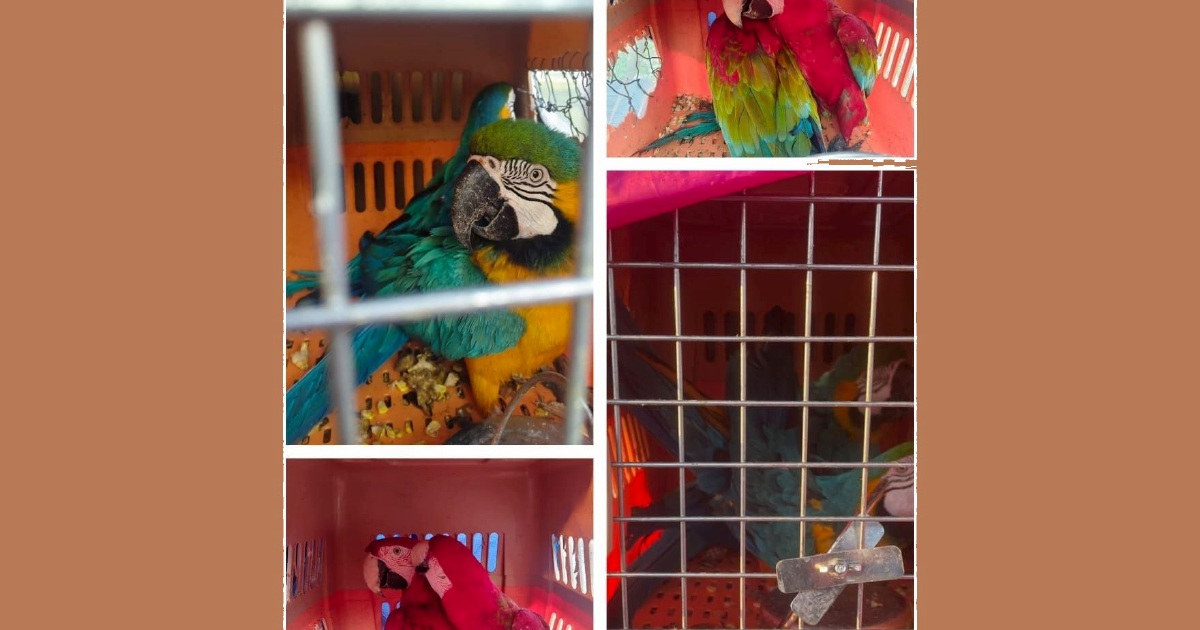
A major wildlife smuggling operation unravelled in Kelantan yesterday when authorities intercepted two companions transporting eight macaws along Jalan Bandar Tumpat in Tumpat. The birds, all legally protected species, were valued at approximately RM400,000 on the illegal trade market. The apprehension marks another significant enforcement success in the state's ongoing battle against animal trafficking networks that threaten both local ecosystems and Malaysia's international conservation reputation.
The seized macaws represent a considerable portion of the illicit exotic bird trade that persists across Southeast Asia despite strengthened border controls and wildlife protection laws. These colourful, intelligent birds command premium prices in black markets, particularly among private collectors willing to circumvent legal acquisition channels. The RM400,000 valuation underscores why criminal syndicates continue targeting Malaysia's ports and land borders as transit points for smuggled fauna destined for regional and international buyers.
Macaw trafficking operates within a broader context of Southeast Asian wildlife crime that extends well beyond Malaysia's borders. The birds originate primarily from Central and South America, yet they frequently pass through Malaysian networks en route to wealthy buyers in China, Thailand, and the Middle East. This trafficking chain intersects with legitimate pet trade infrastructure, creating enforcement complexities that authorities must navigate. The operation in Tumpat suggests that smugglers view Kelantan as a viable smuggling corridor, possibly exploiting less intensive scrutiny on certain routes compared to major ports.
Protected macaw species face extinction threats in their native habitats due to deforestation and the illegal pet trade. International regulations through the Convention on International Trade in Endangered Species (CITES) classify most macaw species within restricted appendices, meaning cross-border movement is heavily regulated. Malaysia, as a signatory nation, commits to preventing illegal wildlife commerce within its territory. Yet cases like this indicate that enforcement remains reactive rather than preventative, with authorities discovering contraband during transport rather than preventing it from entering the country initially.
The arrest of two companions raises questions about the operational scale of this particular trafficking network. Two-person transport operations typically suggest smaller independent smugglers rather than major organised crime syndicates, though they may function as distributors within larger supply chains. Local gang members or migrant workers sometimes serve as low-level couriers, accepting minimal compensation while bearing disproportionate legal risk. The friendship between the two detainees may indicate either personal criminal partnership or coerced participation through debt or intimidation arrangements common in human trafficking networks.
Kelantan's location on Malaysia's east coast positions it strategically for both maritime and overland smuggling operations. The state borders Thailand to the north, creating cross-border vulnerability compounded by porous informal entry points. Wildlife trafficking networks exploit these geographic advantages, moving contraband through less-monitored routes away from heavily policed federal highways. Yesterday's seizure demonstrates that authorities maintain presence along major roads, yet the persistence of such incidents suggests detection rates remain low relative to overall smuggling volumes.
The legal consequences facing the two men will likely include charges under the Wildlife Protection Ordinance 1972, which carries penalties including imprisonment and substantial fines. However, prosecuting smugglers without dismantling supply networks creates minimal deterrent effects. The two arrested individuals represent replaceable operatives within trafficking infrastructure that continues functioning despite individual prosecutions. Enforcement strategies must therefore evolve toward investigating supplier networks and buyer networks simultaneously, rather than focusing exclusively on intercepted contraband.
The seized macaws now face uncertain futures. Malaysia's wildlife rehabilitation centres lack specialised facilities for caring for tropical parrot species accustomed to South American climates and dietary requirements. Options include transfer to international zoos or sanctuaries through diplomatic arrangements, release attempts that carry low survival probabilities, or maintaining captive populations. This practical challenge reflects broader difficulties in managing wildlife crimes—even successful seizures create resource-intensive obligations for already-stretched conservation authorities.
This operation coincides with increased international attention toward environmental crime's links to organised trafficking networks. The UN has designated wildlife crime as a major organised crime category alongside human and drug trafficking. Malaysia's enforcement agencies increasingly recognise that wildlife smuggling operates within professional criminal ecosystems rather than existing as isolated incidents. Cooperation between Kelantan authorities, federal wildlife agencies, and customs enforcement demonstrates improved coordination, yet intelligence-sharing gaps persist between agencies and neighbouring countries.
Market dynamics fundamentally drive wildlife trafficking persistence. As long as wealthy buyers willingly pay RM400,000 for rare macaws, smuggling networks will view the risk-reward calculation as favourable. Addressing demand through public awareness about conservation consequences and legal acquisition alternatives remains underdeveloped in Malaysia. Education initiatives targeting middle and upper-class consumers, combined with stricter penalties for buyers rather than couriers, could reduce trafficking incentives more effectively than intercepting transport after purchases have already been arranged.

