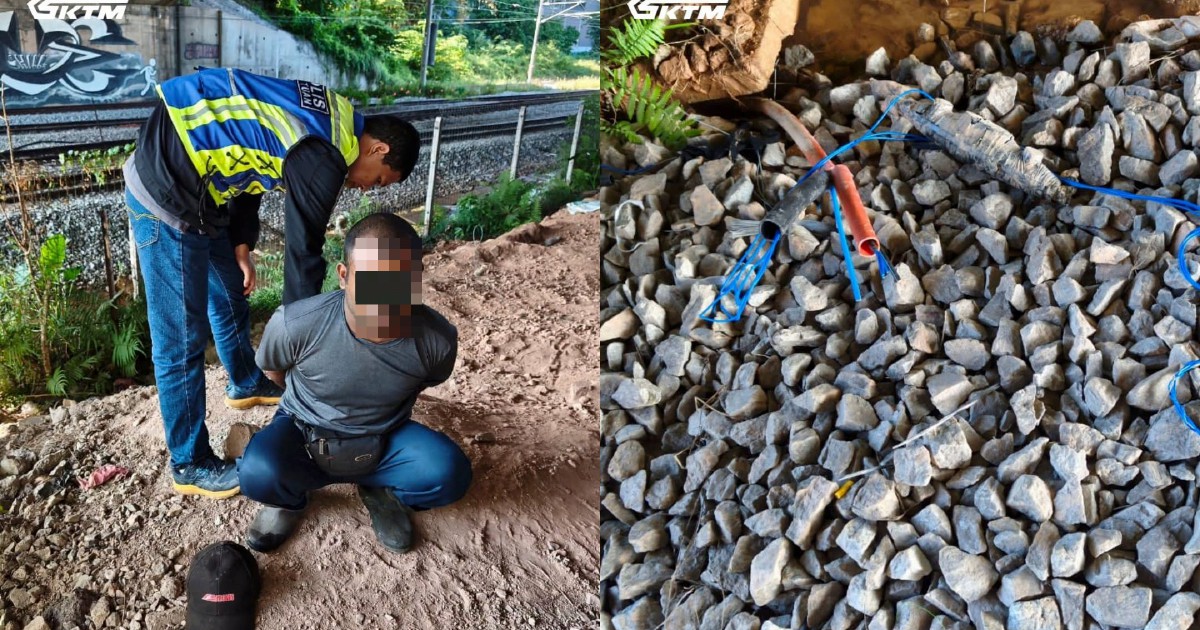
Keretapi Tanah Melayu Bhd (KTMB) auxiliary policemen apprehended two individuals in Shah Alam yesterday while they were in the act of stealing railway cables, marking another incident in the growing pattern of infrastructure vandalism that has plagued Malaysia's rail network in recent months.
The swift intervention by KTMB's security personnel underscores the heightened vigilance that national railway operators have deployed across key sections of the network, particularly in urbanised areas surrounding Kuala Lumpur and the Klang Valley. Shah Alam, being a major industrial and residential hub in Selangor with significant railway infrastructure, has become a focal point for such illicit activities that pose risks not only to operational continuity but also to public safety.
Railway cable theft represents a multifaceted problem for national rail operations. These components serve critical functions in signalling systems, power distribution, and telecommunications infrastructure that maintain the safety and efficiency of train movements. When such theft occurs, it creates dangerous gaps in the safety systems that protect passengers and railway workers, while simultaneously disrupting service and necessitating expensive replacement and repair operations.
The incident reflects a broader challenge facing KTMB and other rail operators across the region. Organised cable theft networks, often driven by the resale value of copper and other valuable metals contained within railway cables, have become increasingly sophisticated in their targeting of transport infrastructure. The relatively remote or dimly-lit nature of many railway sections, particularly during late evening and night hours, makes them vulnerable to opportunistic and organised criminal activity.
The auxiliary police force maintained by KTMB has become an essential component of the railway operator's security infrastructure, working alongside federal law enforcement agencies to prevent such incidents. Their presence serves as both a deterrent and a rapid response mechanism, as evidenced by the successful apprehension in this case. However, the continued frequency of such incidents suggests that additional measures may be necessary to comprehensively address the problem.
For Malaysian commuters and businesses reliant on rail transport, cable theft creates downstream consequences that extend beyond the immediate disruption. Service delays and extended maintenance windows required to replace stolen infrastructure result in increased costs for railway operators, which ultimately influence ticket pricing and service frequency decisions. The reliability of Malaysia's rail network, already a concern for many users, faces further pressure from such criminal activities.
The economic incentive driving these theft operations remains substantial. The fluctuating global prices for copper and other precious metals contained within railway cables create a lucrative black market opportunity for thieves willing to undertake the risks. In Southeast Asia, where informal recycling networks and metal dealers sometimes operate with minimal oversight, this market demand flows directly into incentivising theft from critical infrastructure.
Security enhancements across Malaysian railway networks have included increased lighting in vulnerable sections, installation of surveillance systems, more frequent patrols by auxiliary and federal police, and community engagement initiatives to report suspicious activities. Yet determined criminals continue to find opportunities, suggesting that the scale of the challenge remains substantial and requires continuous evolution of countermeasures.
The apprehension of these two suspects in Shah Alam provides an opportunity for investigation into potential broader theft networks. Malaysian law enforcement agencies often uncover connections between seemingly isolated incidents of infrastructure crime, revealing organised operations that target multiple facilities across different regions. The information gathered from this case may yield intelligence valuable to ongoing investigations into other incidents.
For rail operators throughout the region, the persistence of cable theft has prompted adoption of technological solutions including real-time monitoring systems, GPS tracking of critical components, and improved alarm systems that alert security personnel to active theft attempts. Some operators have also explored physical barriers and modifications to cable housing that increase the difficulty and time required to extract cables, thereby reducing the attractiveness of targets to opportunistic thieves.
The legal consequences for those convicted of railway infrastructure theft in Malaysia can be substantial, yet the potential financial rewards continue to attract participants. This disconnect between penalties and incentives suggests that a comprehensive solution requires not only stronger enforcement but also disruption of the downstream market mechanisms that convert stolen materials into cash profits for criminal networks.
Government attention to such incidents has intermittently intensified following high-profile cases or service disruptions, but sustained, resourced commitment to preventing infrastructure crime remains inconsistent. The arrest in Shah Alam represents immediate success but underscores a larger systemic challenge that demands coordinated, long-term strategic responses involving not only law enforcement but also infrastructure operators, community vigilance, and efforts to address the underground markets that create demand for stolen materials.
As Malaysia continues expanding and modernising its rail networks to support urban development and economic activity, protecting these assets from theft and vandalism becomes increasingly critical. The investment in auxiliary police forces and security infrastructure reflects recognition of this priority, yet the continued prevalence of such incidents indicates that current approaches alone are insufficient to fully address the problem.

