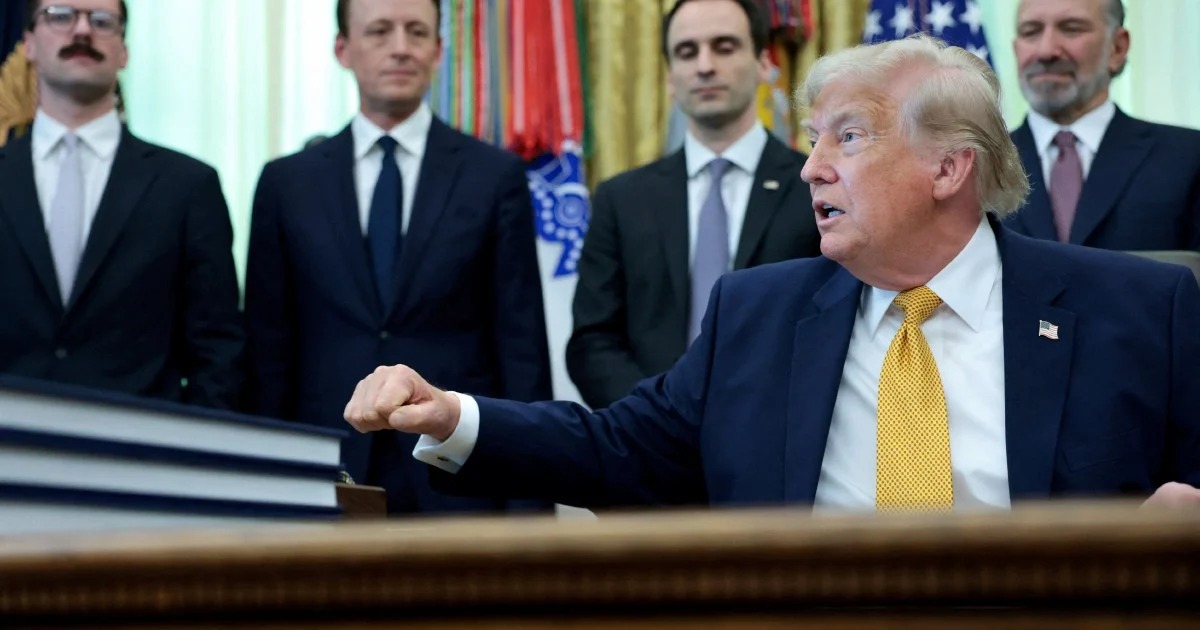
The United States Justice Department has moved to expand its investigation into a purported scheme to breach White House security during a controversial proposal to host a UFC event on the presidential residence's grounds, with the announcement of two fresh arrests on Monday adding significant momentum to the ongoing federal inquiry.
The alleged plot centres on a scenario in which President Donald Trump would have hosted mixed martial arts competition directly on the White House lawn—an extraordinarily unusual venue for such an event that would have required extraordinary security arrangements. The discovery of this supposed conspiracy has prompted multiple federal agencies to coordinate their efforts in identifying all individuals allegedly connected to the threat, resulting in successive waves of arrests as investigators piece together the details of what they believe was a coordinated scheme.
The motivations and specific methods attributed to those arrested remain subjects of active investigation, though the targeting of Trump during a high-profile public gathering underscores the persistent security challenges facing American political leadership. The selection of a UFC event as the backdrop suggests planners may have anticipated increased crowds and reduced perimeter security compared to standard White House operations, creating what they may have perceived as an opportune moment for an attack.
From a Malaysian and Southeast Asian perspective, the incident reflects broader trends concerning threats to national leaders across democracies worldwide. Southeast Asian nations including Malaysia have witnessed their own security incidents targeting political figures and public gatherings, making developments in American security protocols particularly relevant to regional governments tasked with protecting their own leadership during similar high-attendance events.
The involvement of the Justice Department signals the seriousness with which federal authorities are treating these allegations, deploying resources typically reserved for terrorism-related investigations or major domestic security threats. The two additional arrests suggest investigators have expanded their net beyond an initial group of suspects, indicating either a larger conspiracy than initially detected or ongoing cooperation from some detainees providing names of additional co-conspirators.
The White House, as the seat of executive power and one of the most heavily fortified buildings on Earth, would ordinarily present an extraordinarily difficult target for any attack. The inclusion of a public sporting event would represent a dramatic departure from standard security protocols, raising questions about whether the proposed UFC event would have proceeded under significantly altered safety measures or whether such plans were purely speculative at the conspiracy stage.
The timing of these arrests during Trump's current presidential term adds political dimensions to what is officially framed as a criminal matter. Critics and supporters of the current administration may interpret the investigation differently, though the Justice Department would emphasize that all such investigations proceed according to standard prosecutorial practices regardless of the identity of protected individuals involved.
Regional security experts in Southeast Asia will likely monitor this case closely, particularly regarding the methods used by federal investigators to identify conspirators and the legal standards applied in charging individuals for participation in alleged plots. Malaysia's own experience with security threats, ranging from terrorist organisations to political violence, makes understanding international best practices in threat identification and prosecution increasingly valuable.
The involvement of the FBI and other federal agencies demonstrates the multi-layered security apparatus protecting American political leadership, a model that contrasts with approaches adopted by various Southeast Asian nations. Some regional governments maintain tight centralised security operations, while others have adopted more distributed agency-based models similar to the American approach.
The investigation's expansion through successive arrests typically follows a pattern where initial detentions yield intelligence enabling authorities to identify other individuals involved in the alleged conspiracy. This investigative approach relies heavily on forensic evidence, digital communications, and witness testimony to construct a comprehensive picture of the purported plot's scope and sophistication.
As the inquiry continues, the Justice Department will likely present additional charges against other potential conspirators as investigations deepen. The threshold for charging individuals in American law requires demonstrating not merely sympathetic statements or idle threats, but rather concrete planning, resource acquisition, or specific intent to commit violence.
The incident highlights vulnerabilities that even heavily protected locations face when hosting unusual public events, a consideration of particular relevance to Malaysian officials planning high-profile gatherings or special occasions involving national leadership. The propensity of security threats to emerge around symbolic venues and significant public gatherings represents a consistent pattern across multiple democracies.
Looking forward, these arrests will likely inform subsequent White House security protocols regarding special events, potentially establishing new precedents for balancing public access and spectacular gatherings with the paramount requirement of protecting the President and the institution itself. For Southeast Asian readers, the episode underscores the perpetual tension between democratic openness and security imperatives that confronts all modern governments.