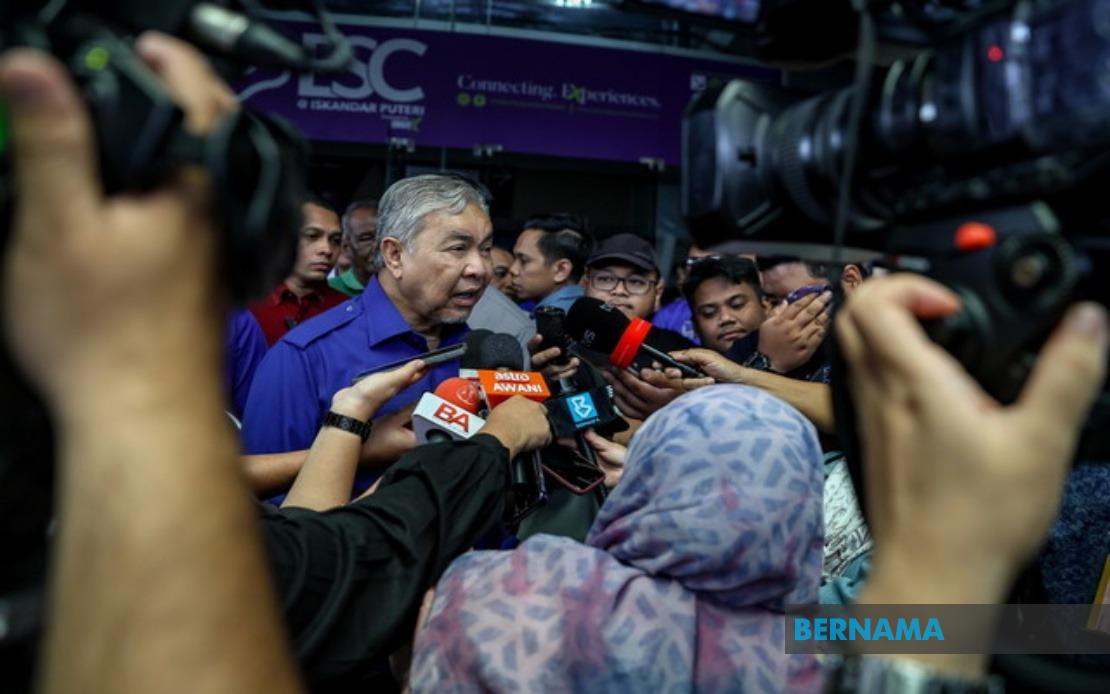
Malaysia's push to overhaul its vocational training framework is moving closer to realisation, with Deputy Prime Minister Datuk Seri Dr Ahmad Zahid Hamidi confirming that the new Technical and Vocational Education and Training Commission will be formally established before the year closes. The initiative aims to replace the current National TVET Council with a more robust institutional structure designed to elevate the country's standing in technical and vocational training.
Addressing attendees at the Johor Darul Ta'zim TVET MARA Roadshow in Iskandar Puteri on July 5, Ahmad Zahid outlined the timeline for parliamentary action, noting that while Cabinet has already granted policy approval, the formal process of tabling legislation in both the Dewan Rakyat and Dewan Negara remains underway. The deliberation reflects the complexity of restructuring a system that touches multiple government agencies and educational institutions across the nation. According to the Deputy Prime Minister, who also chairs the National TVET Council, extensive consultation with stakeholders is proceeding to ensure all perspectives are considered before moving forward.
The rationale behind establishing a dedicated commission centres on operational effectiveness and strategic coordination. Ahmad Zahid emphasised that the new body will assume a far broader mandate than its predecessor, moving beyond simple policy development to take active responsibility for implementation and compliance. This expanded scope mirrors practices in developed nations where equivalent institutions wield both legislative and executive authority over vocational training frameworks. The shift signals recognition among Malaysian policymakers that effective TVET delivery requires an entity capable of not only setting direction but ensuring it is executed on the ground.
Engagement sessions currently underway represent a crucial phase in the reform process. By bringing together representatives from educational bodies, industry associations, government departments, and training providers, officials aim to forge consensus around the new commission's structure, powers, and operational procedures. Once these consultations conclude, the government will prepare a Cabinet memorandum for formal approval, paving the way for parliamentary presentation. The careful legal review being undertaken reflects awareness that institutional restructuring of this scale carries constitutional and administrative implications requiring meticulous handling.
For Malaysia's vocational education sector, the establishment of a dedicated commission carries significant implications. Currently fragmented across multiple agencies and oversight bodies, TVET in Malaysia has faced persistent challenges in quality assurance, curriculum alignment with industry needs, and graduate employability. A centralised commission with clear authority and resources could address these longstanding issues more systematically. The initiative also positions Malaysia to better compete regionally in attracting both students and investment in technical skills development, an increasingly critical factor as Southeast Asian economies compete for manufacturing and advanced technology bases.
The announcement comes amid broader government initiatives to strengthen Malaysia's human capital development in technical fields. With manufacturing sectors across the region facing skilled worker shortages, and emerging technologies requiring new training approaches, reforming vocational education infrastructure has become a national priority. The timing of this push reflects recognition that demographic shifts and economic transformation demand agile, well-resourced institutions capable of rapidly adapting curricula to evolving workplace requirements. A more autonomous and empowered TVET Commission could facilitate such adaptation more readily than the current fragmented arrangement.
During the same event, Ahmad Zahid shifted focus to electoral demographics and governance in Johor, drawing attention to the growing political influence of younger voters. The recent implementation of Undi18 has expanded the electorate significantly, with citizens aged 40 and below now representing approximately 52 percent of Johor's voting population. This demographic transformation has profound implications for electoral strategy and policy priorities across the state. Younger voters, with different economic concerns and social values than their older counterparts, are reshaping the political landscape in ways that political parties must carefully navigate.
As Barisan Nasional chairman, Ahmad Zahid expressed confidence in the party's appeal to Johor's younger demographic, positioning incumbent Menteri Besar Datuk Onn Hafiz Ghazi as a bridge between generational cohorts. The strategy appears designed to consolidate youth support while maintaining broader coalition backing. Ahmad Zahid's remarks underscore how states like Johor are grappling with the electoral realities of younger, potentially more volatile voter blocs with distinct policy expectations. The emphasis on Onn Hafiz's relatively youthful profile suggests BN recognises the necessity of leadership presentation that resonates with voters born into independent Malaysia, far removed from the founding generation's political narratives.
The convergence of these announcements—vocational training reform and electoral demographic analysis—reflects the interconnected challenges facing Malaysian governance. Human capital development through improved TVET systems directly influences youth employment prospects and economic mobility, factors that shape voting behaviour and political legitimacy. By advancing vocational training reform while simultaneously courting younger voters, the government signals awareness that institutional modernisation and electoral success are increasingly intertwined. States like Johor, as economic drivers and political bellwethers, become crucial testing grounds for whether such integrated approaches can deliver tangible improvements in citizens' lives.
Looking ahead, the successful establishment of the TVET Commission will require sustained coordination across multiple government levels and continued stakeholder engagement beyond the parliamentary phase. Implementation challenges will likely emerge around funding, faculty training, curriculum development, and industry partnership mechanisms. The commission's effectiveness will ultimately be measured not by its formal establishment but by its capacity to produce graduates whose skills align with Malaysia's economic needs. For policymakers and educators watching this reform process, the commission represents both an institutional opportunity and a test of government's ability to translate strategic intent into operational reality. The December deadline Ahmad Zahid cited should focus minds on executing these complex transitions within the promised timeframe.

