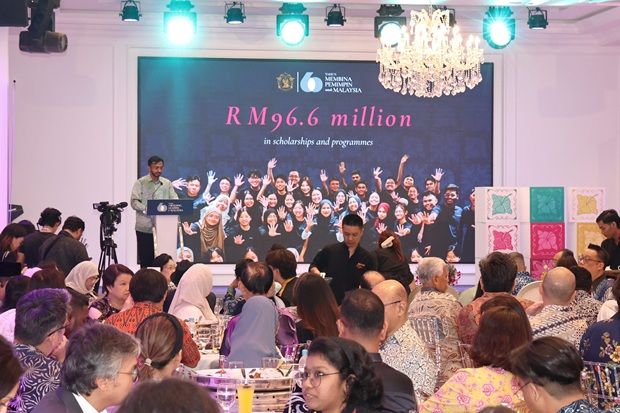
The Tunku Abdul Rahman Foundation reached a significant milestone this August, celebrating six decades of service to Malaysian youth through education and leadership development. Held at the historic Bangunan Sultan Abdul Samad, the anniversary ceremony brought together government officials, foundation leadership, and alumni who have benefited from the institution's support over the past 60 years. The occasion underscored how a humble community initiative has evolved into a cornerstone of Malaysia's human capital development strategy.
The foundation's origins reflect a distinctly Malaysian spirit of collective endeavour. When Tunku Abdul Rahman Putra al-Haj, the nation's first Prime Minister, retired from public life, Utusan Melayu launched a nationwide appeal on his birthday to establish an education fund bearing his name. The grassroots crowdfunding campaign raised more than M$60,170.20, a sum equivalent to approximately RM380,000 in modern currency. This public outpouring of support demonstrated the high regard in which the founding generation held education as an instrument of national progress and social mobility.
What began as a community-driven effort gained formal institutional standing when Tan Sri Mohamed Khir Johari, then Education Minister, proposed legislation to establish the foundation through the Tunku Abdul Rahman Foundation Fund Act 1966. This transformation from voluntary fundraising to statutory body represented a crucial shift, embedding the educational mission within Malaysia's governance framework and ensuring sustained resources for youth development. The timing proved fortuitous, as independent Malaysia grappled with the urgent need to build a cohesive, educated workforce capable of driving the young nation's development agenda.
The foundation's original mandate addressed a critical national requirement: enabling talented Malaysian youth to access higher education opportunities that were limited domestically in the 1960s. By providing loans and scholarships, YTAR facilitated the international education aspirations of thousands of students who might otherwise have been constrained by financial circumstances. Many of these scholars subsequently returned to Malaysia and contributed their expertise to nation-building efforts across government, commerce, academia, and the professions, creating a virtuous cycle of investment in human capital and national development.
Six decades later, the foundation's impact has expanded to impressive dimensions. YTAR has supported more than 12,000 Malaysian youths spanning all ethnic and religious backgrounds through a diversifying portfolio of initiatives. The cumulative disbursement of RM96.6 million represents sustained institutional commitment, as announced by National Unity Minister Datuk Aaron Ago Dagang at the anniversary ceremony. Beyond raw financial metrics, these figures illustrate the foundation's evolving purpose: from a scholarship provider to a comprehensive talent identification and development ecosystem that prepares young Malaysians for meaningful participation in society.
National Unity Minister Datuk Aaron Ago emphasised that the foundation's contemporary relevance extends beyond traditional scholarship distribution. As Malaysia navigates increasingly complex human capital demands, institutions like YTAR function as talent identification engines and pathway providers, connecting promising youth with opportunities and developing their potential systematically. He called upon Malaysia's corporate sector to embrace education and talent development as central pillars of corporate social responsibility, suggesting that YTAR's partnership model offers a framework for private sector engagement in nation-building.
Kularetnam Vijayakumar, the foundation's chief executive officer, articulated a philosophical perspective on institutional longevity and purpose. Rather than attributing success to individual leadership, he stressed that YTAR's six-decade journey reflects the collective stewardship of multiple generations of Malaysians who believed profoundly in education's transformative power. This framing proves particularly significant in the Malaysian context, where institutions rooted in founding ideals often struggle to maintain purpose during transitions. The foundation's ability to evolve from a mid-twentieth-century scholarship mechanism into a contemporary talent development body suggests successful adaptation without abandonment of core principles.
The anniversary ceremony gave particular prominence to early scholarship recipients whose life trajectories illuminate the foundation's impact. Dr Zakaria Ali emerged as one of Malaysia's pioneering figures in fine arts, establishing himself as a painter, writer, educator, and influential academic voice. His scholarship experience demonstrates how timely financial support during formative educational years can enable individuals to develop contributions of lasting cultural and intellectual significance. His journey from a processing assistant opportunity to becoming a Southwestern University scholar depended on fortuitous human connection and institutional support—the precise nexus that YTAR facilitates systematically.
Ch'ng Kim See's trajectory exemplifies how strategic educational investment generates compounding returns across decades. Receiving her scholarship in 1967 at a moment of acute financial crisis, she subsequently established herself as one of Malaysia's most prominent librarians and a recognised regional authority on Southeast Asian history and library science. Her subsequent philosophy of paying forward the support she received reflects a recurring pattern among YTAR alumni: the instinct to reciprocate institutional generosity through personal commitment to mentoring subsequent generations. This multiplication effect extends the foundation's impact far beyond its direct financial contributions.
Datin Sri Sharifah Menyalara Syed Hussein, the foundation's chairperson and granddaughter of Tunku Abdul Rahman, reframed the foundation's mission in terms of purposeful character development rather than merely academic achievement. Drawing on her grandfather's founding vision, she articulated education as a bedrock enabling young people to identify their social position and discharge meaningful citizenship responsibilities. The distinction proves crucial: foundational education encompasses technical knowledge and professional skills while simultaneously cultivating values and purpose orientation necessary for ethical leadership and community contribution.
The foundation's evolution over six decades reflects broader structural changes in Malaysian society and the global knowledge economy. From providing simple financial aid and study loans, YTAR has progressively expanded into providing comprehensive capital deployment—financial, social, cultural, and intellectual. This multidimensional support recognises that contemporary talent development requires more than scholarship funding; it demands networks, mentorship, skills training, and values formation. The foundation's current portfolio of employability programmes and talent identification initiatives reflects sophisticated understanding of how young Malaysians access opportunity and develop capability in an increasingly competitive regional and global context.
The ceremony's announcement regarding the 2026 Pingat Tunku Award nominations signals evolving institutional engagement strategies. By opening self-nomination to graduates from both public and private higher education institutions nationwide, YTAR demonstrates commitment to inclusive recognition while expanding alumni connection. This democratisation of nomination processes reflects contemporary governance principles emphasising accessibility and transparency, moving beyond traditional top-down identification mechanisms. Such structural changes enable the foundation to identify talent and leadership potential more comprehensively across Malaysia's increasingly diverse educational landscape.
As Malaysia confronts complex development challenges requiring sophisticated human capital deployment, the Tunku Abdul Rahman Foundation's 60-year legacy acquires renewed relevance. The institution's demonstrated ability to adapt its mechanisms while preserving its foundational commitment to educational access and youth empowerment suggests that principled institutional evolution represents a viable pathway for organisations navigating rapid social and economic change. The Tunku Scholars who have distributed themselves throughout Malaysian society—from frontline leadership to academic and professional expertise—constitute a network of human capital that continues shaping the nation's capacity to address emerging challenges. The foundation's next chapter will likely deepen this talent cultivation mission, recognising that sustainable national development ultimately depends upon systematic investment in the intellectual, moral, and creative potential of successive generations.

