The steady stream of skilled workers departing Silicon Valley reflects a fundamental shift in the calculus that has long made the United States the world's premier destination for technology talent. Deepak, a 44-year-old software professional, made the wrenching decision to abandon a carefully constructed 15-year life in America when he returned to India in May with his wife and two children, dismantling decades of investment in the American dream. Though he secured another technology position shortly after a layoff in October, the relentless uncertainty generated by President Donald Trump's sweeping immigration restrictions made remaining in the country feel increasingly untenable. The prospect of losing his H-1B temporary work visa status within 60 days of termination created a psychological burden that ultimately tipped the balance in favour of returning home, where such precarious conditions do not govern professional existence.
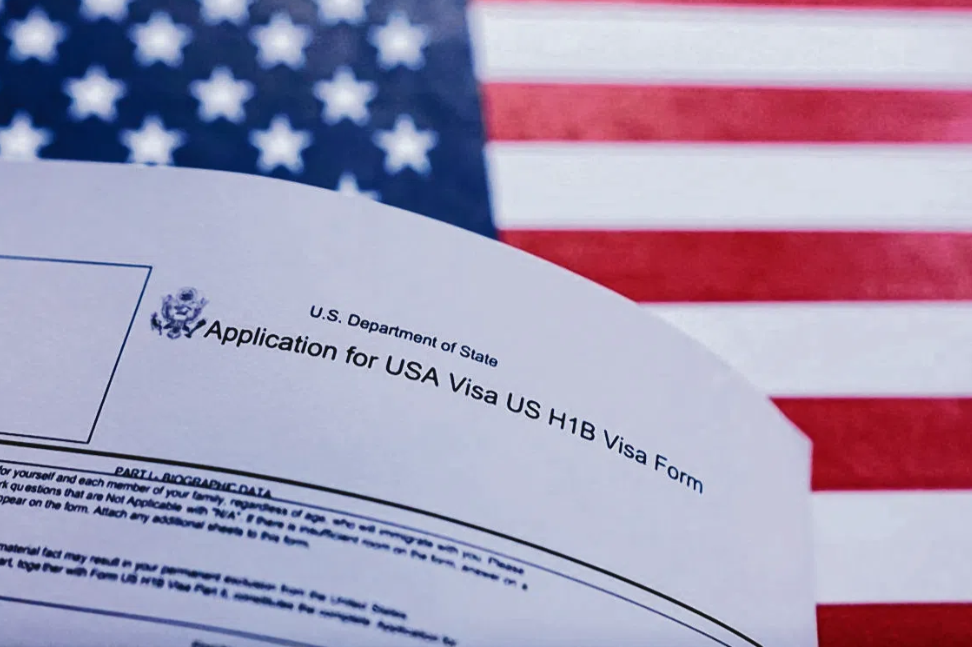
The Trump administration has systematically raised the cost and complexity of employing foreign technology workers through a series of policy escalations that have sent shockwaves through American tech companies dependent on global talent pipelines. A proposed US$100,000 application fee for new H-1B visas—representing a 25-fold increase over the prevailing rate—initially created chaos among employers uncertain whether the surcharge would extend to visa renewals and transfers. Although a federal judge struck down this particular policy as unlawful in June, the administration has pivoted to implementing a US$4,000 surcharge on H-1B visa extensions and renewals beginning September, demonstrating its determination to escalate financial barriers regardless of legal setbacks. For multinational technology corporations such as Amazon, Microsoft, Apple, and Indian outsourcing giants like Infosys and TCS—historically the largest H-1B sponsors—these mounting expenses fundamentally alter hiring calculations and reduce appetite for foreign recruitment.
The quantifiable impact on talent flows is becoming unmistakable. Data from Xpheno, a Bengaluru-based talent consulting firm, reveals that approximately 15,100 Indian professionals returned to India during 2025, compared with 9,800 in 2024—a 54 per cent year-on-year increase. Within just the first months of 2026, some 7,300 professionals have already made the return journey, suggesting the exodus will accelerate further. While precise figures for Chinese professionals returning home remain unavailable, evidence of diminishing American appeal emerges from China's Ministry of Education data showing 536,000 students returned to China in 2025 following graduation, representing an 8.3 per cent increase from the previous year. These statistics collectively indicate that the mythic American Dream, which once magnetised ambitious technologists worldwide, is losing its gravitational pull across Asia's largest economies.
Contemporary labour market conditions in the United States have compounded the deterrent effect of restrictive immigration policies. The technology sector has experienced coordinated waves of significant layoffs across major firms including Meta, Visa, Amazon, and numerous other corporations, with thousands of positions eliminated including many held by American citizens. Simultaneously, artificial intelligence-driven restructuring has prompted aggressive hiring freezes that have shrunk available opportunities precisely when jobseeker numbers have surged. Foreign professionals, lacking citizenship protections and facing heightened employer caution about sponsoring visas amid uncertain business conditions, are increasingly crowded out of recruitment processes. The competitive advantage that highly skilled Indian and Chinese nationals once possessed—their ability to command advanced technical skills at compensation levels below American counterparts—has evaporated when abundant domestic talent is available at lower cost during economic contraction.
The deteriorating employment landscape has forced individuals like Carrie, a Chinese national working as a data analyst, into desperate job-seeking situations. After receiving notice from her employer in the American Midwest, Carrie faced the mathematical reality that her H-1B visa status required securing alternative employment or departing the country by August. At the height of her desperation, she submitted as many as 30 job applications daily, but this frantic pace has since decelerated to five daily applications as rejections accumulated. The crushing realisation that virtually no remaining American technology employers would consider her candidacy—regardless of her qualifications—crystallised the futility of remaining in the country. Her experience encapsulates the cruel mathematics of the current environment: approximately 70 per cent of H-1B visa holders originate from India and 12 per cent from China, concentrating diaspora vulnerability within a narrowing labour market where only the exceptionally specialised foreign workers command sponsorship consideration.
Beyond institutional policy and labour market mechanics, social factors are intensifying the discomfort experienced by highly educated foreign professionals. Reports from the AAPI Equity Alliance document a pronounced increase in social hostility and online racist attacks targeting Indian and Chinese immigrants, who collectively represent America's largest contingent of highly educated and highest-earning immigrants. This climate of xenophobia, amplified by political rhetoric emphasising immigration restriction, creates a psychological dimension to the return migration that extends beyond purely economic calculation. Nupur Dave, a Bengaluru-based consultant who has guided thousands of returning technology professionals through repatriation logistics, observes unprecedented demand for her services, with clients increasingly willing to endure the substantial practical challenges of unwinding American lives rather than tolerate the compounding uncertainties and hostilities they face.
Returnees attempting to rebuild technology careers in India confront a labour market fundamentally different from the American opportunity structure they abandoned. Global Capability Centres—approximately 2,000 facilities throughout India established by multinational corporations to consolidate technical functions—have become the primary absorption mechanism for returning professionals. These centres collectively hired roughly 100,000 employees annually since 2023, and their top 125 operations absorbed approximately 7,000 mid and senior level technology professionals with more than a decade of experience during the preceding 12 months, including 2,800 who had recently returned from the United States. However, according to Xpheno co-founder Kamal Karanth, returning professionals do not automatically command salary premiums or rapid advancement unless they possess specialised expertise in data science or artificial intelligence. Most returnees must negotiate substantially reduced compensation packages relative to their final American salaries, representing a permanent income loss despite their accumulated expertise and proven track records.
For some returning professionals, the enforced transition has catalysed unexpected introspection about alternative life paths. Ram, a 38-year-old product manager who recently returned to Bengaluru after nine years in Connecticut with his wife and toddler daughter, has deliberately chosen to avoid immediate employment and instead exists on accumulated savings. This deliberate pause represents a luxury he never experienced during his H-1B tenure, when the precarious visa status created psychological pressure toward relentless career progression and income maximisation. Ram now contemplates fundamentally different vocational directions, including entrepreneurship, agricultural pursuits, or continued product management, recognising that the enforced transition has created mental and temporal space to evaluate his authentic professional preferences rather than subsisting within the anxiety-driven framework that characterised his American existence. His experience suggests that some returnees may discover that the American opportunity structure, despite its material rewards, constrained rather than expanded their human flourishing.
The broader implications of this talent repatriation extend beyond individual career trajectories to reshape competitive dynamics in the global technology sector. For decades, American companies extracted a significant proportion of Asia's highest-calibre technical talent, concentrating innovation capacity within Silicon Valley and other American technology hubs. The reversal of this flow—with tens of thousands of experienced professionals returning annually—represents a meaningful rebalancing of human capital distribution. Indian technology companies, particularly outsourcing and Global Capability Centre operators, gain access to talent pools enriched by American experience while simultaneously avoiding the escalating visa sponsorship costs that American employers now confront. China similarly benefits from returning technical professionals bringing Silicon Valley methodologies and accumulated expertise into expanding domestic technology sectors. This repatriation effectively functions as a technology transfer mechanism, accelerating the development of competitive capability outside the American ecosystem.
The Trump administration's immigration restrictions, rather than protecting American workers from foreign competition, appear likely to accelerate the geographic diversification of technology development that might ultimately prove more disadvantageous to American economic interests. By rendering employment of foreign talent prohibitively expensive and legally uncertain, these policies push sophisticated technical capabilities toward competing economies that actively welcome returning nationals. Indian Global Capability Centres and Chinese technology companies gain strategic advantage precisely when American firms face constraints in recruiting and retaining the global talent pools that historically contributed to their competitive dominance. For Malaysian and Southeast Asian technology sectors, this reconfiguration of global talent flows presents opportunities to attract experienced professionals who might previously have considered only American opportunities, while simultaneously suggesting that the region should prepare for a more multipolar innovation landscape where dominant American technological hegemony faces mounting pressure from revitalised Asian competitors.

