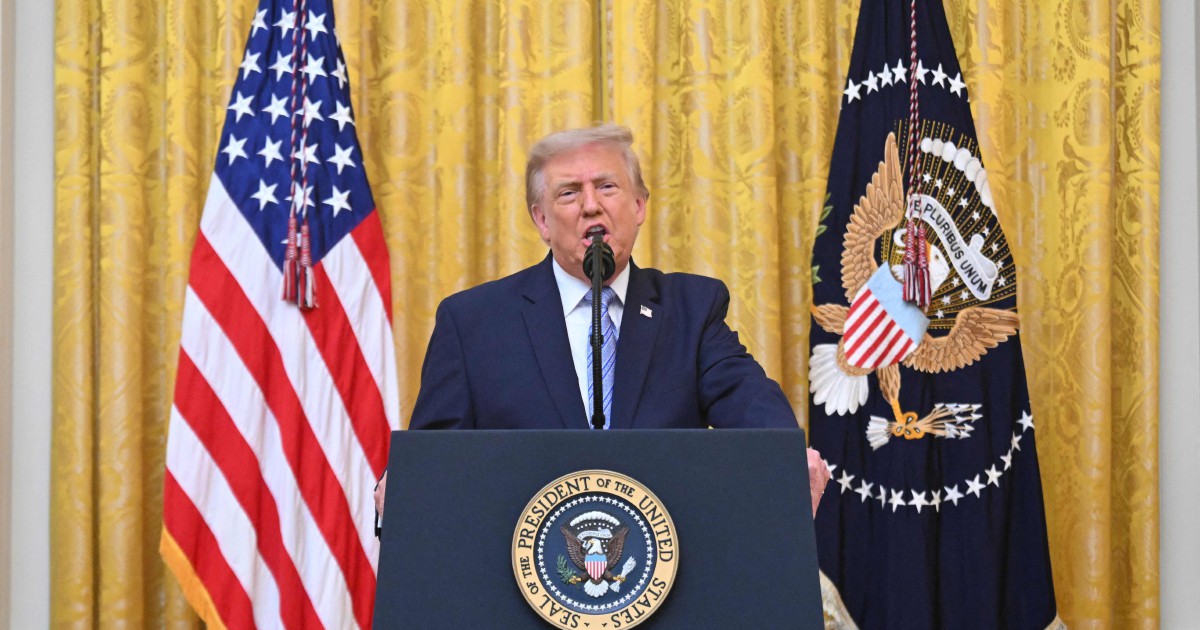
President Donald Trump has revived claims about the 2020 US election that have been thoroughly examined and rejected by numerous investigations, courts, and election officials. Speaking on Thursday, the president made assertions about foreign involvement in the election, specifically naming China as having allegedly stolen millions of voter files and referencing Venezuela's supposed capability to compromise American voting infrastructure. These contentions echo allegations that have been investigated extensively since the election and found wanting by both Republican and Democratic officials, as well as by judges appointed by Trump himself.
The resurfacing of these claims marks a continued pattern of election-related assertions that have found little factual grounding. Over 60 legal challenges brought by Trump and his supporters in the months following the 2020 election were dismissed by courts, including the Supreme Court. Election security experts, state election officials from both parties, and Trump's own Attorney General at the time all concluded that the election was conducted securely and that the results were legitimate. Despite this widespread consensus among officials responsible for election administration and security, Trump has maintained various versions of these allegations through public appearances and statements.
The allegations regarding China and voter data, in particular, lack substantiation from cybersecurity agencies or intelligence communities. The Cybersecurity and Infrastructure Security Agency, a component of the Department of Homeland Security, has found no evidence supporting claims of foreign interference affecting voting systems or the recorded vote. Similarly, concerns about voting machine vulnerabilities have been examined by security experts who, while acknowledging that no system is entirely immune to potential threats, have found no credible evidence that any foreign power successfully compromised voting equipment or tabulation systems during the 2020 election.
For Malaysian and Southeast Asian observers, Trump's continued promotion of election-related fraud allegations carries broader implications for understanding democratic governance and institutional resilience. The persistence of these claims despite official investigations and judicial review highlights how politically charged narratives can persist even when institutions charged with verification and oversight reach contrary conclusions. This phenomenon has relevance to regional discussions about election integrity, the role of courts in settling electoral disputes, and the importance of institutional trust.
The specificity of Trump's allegations about Venezuela deserves particular attention given Latin America's historical tensions with the United States over election interference claims and accusations of election manipulation. Venezuela's government has long faced international criticism regarding electoral fairness, yet the assertion that it could manipulate American voting machines represents a different category of claim—one that would require sophisticated technical capabilities and infrastructure access that security experts have found no evidence of possessing or attempting to employ.
Court proceedings have been central to the verification of Trump's election-related claims. The former president pursued legal challenges in multiple states and at the federal level, and judges—including those appointed during his administration—examined evidence brought forward and consistently found insufficient grounds to alter election outcomes or invalidate results. This judicial examination, occurring within the American legal system's adversarial framework specifically designed to test contested claims, represents the institutional mechanism through which election disputes are formally resolved.
Election officials, both those who supported Trump politically and those who opposed him, have maintained consistent accounts of the 2020 election's administration. Republican secretaries of state and county election administrators from Trump-supporting states have publicly stated that their elections were conducted securely and that results were accurate. This bipartisan consensus among officials with direct responsibility for election administration provides another counterpoint to the allegations being reiterated.
The phenomenon of election fraud allegations persisting despite official verification is not unique to the United States or to recent history, but it carries particular weight in democracies where confidence in electoral institutions underpins the system's legitimacy. When unsuccessful candidates question election integrity following their defeat, the specific manner in which those questions are engaged—through courts, through election administration agencies, through public discourse—determines whether institutional trust is reinforced or eroded.
For regional audiences, the American context offers lessons about how institutional mechanisms respond to electoral challenges and how public figures' statements interact with official findings. The extent to which courts, election administrators, and security agencies can collectively establish factual baselines regarding election integrity becomes a test of democratic institutions' capacity to resolve contested questions of fact and legitimacy. The durability of Trump's allegations despite contrary findings from these various institutions reflects broader questions about how democracies maintain institutional credibility and public confidence.

