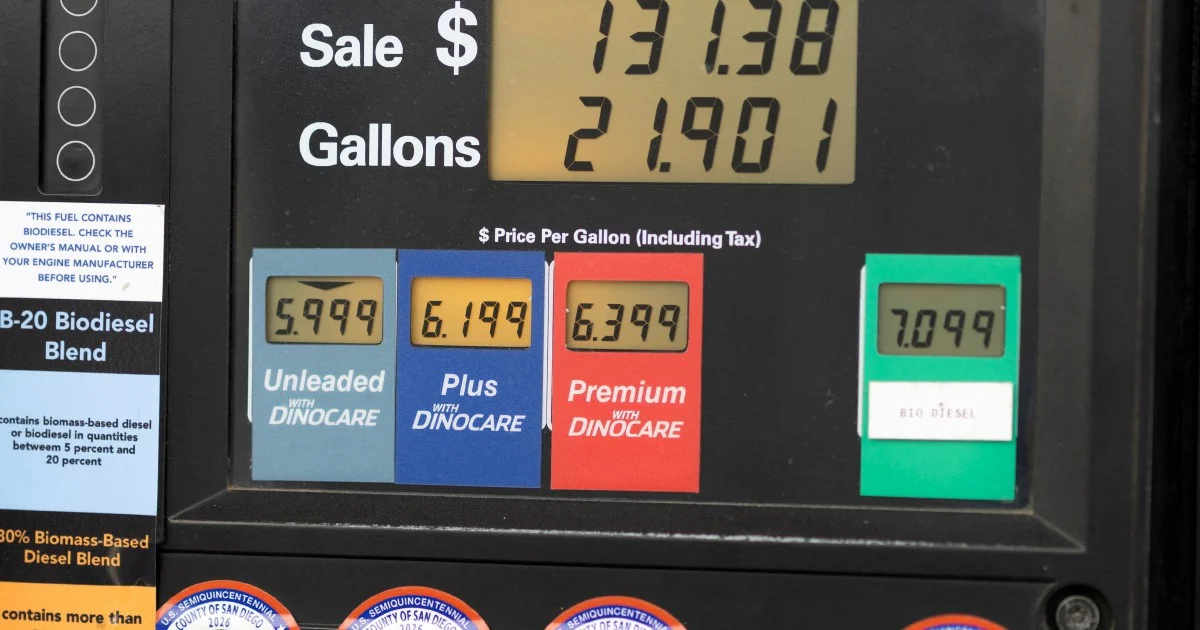
Donald Trump has ordered a formal investigation into major oil companies, signalling his frustration that petrol prices at American fuel pumps have not declined as rapidly as anticipated. The US President's directive, announced on Wednesday, comes as he faces growing political criticism over the economic fallout from escalating Middle Eastern tensions and their impact on global energy markets.
The investigation represents Trump's attempt to deflect blame for stubborn gasoline prices, which remain elevated despite recent fluctuations in crude oil benchmarks. The administration appears concerned that high fuel costs could become a liability heading into pivotal political moments, making it essential to demonstrate active intervention in energy markets. By targeting oil majors directly, Trump is signalling to voters that he recognises their pain at the petrol station and is prepared to hold corporations accountable.
High gasoline prices have historically been a flashpoint for American political discontent, affecting consumer spending and public sentiment more visibly than many other economic indicators. When fuel becomes expensive, the political consequences ripple through communities regardless of underlying supply-demand fundamentals. Trump's move suggests the White House believes scrutinising corporate behaviour could help explain price movements to the public while potentially pressuring companies to moderate their operations or margins.
The timing of the investigation is particularly sensitive given the escalating military situation in the Middle East. Regional conflicts have historically triggered crude oil price surges, as markets factor in supply disruption risks from one of the world's most strategically important oil-producing regions. The correlation between geopolitical tension and energy costs creates a complex political dynamic: while the President cannot directly control Middle Eastern security developments, he can demonstrate action on the domestic energy sector.
For Malaysian readers and Southeast Asian business observers, the investigation underscores how US domestic political pressures can reshape global energy markets. American energy policy decisions often have outsized impact on international crude pricing, which in turn affects fuel costs across Asia. Malaysia, as both an energy consumer and producer with significant oil and gas interests, faces indirect exposure to shifts in US regulatory approaches toward oil corporations.
The probe also reflects broader tensions between governments and energy companies over pricing power. Oil majors argue that global commodity prices reflect worldwide supply-demand dynamics beyond their individual control. However, public frustration with fuel costs tends to focus on visible corporate entities rather than abstract market forces. By initiating an investigation, Trump channels that frustration toward specific targets, potentially setting precedent for more aggressive regulatory scrutiny.
The investigation's scope remains unclear, though Trump's language suggests examination of whether companies are manipulating prices or failing to respond appropriately to market conditions. Whether investigators find evidence of illegal activity will likely depend on their mandate and definition of problematic conduct. Even an investigation without clear violations can achieve political objectives by generating negative publicity and constraining corporate behaviour through reputational pressure.
Southeast Asian energy companies and economies should monitor this investigation's direction carefully. If the Trump administration broadens scrutiny to include international oil corporations' activities in US markets, or if it expands into supply chain and trading practices, implications could extend far beyond American borders. Multinational energy firms operating across Asia may face increased compliance demands or operational restrictions if US regulators demand transparency into global pricing strategies.
The investigation also signals potential divergence in Trump's approach compared to previous administrations. Energy companies had often enjoyed relatively favourable regulatory relationships, but changing political calculations appear to outweigh those traditional alignments. This pragmatic willingness to challenge corporate interests when politically expedient establishes an unpredictable environment for energy sector planning.
For consumers across the region, the precedent matters because it demonstrates how political leaders increasingly view energy prices as legitimate domains for government intervention. If the US investigation produces results or recommendations, other governments may adopt similar approaches. This could lead to more active state involvement in energy market dynamics across multiple jurisdictions, potentially disrupting the relatively market-driven approach that has characterised energy trading and distribution.
The investigation's eventual findings and recommendations will reveal the administration's willingness to impose structural changes on the energy sector or whether the exercise primarily serves political communication purposes. Either way, the move signals that high gasoline prices have reached a political threshold demanding visible executive action, even if underlying solutions remain limited by market realities.