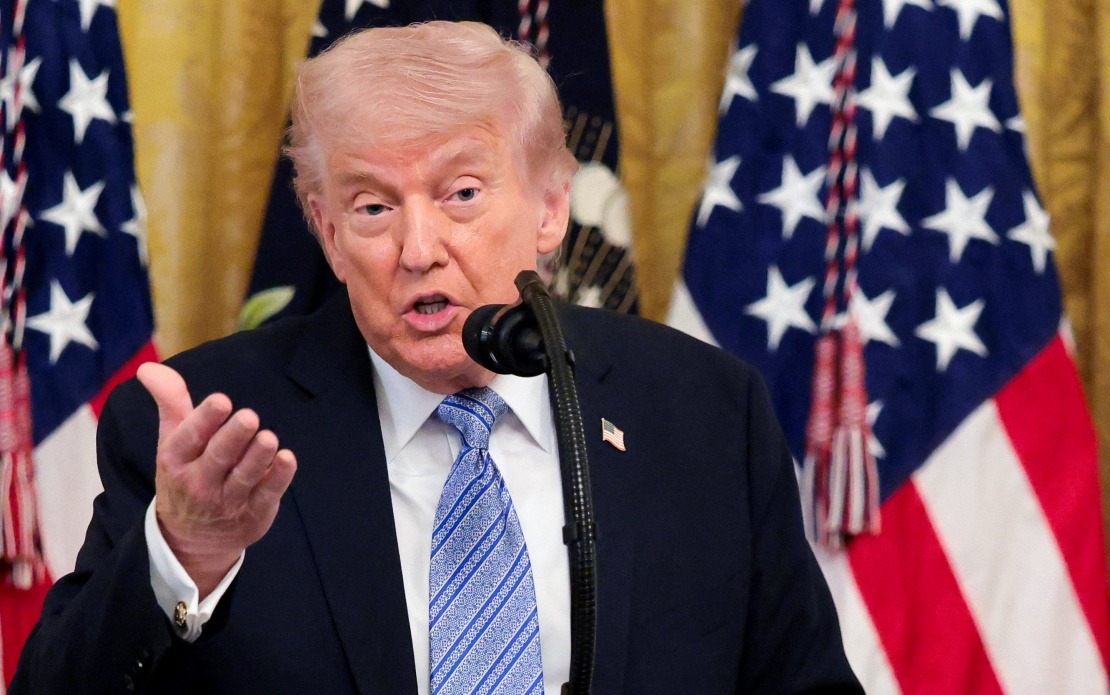
Donald Trump has signalled his intention to back FIFA President Gianni Infantino for the position of UN secretary-general, according to reports citing people close to the American president. The nomination would represent a dramatic pivot in international leadership, tapping a sports administrator rather than a traditional diplomat for one of the world's most influential posts. A new secretary-general will assume office on January 1, 2027, for a five-year mandate succeeding the incumbent Antonio Guterres.
Trump's assessment of Infantino centres on the Swiss-born executive's capacity to navigate complex relationships and forge consensus across deeply divided nations. According to Trump's confidants, the US president views the 56-year-old FIFA chief as someone "respected by everyone around the world" and possesses "a special ability to bring people together." This characterisation reflects Trump's own valuation of personal diplomacy and relationship-building as essential tools for resolving international disputes.
The relationship between Trump and Infantino has strengthened considerably over the past year, particularly during the 2026 World Cup preparations. Infantino made strategic efforts to cultivate Trump's support, culminating in the FIFA president presenting the American leader with the organisation's inaugural Peace Prize in December. Such gestures signal Infantino's understanding of Trump's preference for personal recognition and his appetite for high-profile endorsements that underpin his international standing.
Historically, the office of UN secretary-general has been reserved for experienced diplomats with deep roots in international affairs. Infantino's selection would mark a substantial departure from this convention. His background in sports administration and commercial management differs significantly from the traditional pathway, yet his management of FIFA during periods of significant controversy and reform demonstrates an ability to navigate institutional complexities and stakeholder interests.
Formalising this nomination faces substantial procedural obstacles embedded in the UN Charter. Article 97 stipulates that the General Assembly appoints the secretary-general based on a recommendation from the Security Council. The five permanent members—China, France, Russia, the United Kingdom, and the United States—each possess veto authority over any nomination. Securing consensus among these nations, particularly given current geopolitical tensions, represents a formidable challenge that extends beyond Infantino's personal credentials.
Trump's broader scepticism toward the UN has intensified since his return to the presidency. He has repeatedly condemned what he perceives as institutional ineffectiveness in addressing major conflicts and crises affecting global stability. This criticism has translated into concrete policy measures, including substantial reductions in American financial contributions to UN operations and withdrawal from multiple UN-affiliated bodies. The departure from the World Health Organization exemplifies his willingness to exit multilateral structures he deems inadequate or contrary to American interests.
Last year, Trump established his own Board of Peace as an alternative mechanism for pursuing diplomatic initiatives. This step sparked considerable international speculation about whether the administration was constructing parallel structures to circumvent traditional UN channels. Trump subsequently denied allegations that his initiatives represented attempts to supplant UN functions, yet the board's existence underscores his preference for more direct, bilateral approaches to conflict resolution.
Such moves raise fundamental questions about American commitment to multilateral institutions during a period of pronounced geopolitical volatility. Trump's approach reflects a transactional view of international engagement, where institutional participation depends on demonstrable value delivery aligned with American strategic priorities. This philosophy contrasts sharply with the internationalist consensus that anchored American foreign policy throughout much of the post-World War II era.
For Southeast Asian nations, developments at the United Nations carry substantial significance. The region's stability increasingly depends on adherence to international law, the peaceful resolution of maritime disputes, and the functioning of global institutions that provide frameworks for managing great power competition. Any deterioration in UN effectiveness directly impacts the region's security architecture and economic interests tied to rules-based international order.
Infantino's potential nomination also intersects with Asia's growing influence in international sport and governance. Football's global reach, particularly FIFA's expansion of World Cup participation to 48 nations with qualifying tournaments across Asia, positions the organisation as a significant soft power vehicle. An Asian-connected leadership of the UN, even indirectly through an individual managing FIFA's Asia operations and partnerships, could reshape institutional dynamics.
The nomination scenario remains speculative, dependent on numerous variables including the evolution of geopolitical relationships, responses from other Security Council permanent members, and potential alternative candidates. Nevertheless, Trump's stated interest in Infantino reflects his distinctive approach to international recruitment, prioritising personal rapport and perceived diplomatic acumen over conventional institutional experience. This nomination, if pursued, would test whether the international community prioritises continuity in UN leadership or embraces transformative change through unconventional candidates.
The coming months will reveal whether Trump advances this proposal substantively or whether it remains a preliminary negotiating position. The reaction from other major powers, particularly China and Russia, will prove decisive. A successful nomination would require either unprecedented consensus or American leverage sufficient to overcome Security Council objections—an outcome that appears unlikely given current international divisions and traditional expectations governing this historically significant office.

