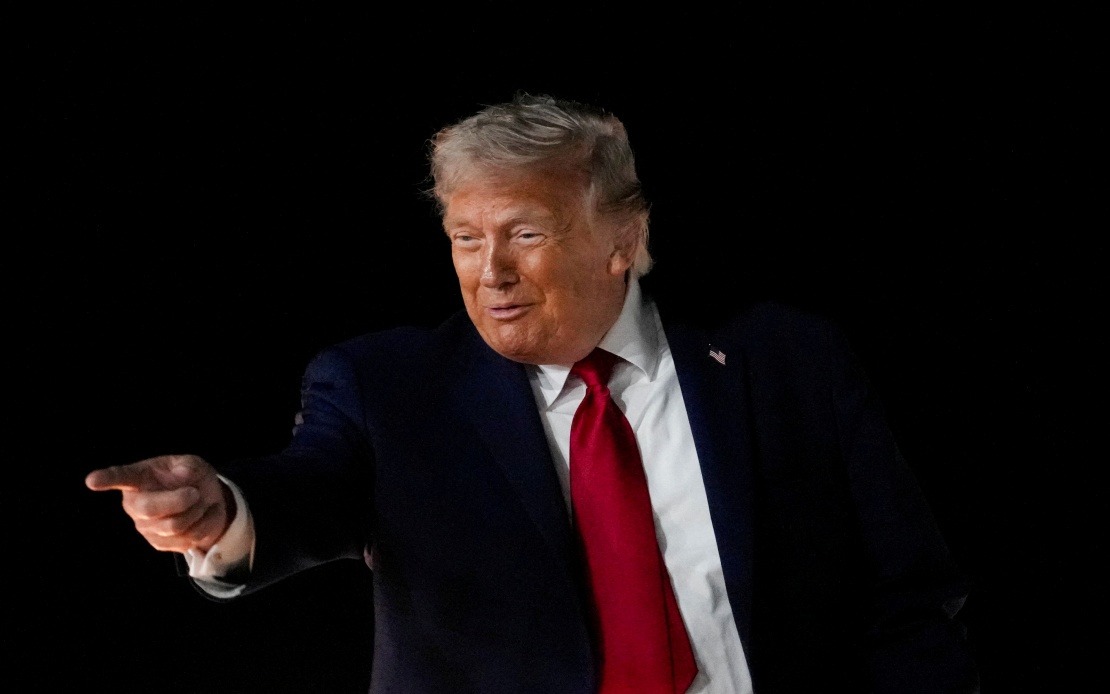
Donald Trump has escalated his rhetoric against Canada, asserting that Ottawa seeks to enjoy privileges associated with being a United States state while refusing to formally join the nation. The inflammatory remarks came as the Trump administration imposed tariffs on numerous Canadian goods, marking a significant escalation in transatlantic trade relations that carries implications for regional trade dynamics and investor confidence across North America and beyond.
In a post on Truth Social, Trump levelled dual criticisms at Canada, suggesting the country has benefited from American market access without reciprocal commitment, while simultaneously accusing Canadian authorities of imposing what he characterised as excessive tariffs on American agricultural products over an extended period. The president framed these grievances as justification for the newly implemented trade measures, creating a narrative linking historical trade imbalances to present policy decisions. This rhetorical framing reflects a broader Trump administration approach to trade disputes, wherein past disputes become justification for current protectionist actions.
The tariff implementation began on August 22, with duties taking effect at 12:01 am Eastern Time, according to US Trade Representative Jamieson Greer. The timing and precision of the announcement underscored the administration's determination to proceed despite ongoing negotiations. Greer's public statement that Canada had declined to finalise a comprehensive trade agreement with Washington suggested that diplomatic channels had been exhausted, prompting Washington to resort to unilateral trade measures. For Malaysian businesses with North American supply chains, such disruptions create uncertainty regarding pricing, logistics, and market access across the continent.
Trump's comments represent merely the latest instalment in a series of provocative statements regarding North American geography and political integration. The American president has repeatedly and deliberately suggested that Canada should become the fifty-first state, positioning the idea as a logical economic solution rather than mere rhetoric. This recurring theme has become a signature element of Trump's public messaging, deployed strategically to underscore American economic dominance and to place pressure on Canadian leadership through public humiliation and nationalist appeals to American audiences.
Beyond Canada, Trump has similarly floated the possibility of the United States acquiring other territories and nations, including Greenland and Venezuela, further cementing his approach to territorial expansion through blunt public statements rather than conventional diplomatic channels. These proposals, however fantastical they may appear to international observers, serve multiple purposes within Trump's political strategy: they energise his domestic political base by emphasising American strength, they create negotiating leverage through unconventional pressure tactics, and they fundamentally challenge post-World War II international norms regarding territorial sovereignty and the permanence of borders.
The trade tensions between Washington and Ottawa occur within a broader context of North American economic integration spanning decades. Canada and the United States maintain one of the world's largest bilateral trading relationships, with integrated supply chains spanning automotive manufacturing, agriculture, energy, and technology sectors. Any sustained trade dispute between the two nations consequently reverberates throughout these interconnected industries, affecting employment, consumer prices, and investment patterns throughout the continent. For Southeast Asian exporters and manufacturers, Canadian economic slowdown or supply chain disruption creates competitive opportunities in North American markets, though it also introduces volatility into planning assumptions.
The agricultural sector represents a particularly sensitive dimension of American-Canadian trade relations, given the sector's political importance in numerous congressional districts and the Trump administration's historical courting of rural American voters. By emphasising alleged Canadian tariffs on American agricultural goods, Trump frames his administration's actions as defensive measures protecting American farmers rather than aggressive protectionism. This rhetorical strategy resonates with constituency groups that supported Trump's previous campaigns and remains crucial to his political viability heading into electoral cycles. The invocation of farmers' grievances thus serves both immediate trade policy objectives and longer-term political strategies.
Canadian officials have largely responded to such provocations with measured diplomatic language, though the escalating nature of Trump's rhetoric threatens to exhaust the patience of both Canadian political leadership and public opinion. The suggestion that Canada might become an American state carries profound implications for Canadian sovereignty, national identity, and political autonomy—dimensions that resonate deeply within Canadian political discourse regardless of partisan affiliation. The intensity of Trump's messaging suggests the administration views the stakes of the trade dispute as sufficiently high to justify confrontational rhetoric that previous administrations might have avoided as counterproductive to negotiating objectives.
From a Southeast Asian perspective, the American-Canadian trade dispute illustrates how Great Power economic competition and nationalist political movements are reshaping international trade architecture. Malaysia and other ASEAN nations have built prosperity partly through integration into global value chains centred on North American and European markets. Trade wars, tariffs, and political instability in these traditional markets consequently create both risks and opportunities for Southeast Asian economies. Companies throughout the region must monitor these developments closely, as shifts in North American trade flows could redirect investment and create openings in sectors previously dominated by North American suppliers.
The broader implications extend to questions about the sustainability of post-1945 international institutions and norms. Trump's willingness to challenge not merely specific trade practices but the fundamental principles of international commerce and territorial sovereignty suggests that the coming years may witness significant restructuring of global economic relationships. Whether this restructuring ultimately produces more efficient or more equitable outcomes remains uncertain, but the transition period itself creates considerable uncertainty for businesses and policymakers worldwide who have constructed strategies assuming relatively stable international rules and boundaries.

