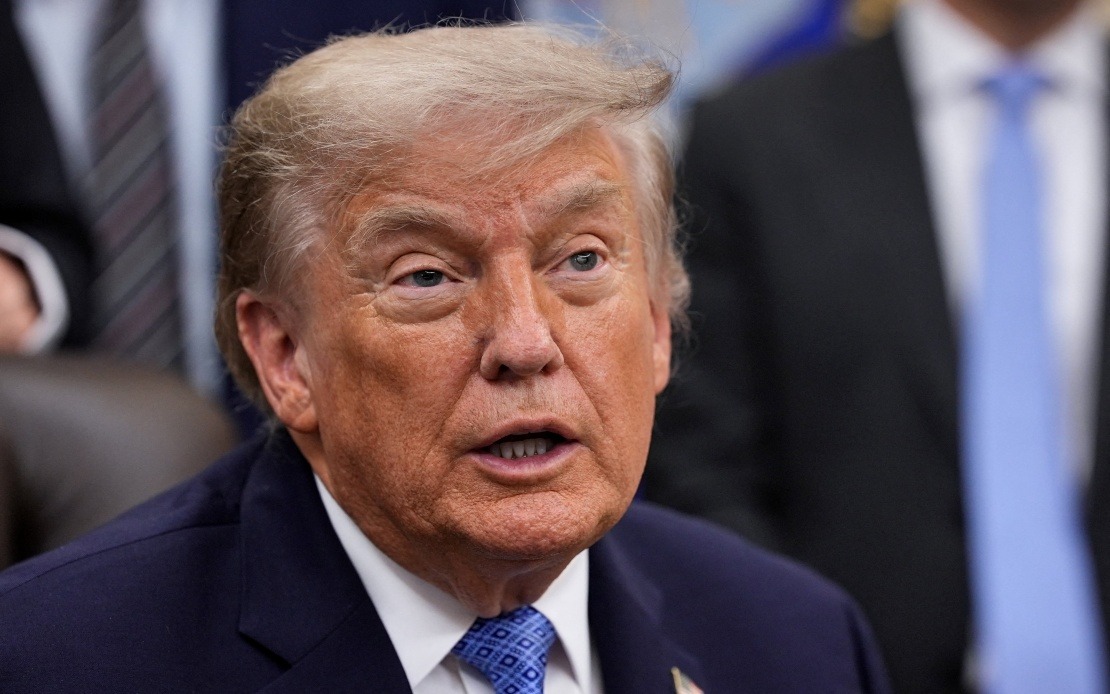
US President Donald Trump has escalated tensions with Canada by attributing transboundary wildfire smoke to inadequate forest management practices and threatening trade consequences. In a Friday post on Truth Social, Trump declared that the costs associated with air pollution drifting across the border must be reflected in tariffs Canada already faces, signalling his intent to weaponize the environmental issue in trade negotiations. He announced plans to contact Prime Minister Mark Carney regarding Canada's response to what he characterized as a preventable crisis stemming from poor land stewardship.
The smoke affecting both nations originates primarily from an extensive outbreak of wildfires across Ontario and Minnesota, with the plume reaching hundreds of kilometres southward into major metropolitan areas throughout the northeastern United States and Canada. Cities including Toronto, Chicago, Detroit, and Washington have experienced measurable degradation of air quality, while New York residents have encountered particularly poor visibility and persistent smoke odours. The scale of transboundary air pollution demonstrates the interconnected nature of environmental challenges in North America, where weather patterns and fire dynamics respect no political boundaries.
Trump's critique centered on what he characterized as Canada's failure to maintain adequate forest hygiene, arguing that accumulated brush and debris had created tinderbox conditions enabling rapid fire spread. Using inflammatory language, he described the situation as an "unnecessary invasion" of "filthy, polluted, and unhealthy air" that posed unacceptable health risks to Americans. This framing deliberately personalizes the environmental crisis, casting it as a consequence of Canadian negligence rather than broader climatic or meteorological factors beyond any single nation's control.
However, this political narrative conflicts with scientific consensus regarding North American wildfire patterns. Extensive research from climate and forestry institutions demonstrates that escalating wildfire frequency and intensity across the continent is fundamentally linked to climate change, including rising temperatures, altered precipitation patterns, and extended fire seasons. While forest management practices certainly influence local fire risk, attributing the current crisis primarily to inadequate Canadian maintenance practices oversimplifies complex environmental dynamics involving continental weather systems and atmospheric circulation patterns.
Ontario Premier Doug Ford responded to Trump's criticism by redirecting focus toward practical cooperation rather than blame assignment. Ford emphasized that Ontario has historically provided emergency assistance to American jurisdictions during crises and suggested that reciprocal support should supersede political posturing. His intervention reflects a pragmatic approach centred on cross-border solidarity during environmental emergencies, contrasting sharply with the adversarial tone emanating from Washington. This regional leadership perspective highlights how subnational actors sometimes prioritize functional problem-solving over national-level rhetoric.
The threat to leverage tariffs around an environmental issue represents a novel application of Trump's protectionist trade agenda. Rather than confining tariff disputes to traditional economic sectors, this approach extends them into climate and environmental domains, potentially establishing precedent for using trade policy as a tool for addressing transboundary environmental disputes. Such an approach could reshape how cross-border environmental conflicts are negotiated, moving them from primarily diplomatic or scientific channels into commercial negotiation frameworks.
For Malaysian and Southeast Asian observers, this episode illuminates broader patterns in how major powers increasingly weaponize trade relationships and environmental issues simultaneously. As climate change drives more transboundary environmental challenges—from haze to ocean pollution to shared water resources—the US-Canada interaction suggests that trade retaliation may become a common response mechanism. This has implications for regional economies like Malaysia, which faces its own transboundary haze challenges and maintains complex trade relationships with multiple powers.
The timing of Trump's intervention during an ongoing trade dispute with Canada suggests these environmental grievances may represent a supplementary argument in broader economic negotiations rather than a primary concern. By framing environmental consequences as financial liabilities that warrant tariff adjustments, Trump reframes unilateral trade policy as compensation for imposed external costs. This logic, if adopted by other nations, could substantially complicate international trade architecture and environmental cooperation frameworks.
The wildfires themselves underscore how climate change increasingly creates political friction between neighbouring states. As environmental impacts become more severe and visible, governments face domestic pressure to assign responsibility and pursue remedies. When those impacts cross borders, the resulting tensions can become internationalized quickly, particularly when national leaders employ them to advance concurrent trade objectives or political messaging.
Moving forward, the US-Canada dispute may establish whether environmental damage caused by transboundary pollution can legitimately trigger trade sanctions, or whether such incidents remain confined to diplomatic channels and environmental agreements. The outcome carries significance beyond bilateral relations, potentially influencing how other nations address similar challenges with their neighbours.

