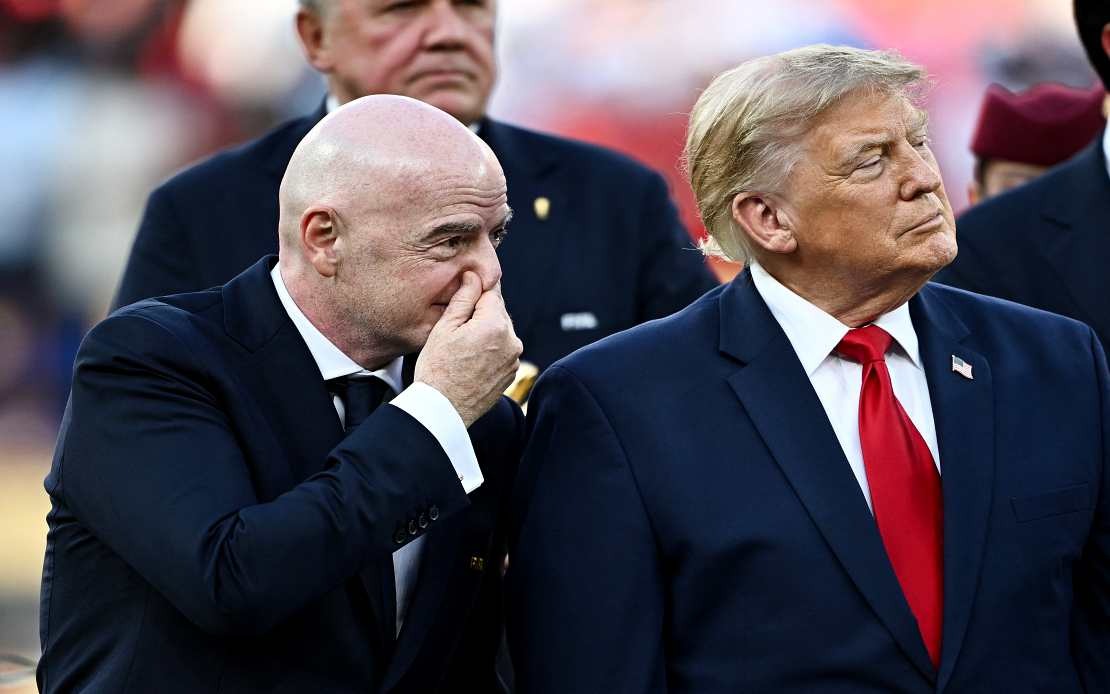
United States President Donald Trump has stepped into the escalating dispute over FIFA's leadership, issuing a forceful defence of President Gianni Infantino at a moment when the football administrator faces mounting international criticism. In a statement posted on Truth Social, Trump characterised the FIFA chief as an outstanding and indispensable figure in world football, dismissing any suggestion that the organisation should consider his removal from the top post.
The intervention comes as several major continental football bodies have coordinated a significant pushback against Infantino's direction of FIFA. The Union of European Football Associations, the Asian Football Confederation, and the Confederation of North, Central American and Caribbean Football jointly issued an open letter that raised serious questions about Infantino's stewardship and called for an independent examination of a contentious commercial arrangement involving the sale of FIFA's media and broadcast rights.
At the centre of the dispute is a proposed transaction unveiled by FIFA in July to raise approximately US$4.2 billion through the sale of roughly 20 per cent stake in a newly created commercial entity. This vehicle would assume control over the organisation's lucrative media and broadcasting portfolio, including the rights to World Cup tournaments. The plan triggered immediate and sustained resistance from major football confederations, with sources suggesting that Joshua Kushner's investment foundation was positioned to acquire the shares—a detail that has attracted considerable scrutiny given Kushner's family connections to Trump through his brother Jared Kushner's marriage into the Trump family.
Trump's public backing of Infantino emphasises the FIFA president's accomplishment in delivering what the American leader characterised as the most commercially and logistically successful World Cup tournament in the competition's history, suggesting the event's success was magnified four times over compared to previous editions. This framing reflects the significant revenue generation and global viewership achieved during the recent World Cup cycle, which did indeed establish attendance and revenue records. Trump further argued that FIFA would forfeit the possibility of repeating such financial and organisational achievements if it were to separate from Infantino's leadership.
The controversy has forced Infantino into a defensive position within his own organisation. In early August, he convened an emergency gathering of FIFA's executive hierarchy to address the mounting discontent and his diminishing influence over the federation's decision-making apparatus. During this meeting, the FIFA leadership caucus expressed formal support for the embattled president, though Infantino was compelled to offer an apology for administrative failures related to the FIFA Forward Enterprise commercial initiative, acknowledging missteps in the execution and presentation of commercial strategy.
The unified resistance from European, Asian, and North American football governing bodies represents an unusual display of continental solidarity. UEFA's declaration of a comprehensive boycott of all FIFA-organised competitions, unless and until the commercial rights proposal was entirely abandoned, effectively created an existential threat to FIFA's competitive calendar and commercial viability. This drastic measure signalled the depth of concern among Europe's most powerful football interests regarding both the specific transaction and broader governance questions about FIFA's direction.
Under mounting pressure from this coordinated continental opposition, Infantino ultimately announced that FIFA had decided to shelve the entire commercial rights sale initiative. The reversal represented a significant tactical retreat for the FIFA president, effectively validating the objections raised by the continental confederations and temporarily defusing the immediate crisis. However, the episode has exposed fundamental tensions within FIFA regarding transparency, decision-making processes, and the distribution of commercial benefits across the global football ecosystem.
For Malaysian and Southeast Asian observers, this internal FIFA conflict carries particular relevance given the Asian Football Confederation's central role in the resistance movement. The AFC's participation in coordinating the opposition reflects the confederation's commitment to protecting Asian football interests within FIFA's governance structure and commercial arrangements. The dispute also underscores broader questions about how international sports organisations should balance commercial innovation with stakeholder accountability and transparent decision-making processes that respect the legitimate interests of regional football bodies.
Trump's intervention introduces an additional layer of complexity by seemingly connecting FIFA's internal governance dispute to potential American commercial interests. The suggestion of Kushner family involvement in the proposed investment vehicle, while not definitively established, has invited scrutiny regarding whether FIFA's strategic direction might be influenced by considerations beyond football's sporting and administrative interests. This dimension has resonated particularly among observers concerned about the commercialisation of international football and the concentration of control over global sports infrastructure.
The broader context of this dispute reflects the ongoing tension between FIFA's need to generate revenue for development and operational purposes, the interests of continental confederations in maintaining autonomy over commercial negotiations affecting their members, and concerns about governance transparency in an international sports organisation. Infantino's tenure has been marked by significant revenue growth and the execution of major tournament expansions, achievements that Trump highlighted in his defence. Yet these commercial successes have simultaneously generated concerns about the processes through which such decisions are made and the distribution of resulting benefits across football's global infrastructure.
Moving forward, the resolution of this conflict will likely shape FIFA's approach to commercial partnerships and governance arrangements. The continental confederations have demonstrated they possess sufficient collective leverage to constrain FIFA's unilateral decision-making, a dynamic that could influence how Infantino and his successor approach major strategic initiatives. For Asian football specifically, the AFC's successful coordination with UEFA and CONCACAF suggests a potential template for future collective action on governance matters affecting the sport's global architecture.

