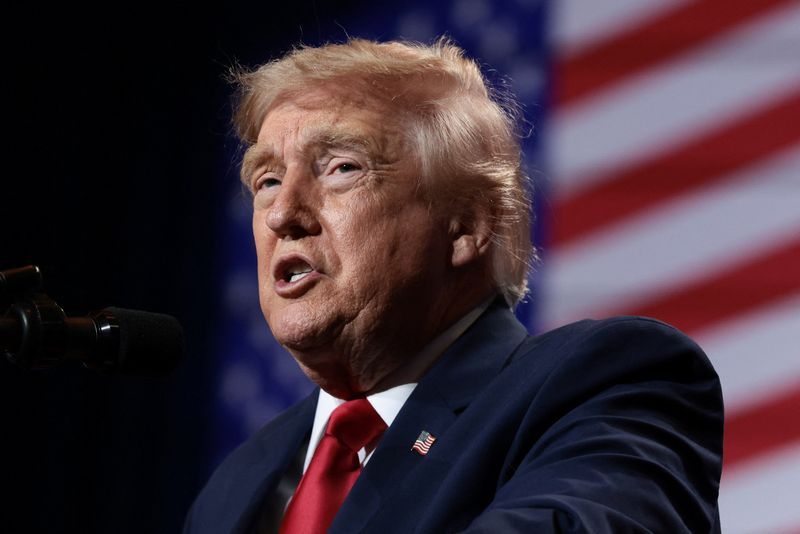
President Donald Trump has signed a national security presidential memorandum that grants sweeping authority to federal law enforcement agencies and vetted private companies to deploy cyber tools against transnational criminal organisations based in foreign jurisdictions that target Americans. The directive, issued on Wednesday, represents a significant escalation in the United States' approach to combating overseas criminal networks through offensive cyber capabilities, enlisting private sector expertise and resources alongside traditional government agencies.
The memorandum's architecture establishes a coordinated framework designed to harness what the White House describes as "the capability and innovation of the private sector" in conducting offensive cyber operations. These activities will operate under direct government supervision, with participating companies required to work in conjunction with federal, state, local, tribal, and territorial agencies. The approach essentially creates a partnership model where private entities assist in identifying threats posed by foreign-based criminal organisations and subsequently propose and execute tailored cyber responses.
According to the White House fact sheet, the directive targets a broad spectrum of criminal activity, including ransomware attacks that have devastated American businesses and critical infrastructure, international financial fraud schemes, and other sophisticated crimes orchestrated by what the memorandum officially designates as "transnational criminal organisations." These groups represent a growing security concern for the United States, as they exploit the borderless nature of cyberspace to conduct operations with relative impunity from foreign territories.
The operational structure places the Department of Homeland Security and Department of Justice at the centre of the initiative. The Homeland Security Task Force's National Coordination Center will establish and oversee a dedicated program tasked with conducting specific cyber operations designed to disrupt foreign transnational criminal organisations. This centralised coordination mechanism aims to prevent the interagency communication failures and duplicative efforts that have historically complicated American cyber operations.
Private companies participating in this framework must undergo rigorous vetting procedures before receiving authorisation to conduct operations. Once approved, these firms will have authority to execute two categories of cyber action: surveillance operations to monitor criminal networks and their infrastructure, and what the memo terms "cyber effects operations." The latter encompasses a technically expansive range of activities, including the manipulation, disruption, denial, degradation, or destruction of information systems, networks, physical or virtual infrastructure controlled through digital means, and data residing on those systems. This definition effectively permits offensive cyber intrusions with potentially severe consequences.
Financial safeguards form part of the program's regulatory architecture. Companies seeking to participate must maintain a bond or escrow account containing at least one million dollars, functioning as a guarantee against potential misconduct or unintended consequences arising from their cyber operations. This requirement reflects official recognition that offensive cyber activities, even when carefully planned and executed under government authority, carry inherent risks of collateral damage or escalation.
The concept of enlisting private companies in offensive cyber operations is not unprecedented in American security policy, but it remains contentious within cybersecurity and international relations circles. Previous proposals and limited implementations of similar arrangements have generated substantial debate regarding potential risks, including uncontrolled escalation of cyber conflicts, unintended consequences affecting civilian infrastructure, coordination failures between government agencies and private firms, and questions about accountability when operations cause harm beyond intended targets. Some analysts worry that privatising elements of cyber warfare could obscure official government responsibility and create opportunities for attribution manipulation.
For Southeast Asian nations, including Malaysia, this development carries significant implications. The region has emerged as a hub for transnational cybercrime, money laundering networks, and organised crime operations that frequently target American victims. The expansion of American cyber capabilities to strike at criminal infrastructure operating in neighbouring jurisdictions raises questions about sovereignty, potential collateral damage to civilian systems, and the broader precedent for private sector participation in offensive cyber operations. Malaysian authorities and other regional governments may face pressure to cooperate with American initiatives while simultaneously protecting their own digital infrastructure and citizens from potential unintended consequences.
The memorandum also reflects shifting American strategic thinking about cyber warfare and law enforcement. Rather than approaching transnational crime primarily through traditional diplomatic channels, extradition requests, and international law enforcement cooperation, the Trump administration is authorising direct cyber action against criminals operating abroad. This represents a more aggressive posture that prioritises operational speed and effectiveness over the diplomatic and legal frameworks that have traditionally governed such matters.
Regional cybersecurity experts note that private company involvement in government-directed cyber operations creates both opportunities and risks. Malaysian businesses and technology firms operating in the region might face pressure to participate in such arrangements, while also running the risk of becoming entangled in international cyber conflicts. The requirement for substantial financial bonds suggests the government recognises the serious potential consequences of these operations, though critics contend that financial guarantees provide insufficient protection against cascading failures in complex digital systems.
The White House and Department of Homeland Security declined to provide additional details about implementation timelines, specific targeting criteria, or oversight mechanisms beyond the bond requirement. This opacity reflects the sensitive nature of offensive cyber operations, yet it also leaves significant questions unanswered about how participating companies will be selected, what appeals processes exist for affected parties, and how the government will determine whether operations have achieved their objectives without causing broader damage.
As the programme develops, Malaysia and other Southeast Asian nations will likely monitor how the memorandum's provisions are implemented and what impact American cyber operations against criminal organisations in the region might have on broader digital security, economic activity, and regional stability. The initiative represents another step in the growing militarisation of cyberspace, with implications that extend far beyond the bilateral US-criminal enterprise context.

