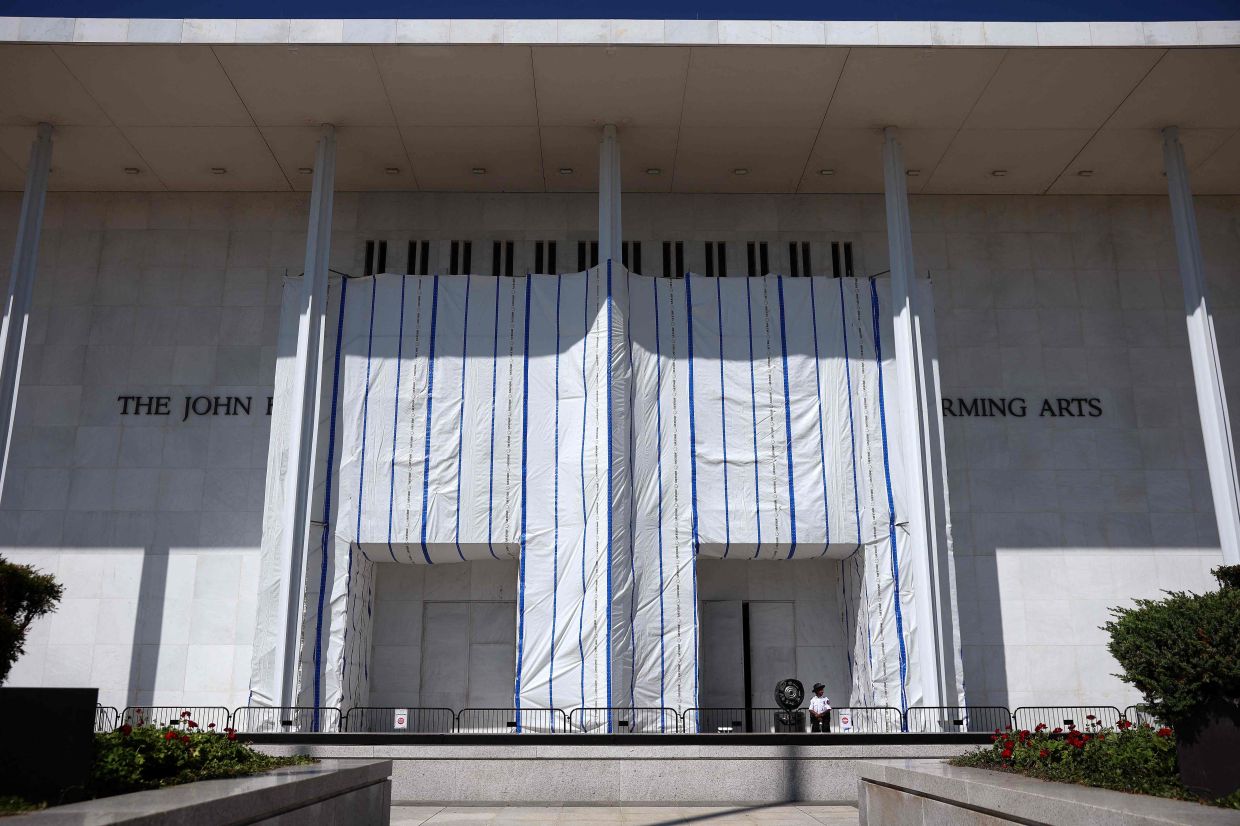
The Trump administration has weaponised the threat of destruction in its escalating dispute over Washington's Kennedy Center, suggesting in a federal court filing that the iconic performing arts venue could face demolition if judges block the president's restoration agenda and efforts to affix his name to the building. The extraordinary warning, filed by the Justice Department on Tuesday, represents a dramatic rhetorical shift in what has become a contentious battle over one of America's most recognisable cultural institutions and the proper way to honor a slain president's legacy.
The administration's legal argument rests on a stark claim: without Trump's intervention, restoration funding, and fundraising prowess, the Kennedy Center would deteriorate into such a hazardous state that demolition would become inevitable. Justice Department attorney Brantley Mayers contended in the filing that the building currently suffers from structural deficiencies that pose safety risks to visitors. The administration has framed the president as the singular figure capable of marshalling the resources necessary to prevent such decay, thereby making recognition of Trump's role essential to the venue's continued existence.
The demolition warning, while clothed in warnings about the building's integrity, appears designed primarily to pressure Democratic opponents and sympathetic judges into accepting the administration's plans. By suggesting that the alternative to Trump-led renovation is razing the structure entirely, the Justice Department has introduced an all-or-nothing proposition into the legal proceedings. The filing does not claim that an actual demolition plan exists, but rather uses the prospect as leverage in the dispute, a tactic that critics will likely view as coercive.
Should courts block the renovation and prevent Trump's name from being added to the building, the filing speculates that the site could be repurposed as a large outdoor amphitheater overlooking the Potomac River. Justice Department lawyers acknowledged that such an alternative would "fail to adequately honor" President John F. Kennedy but argued it would prove cheaper to construct and maintain than preserving the existing structure. This hypothetical transformation underscores how fundamentally the administration views its involvement as indispensable to the Kennedy Center's future.
The Justice Department's characterisation of the Kennedy Center as "structurally unsound, fundamentally unsafe, and embarrassing to the nation's capital" represents a sharp departure from previous assessments by the center's own officials. Those administrators had described the planned renovation in notably more measured terms, focusing on extensive electrical, plumbing, stage, and leak-prevention repairs. The center's leadership had emphasised that the work would not materially alter the building's distinctive exterior nor reduce it to its structural frame, presenting a picture of targeted modernisation rather than comprehensive rescue from imminent collapse.
The financial dimensions of this dispute reveal significant stakes for both political camps. The Trump administration has secured US$258 million from Congress for restoration work and reportedly attracted a new donor base, achievements it claims justify recognising the president's role. Justice Department lawyers argue that continued fundraising depends on acknowledging Trump's contributions, suggesting that donors would withdraw support if the president's name were removed from the project. This calculation appears designed to make the naming effort seem not merely symbolic but financially necessary.
The board of the Kennedy Center, newly stacked with Trump appointees, voted to place the words "Restored and Renovated by President Donald J. Trump" beneath the institution's established name and to rename its surrounding plaza the "President Donald J. Trump Plaza." These actions triggered a legal challenge from Congresswoman Joyce Beatty, a Democratic board member, who contends that only Congress possesses authority to name the institution originally established as a "living memorial" to Kennedy. Her lawsuit strikes at fundamental questions about how public institutions honour historical figures and whether an administration can unilaterally reshape institutional identity.
A federal judge previously sided with Beatty's position, ruling that the board could not simply rename the Kennedy Center and ordering the removal of earlier Trump signage placed at the venue. The administration is now appealing that decision, using the demolition threat as additional pressure in its legal strategy. The court's skepticism about the naming effort suggests judicial sympathy for preserving the institution's Kennedy-centric identity, though the appeal process remains ongoing.
For Southeast Asian observers monitoring American institutional governance, this dispute illustrates broader questions about how democracies manage competing interests around cultural monuments. The Kennedy Center controversy reflects tensions between executive authority, legislative oversight, and public stewardship of shared heritage. The threat of demolition, weaponised in a legal filing, demonstrates how institutional preservation itself can become a tool of political leverage.
A federal hearing scheduled for Thursday will address both the proposed closure and the latest effort to place Trump's name on the building. The proceeding will likely determine whether courts will enforce limits on the administration's authority to reshape this publicly funded cultural landmark, or whether the threat of deterioration and demolition provides sufficient justification for accepting the president's prominent recognition. The outcome will signal whether institutional naming and identity remain subject to constitutional constraints or whether executive will, backed by financial resources and the implicit threat of destruction, can override traditional protections.
For Malaysia and the region, this episode underscores how even wealthy, institutionalised democracies grapple with questions about executive overreach and the politicisation of cultural institutions. The Kennedy Center case raises enduring questions about balancing commemoration with preservation, and about the proper relationship between those who fund restoration and those who hold stewardship responsibility for public heritage. These issues resonate globally as institutions worldwide navigate the political dimensions of institutional naming and historical memory.

