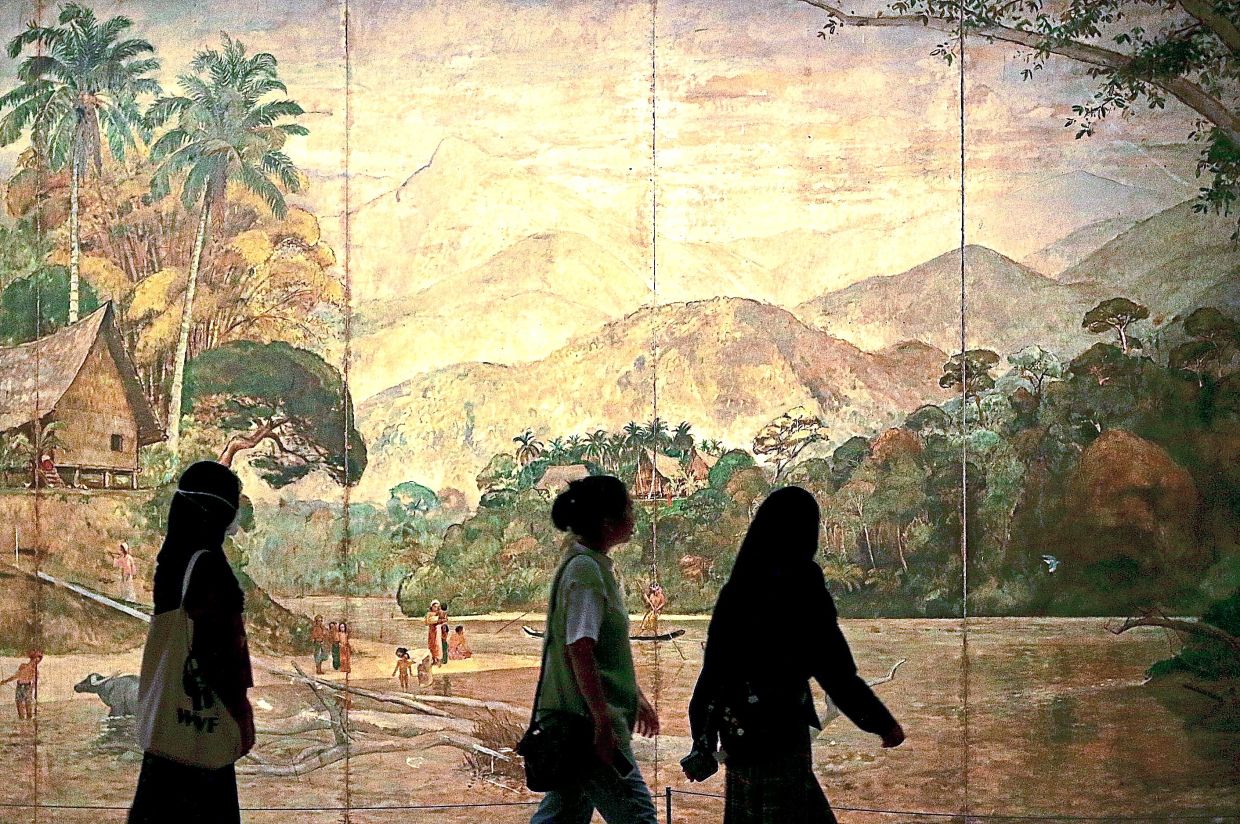
The National Art Gallery is confronting a persistent challenge that many visitors never see: Malaysia's tropical environment silently degrades the very artworks on display. The combination of high humidity and intense light exposure creates conditions that demand specialized conservation approaches tailored to Southeast Asia's climate rather than methods developed in temperate Western nations. This recognition has prompted regional institutions to rethink how they protect cultural treasures in a part of the world where traditional conservation wisdom often falls short.
Tan Hui Koon, senior chief curator of the Collection and Conservation section at the National Art Gallery, emphasises that the threat is both real and continuous. Tropical moisture does not simply sit on an artwork's surface—it infiltrates organic materials such as textiles, canvas and wood, causing them to absorb water and then release it repeatedly. This constant expansion and contraction cycle gradually weakens the structural integrity of pieces and can cause paint layers to flake or separate entirely. Unlike damage that occurs suddenly through accident or neglect, this environmental degradation happens incrementally and often invisibly until significant harm has already occurred.
The solution lies not in aggressive restoration after damage has taken hold, but in prevention. Tan explains that artworks require protective measures analogous to human sunscreen. The gallery employs museum-standard glass with tinting properties that deflect ultraviolet radiation, a critical investment given Malaysia's equatorial position and year-round intense sunlight. Beyond physical barriers, proper conservation demands rigorous environmental control—maintaining stable temperature and humidity levels, careful handling protocols, and appropriate storage conditions. This preventive philosophy represents a fundamental shift from responding to crises toward anticipating and neutralising threats before they materialise.
However, even the most carefully preserved artwork cannot be returned to its original condition once material loss has occurred. Restoration efforts focus on stabilising what remains and enabling continued display rather than achieving full recovery. This sobering reality underscores why preventive conservation has become the priority for institutions managing collections in challenging climates. The National Art Gallery's emphasis on this approach reflects hard-won experience managing collections across decades of tropical exposure.
Recognising that this challenge extends beyond Malaysia's borders, regional institutions are convening to develop and share knowledge. From December 7 to 9, the National Art Gallery will host the seventh Asia-Pacific Tropical Climate Conservation Art Research Network conference, bringing together conservation specialists from Malaysia, Thailand, Singapore, Australia and the Philippines. This gathering reflects a growing acknowledgment that tropical nations face distinctive preservation challenges requiring coordinated research and mutual learning. The conference represents the maturation of a network that began in 2008, demonstrating the value of sustained regional collaboration on conservation science.
The conference agenda reflects evolving priorities within the conservation field. While earlier meetings focused heavily on how Western paintings respond to tropical conditions, this year's iteration emphasises local knowledge systems and intergenerational knowledge transfer. Participants will examine disaster response strategies and conservation methods developed specifically for the geographical and climatic contexts of individual countries. This deliberate shift away from wholesale adoption of Western conservation models acknowledges that context matters profoundly—what works in London's dry climate and temperate seasons may prove ineffective or counterproductive in Kuala Lumpur's year-round heat and humidity.
Beyond climate considerations, the conference will explore emerging challenges and opportunities. Topics include climate change impacts on heritage, disaster management protocols, applications of artificial intelligence to conservation work, advances in materials research technology, and ethical frameworks guiding conservation decisions. Equally important is the emphasis on resource-sharing among institutions. Many Southeast Asian museums operate with limited budgets and specialised equipment. Through coordinated networks, institutions can pool expertise, share conservation facilities, and collectively develop solutions that individual organisations might struggle to fund independently.
The gathering also prioritises building the region's conservation capacity for decades ahead. Tan identifies knowledge transfer as central to the network's mission. Young conservators benefit from mentorship by experienced practitioners across national boundaries, exposure to diverse approaches, and understanding of how conservation integrates art history, chemistry, materials science and technology. This interdisciplinary character demands professionals comfortable working across traditional academic silos—a skillset particularly valuable in developing nations where specialised conservation training remains limited.
Participants will undertake a heritage site visit to Lenggong organised in collaboration with the Islamic Arts Museum Malaysia, the Department of National Heritage and People of Remarkable Talents. This fieldwork connects conference discussions to real conservation challenges facing Malaysia's archaeological and cultural landscape. Lenggong, one of Malaysia's oldest inhabited regions, offers tangible examples of how climatic and environmental factors threaten heritage beyond museum walls—temples, historical structures and outdoor artefacts face preservation challenges that conference participants can examine firsthand.
For Malaysia specifically, hosting this conference carries broader significance. The country's artistic heritage and conservation expertise represent underutilised assets on the global stage. By demonstrating leadership in developing locally-appropriate conservation science, Malaysia can position itself as a thought leader in tropical preservation methods. This expertise has market value—as climate change pushes more institutions to grapple with changing environmental conditions, the solutions pioneered in Southeast Asia may become increasingly sought after internationally. Tan views the conference as an opportunity to trace Malaysia's conservation journey over 15 years while simultaneously strengthening networks capable of elevating Malaysian heritage onto the world stage.
Ultimately, the work occurring at the National Art Gallery and within this regional network addresses a fundamental challenge: how to preserve cultural treasures in an environment fundamentally different from the temperate climates where most Western conservation science developed. By combining preventive strategies, cutting-edge research, local knowledge and international collaboration, Malaysian institutions are developing a conservation model suited to tropical realities—one that other developing nations with similar climates may eventually adopt and adapt.

