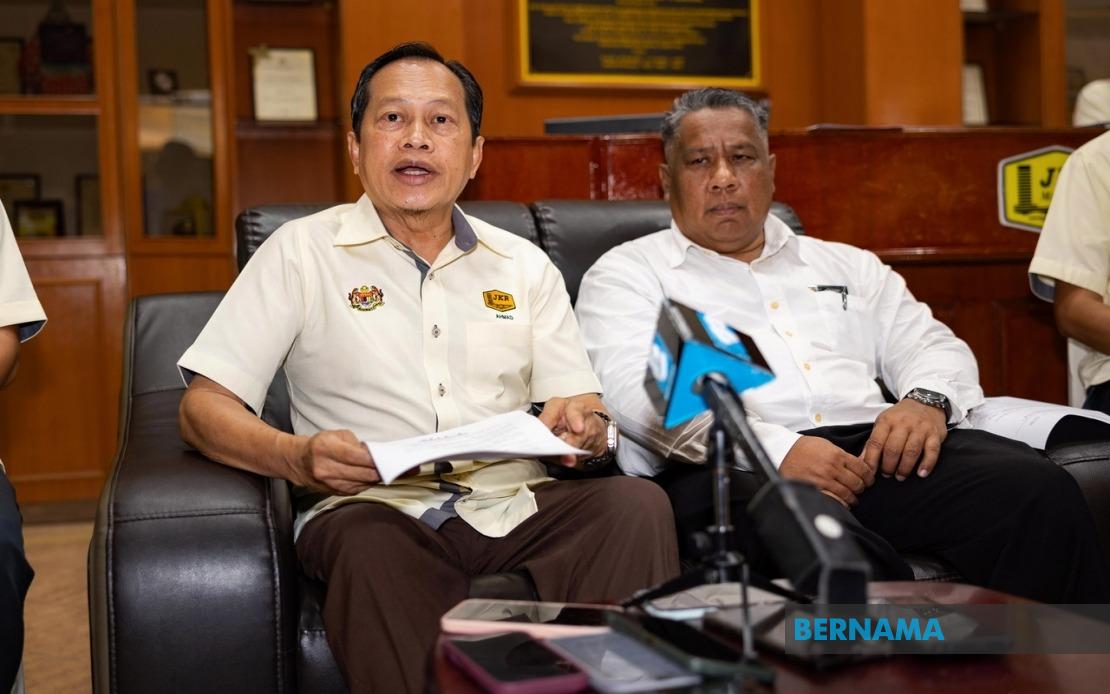
Following a tragedy that claimed four lives when a tree collapsed onto a vehicle along the FT68 Bentong-Kuala Lumpur Old Road, Malaysia's Deputy Works Minister Datuk Seri Dr Ahmad Maslan has moved to clarify the division of responsibility for managing vegetation on federal highways. The incident has reignited scrutiny on how authorities coordinate to prevent similar accidents, with questions being raised about the adequacy of current oversight mechanisms and whether multiple agencies are effectively sharing responsibility for safety-critical maintenance.
During a working visit to the Manjung District Engineer's Office in Lumut, Datuk Seri Ahmad Maslan explained that the legal framework governing tree management is embedded in Section 101(b) of the Local Government Act 1976. Under this provision, local authorities possess both the power and the obligation to plant, prune, and remove trees within their jurisdictions, including those situated on federal road reserves that fall within their administrative boundaries. This statutory arrangement, he emphasised, establishes a clear demarcation of duties rather than creating ambiguity about who bears responsibility.
The Deputy Works Minister was responding to calls from Bentong MP Young Syefura Othman, who has advocated for the Public Works Department and road maintenance concessionaires to strengthen collaborative efforts with certified arboricultural experts. The MP's recommendations include implementing regular technical evaluations of mature trees and slope stability assessments at strategic intervals throughout federal road networks. These suggestions arose from concern that preventative measures could have mitigated the recent tragedy.
Ahmad stressed that the Public Works Department does not undertake tree planting operations as part of its core responsibilities. Rather, JKR's remit along federal roadsides is confined to road infrastructure elements such as furniture and signage. This distinction matters operationally because it shapes which agency commands the expertise, equipment, and budget allocation required for comprehensive tree management. By positioning JKR as a support function rather than a primary operator, the minister attempted to reframe the conversation around coordination rather than direct provision of services.
Critically, the concession agreements governing road maintenance contain specific constraints on tree removal activities. Under existing contractual terms, maintenance concessionaires are permitted to clear fallen trees only after they have already collapsed or become hazardous through natural failure. Proactive removal of potentially unstable mature specimens, or systematic pruning to reduce risk, falls outside the contractual scope unless there is evidence of imminent danger. This gap between what might be operationally prudent and what contractual arrangements permit represents a systemic vulnerability that the tragedy has exposed.
The minister's remarks suggest a reluctance to expand JKR's mandate without legal clarification, citing a court's decision on the matter. This cautious approach reflects the bureaucratic reality that Malaysian federal agencies frequently operate within tightly defined statutory and contractual parameters. However, the implication is that closing gaps in tree safety protocols may require amendments to existing frameworks rather than simply directing current agencies to do more within their present authorities.
For Malaysian road users and residents in affected areas, the practical consequence of this responsibility structure is that safety outcomes depend on coordination between JKR, concessionaires, and local authorities. When these entities do not communicate effectively or share information about hazardous vegetation, the risk compounds. Bentong MP Young Syefura Othman's call for periodic technical assessments reflects recognition that reactive responses after failures are insufficient; proactive monitoring requires sustained cross-agency engagement.
During his Manjung visit, Ahmad also emphasised the importance of continuous monitoring and collaborative oversight at multiple administrative levels within the Ministry of Works, Perak's JKR division, and district-level JKR offices. He framed this attention as critical to ensuring that infrastructure projects and maintenance activities conform to technical standards, schedules, and budgetary allocations. This messaging suggests that the ministry recognises potential coordination gaps and is attempting to strengthen oversight mechanisms through internal restructuring and communication improvements.
The broader context for this clarification is Malaysia's ongoing infrastructure modernisation against a backdrop of growing road networks and ageing vegetation. As urban and peri-urban areas expand, trees planted decades ago along federal reserves have matured and may require increasingly intensive management. The institutional framework governing these responsibilities was designed for earlier conditions and may not optimally serve contemporary safety requirements, particularly in high-traffic corridors where tree failures carry elevated consequence.
The tragedy on FT68 has also highlighted a gap between public expectations and operational reality. Malaysians using federal roads reasonably expect that all hazards, including mature trees, are regularly assessed and managed to acceptable safety standards. However, the fragmentation of responsibility across multiple agencies means that actual safety outcomes depend on how well these entities coordinate. When families are killed by preventable events, questions about bureaucratic responsibility boundaries become viscerally immediate.
Moving forward, the key question is whether existing coordination mechanisms are adequate or whether the incident signals the need for a more unified approach to vegetation management on federal roads. Ahmad's readiness to assist local authorities represents a positive signal of willingness to collaborate, but statements of intent differ from institutional changes that would embed regular multi-agency assessment protocols, standardised risk thresholds for tree removal, and clear escalation procedures when local authorities face resource constraints. The tragedy suggests that clarifying legal responsibility, though important, is insufficient without corresponding operational structures that translate responsibility into consistent safety outcomes across all federal road reserves.

