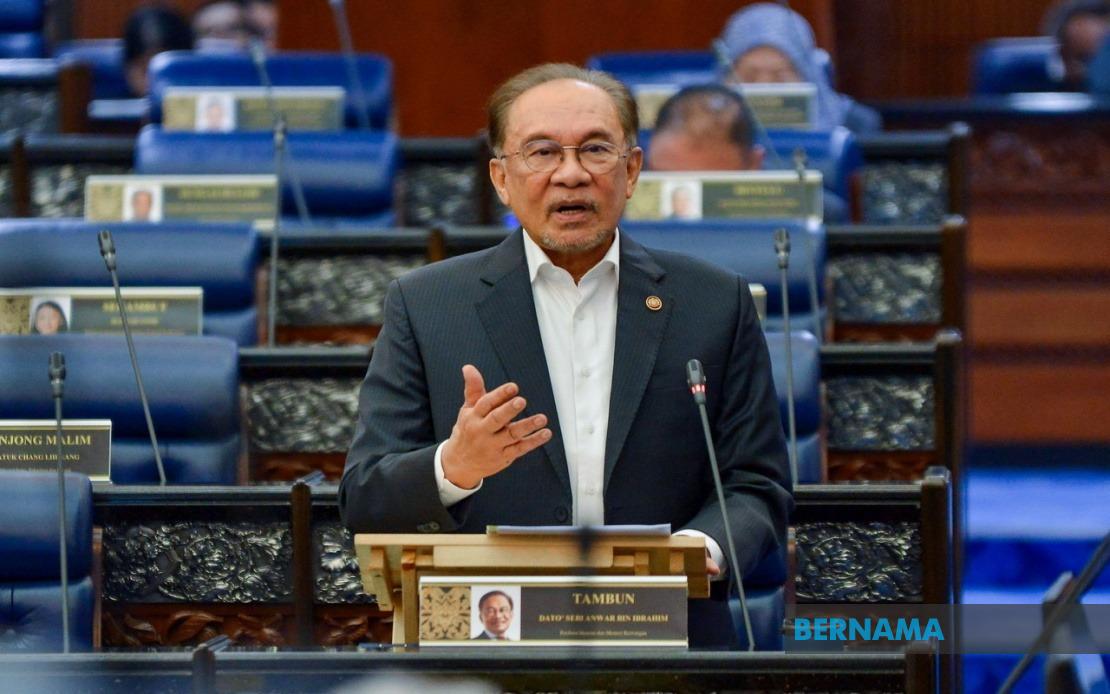
Prime Minister Datuk Seri Anwar Ibrahim has directed the Transport Ministry to pursue conversations regarding the strategic use of ports positioned along the Malaysia-Thailand border and in Penang, with the overarching objective of bolstering infrastructure development and logistics capabilities in this critical frontier region. The directive emerged from high-level discussions held between Anwar and Thai Prime Minister Anutin Charnvirakul during the latter's recent official visit to Malaysia, reflecting the growing importance both nations place on regional connectivity and economic integration.
During Ministerial Question Time in the Dewan Rakyat, Anwar elaborated on the bilateral agenda, emphasising that port infrastructure featured prominently among the matters tabled with his Thai counterpart. The conversation encompassed multiple dimensions of cross-border transport infrastructure, extending beyond port facilities to encompass railway networks and other logistical pathways that could facilitate enhanced people-to-people and goods movement between the two neighbours. This multifaceted approach underscores a recognition that sustainable border development requires investment across several complementary transport modes rather than reliance on any single corridor.
The Malaysian premier acknowledged that while a newly inaugurated transport route has commenced operations, the government recognises additional opportunities for expansion and optimisation. By widening the discussion to include rail transport alongside maritime infrastructure, the government is positioning itself to develop a more resilient and diversified logistics ecosystem. This strategic thinking reflects international best practices where mature border corridors typically feature multiple interconnected transport systems to maximise efficiency and reduce bottlenecks.
Sanglang port and Perlis Inland Port, or PIP, emerged as focal points in these infrastructure deliberations. Both facilities represent significant investments in Malaysia's northern logistics backbone and offer considerable potential for amplifying the economic benefits generated by the developing border corridor. Rather than treating these ports as standalone assets, government officials are increasingly viewing them as integrated components within a broader regional trade and commerce network. The emphasis on maximising economic spillovers suggests a sophisticated understanding that infrastructure investment must directly translate into tangible commercial activity and business opportunities for communities in both countries.
The inclusion of tourism within the border development discussion reveals a forward-thinking approach that extends beyond conventional freight and logistics concerns. By linking transport infrastructure development to tourism promotion, Malaysian policymakers are attempting to create diversified revenue streams and employment opportunities throughout the border region. Enhanced transport connectivity typically attracts tourism investment, and Thai visitors travelling through improved transport networks could inject significant economic activity into Malaysian border towns and surrounding districts.
The timing of these discussions carries particular significance for Southeast Asian regional integration efforts. As the region moves toward greater economic interconnection through frameworks such as the ASEAN Economic Community, bilateral initiatives between major trading partners like Malaysia and Thailand take on added importance. Cross-border infrastructure development serves as a practical mechanism for translating regional integration aspirations into concrete infrastructure and commercial benefits that reach local communities.
For Malaysian stakeholders, particularly those operating in border states, the Transport Ministry's engagement on port utilisation represents a potential turning point. Historically, the Malaysia-Thailand border region has faced infrastructure constraints that limited its capacity to capture trade flowing between Southeast Asia and neighbouring markets. Improved port facilities and enhanced rail connections could reposition this region as a competitive gateway for regional commerce, potentially drawing investment and generating employment across multiple economic sectors.
The government's emphasis on railway transport alongside port infrastructure reflects a growing recognition that Thailand's existing rail networks represent underutilised assets that could be leveraged for bilateral trade. Enhanced rail connectivity between Malaysian and Thai ports could reduce transportation costs and transit times, making cross-border commerce more competitive and attractive to regional and international traders. This infrastructure synergy aligns with broader Southeast Asian efforts to develop comprehensive multimodal transport corridors.
Implementing these cross-border infrastructure initiatives will require sustained coordination between Malaysian and Thai transport authorities, complemented by appropriate regulatory frameworks and investment mechanisms. The Transport Ministry's engagement on port usage discussions suggests this coordination apparatus is being activated at appropriate levels. Successful execution would position Malaysia's northern region as a more attractive logistics hub, potentially attracting supply chain investment from multinational enterprises seeking efficient gateway routes into Southeast Asia.
Looking forward, the concrete outcomes of these ministerial discussions will significantly determine whether the Malaysia-Thailand border realises its substantial economic potential. The government's willingness to pursue integrated transport solutions spanning ports, rail, and tourism infrastructure indicates serious commitment to transforming this frontier region into a genuine engine of regional prosperity. For Malaysian businesses and investors, these initiatives signal expanding opportunities in logistics, trade facilitation, and associated service sectors within the emerging border corridor economy.

