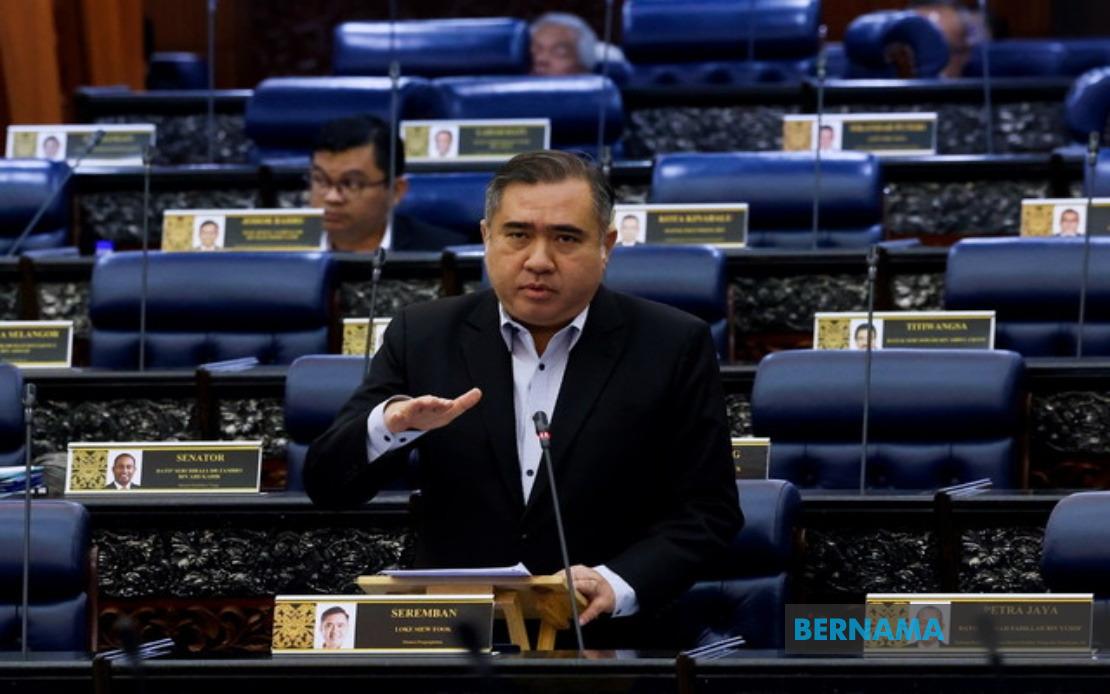
The Transport Ministry has announced plans to overhaul Malaysia's approach to compensating road accident victims and their families, signalling a significant shift toward holding offenders financially accountable for the harm they cause. Minister Anthony Loke informed Parliament that proposed amendments to the Road Transport Act 1987 would grant courts the authority to impose compensation orders on individuals convicted of serious traffic offences, marking a departure from treating fatal accidents as routine traffic violations.
The compensation mechanism represents a recognition that victims of serious road incidents and their dependents face substantial financial hardship when breadwinners are killed or permanently disabled. Under the new framework, courts would retain discretion to determine appropriate compensation levels based on the specific circumstances of each case. Judicial officers would consider multiple factors when determining awards, including the extent of injuries sustained, the permanence of any disabilities, documented economic losses such as lost wages and medical expenses, and the offender's financial capacity to satisfy the judgment. This case-by-case approach acknowledges that road accidents create vastly different consequences depending on whether victims are working professionals, children, or retirees.
Parallel to the compensation initiative, the government has already passed the Road Transport (Amendment) Bill 2026, which introduces a dedicated legal framework targeting illegal street racing, a persistent problem that has claimed multiple lives in recent years. The legislation establishes a new Section 42A that creates a specific offence for illegal racing, fundamentally altering enforcement capabilities. Previously, authorities could only prosecute participants after an accident occurred, creating a reactive rather than preventive system. The amendment now permits prosecution of individuals engaged in illegal racing activities before any collision takes place, allowing police to disrupt dangerous driving behaviour at its inception.
The penalties introduced under the new amendments reflect escalating consequences for repeat offenders. A first conviction for illegal racing results in a fine ranging from RM2,000 to RM10,000, alongside potential imprisonment of up to two years, or a combination of both. Individuals convicted of a second or subsequent illegal racing offence face substantially steeper penalties, including fines between RM5,000 and RM20,000 and imprisonment terms extending to five years. This graduated penalty structure aims to deter initial participation while imposing severe consequences that discourage recidivism among those already convicted.
The Transport Ministry has coupled legislative changes with intensified enforcement operations across the country. A recent operation in Johor, one of Malaysia's hotspots for illegal racing incidents, demonstrates the scale of the problem and enforcement response. Officers arrested sixteen individuals and seized 260 motorcycles during this operation, illustrating how systematic crackdowns target both participants and the vehicles they use. The cumulative effect of removing motorcycles from circulation aims to raise the cost and complexity of organising illegal racing events, making participation economically less attractive for street racers.
The urgency of these measures became acute following a catastrophic accident on June 1 at Kilometre 27 of Jalan Renggam-Simpang Renggam in Johor, which resulted in five fatalities. The severity of this incident prompted the Attorney-General's Chambers to direct investigations under Section 302 of the Penal Code, which addresses culpable homicide not amounting to murder, indicating the government's determination to pursue serious criminal charges rather than simple traffic offences. Such incidents highlight why legal reforms targeting illegal racing have shifted from proposals to enacted law.
Statistical context underscores the public health dimensions of road safety in Malaysia. Loke noted that road accidents claim more than 6,000 lives annually across the country, representing a chronic crisis that extends beyond sensational incidents involving illegal racing. This death toll exceeds many communicable diseases and rivals suicide rates in developed nations, yet receives comparatively less public health intervention. The scale of fatalities suggests that while illegal racing represents a visible and dramatic subset of road accidents, systemic issues affecting driver behaviour, vehicle maintenance, and road infrastructure require broader attention.
Beyond legislative and enforcement responses, the Transport Ministry emphasises that sustainable reductions in road accident mortality require behavioural change and public awareness campaigns. Loke stressed that enforcement alone cannot address deeply embedded cultural attitudes toward driving, speed, and risk-taking that contribute to Malaysia's accident statistics. Education initiatives targeting young drivers, campaigns addressing drunk driving, and messaging around defensive driving techniques represent necessary complements to criminal penalties and compensation mechanisms. The government recognises that deterrence through legal consequences operates most effectively alongside social norms that stigmatise reckless driving behaviours.
The proposed amendments also reflect a broader policy shift toward victim-centred justice and financial restitution, aligning Malaysian law with international best practices in compensation for criminal harm. Many developed legal systems routinely impose compensation orders as standard sentencing components, recognising that criminal justice should facilitate victim recovery alongside offender punishment. By adopting this approach, Malaysia joins jurisdictions that treat road accident compensation as a legitimate criminal justice function rather than exclusively a civil matter requiring separate lawsuits.
Loke called for a whole-of-society approach to road safety, explicitly warning against politicisation of the issue and emphasising that improvement requires cooperation across government ministries, community organisations, civil society groups, and individual citizens. This appeal reflects an awareness that some constituencies may resist stricter enforcement against illegal racing if implementation appears selective or politically motivated, potentially undermining public legitimacy of the measures. The framing of road safety as a national agenda transcending partisan divisions attempts to position these reforms as benefiting all Malaysians regardless of political affiliation.
Implementation of the compensation mechanism will require establishing clear guidelines for courts determining appropriate award levels, training judicial officers in assessing damages, and potentially creating victim advocacy systems to ensure families navigate compensation claims effectively. The effectiveness of these amendments ultimately depends on rigorous prosecution, consistent sentencing practices, and timely payment mechanisms that ensure victims actually receive awarded compensation rather than facing years of collection battles.
For Malaysian drivers and road users, these amendments signal that causing serious harm through reckless or illegal driving will carry both criminal penalties and substantial financial consequences. The combination of stricter criminal sanctions, proactive enforcement against illegal racing, and court-ordered compensation reflects government determination to reduce deaths and injuries on Malaysian roads through multiple reinforcing mechanisms rather than relying on any single intervention.

