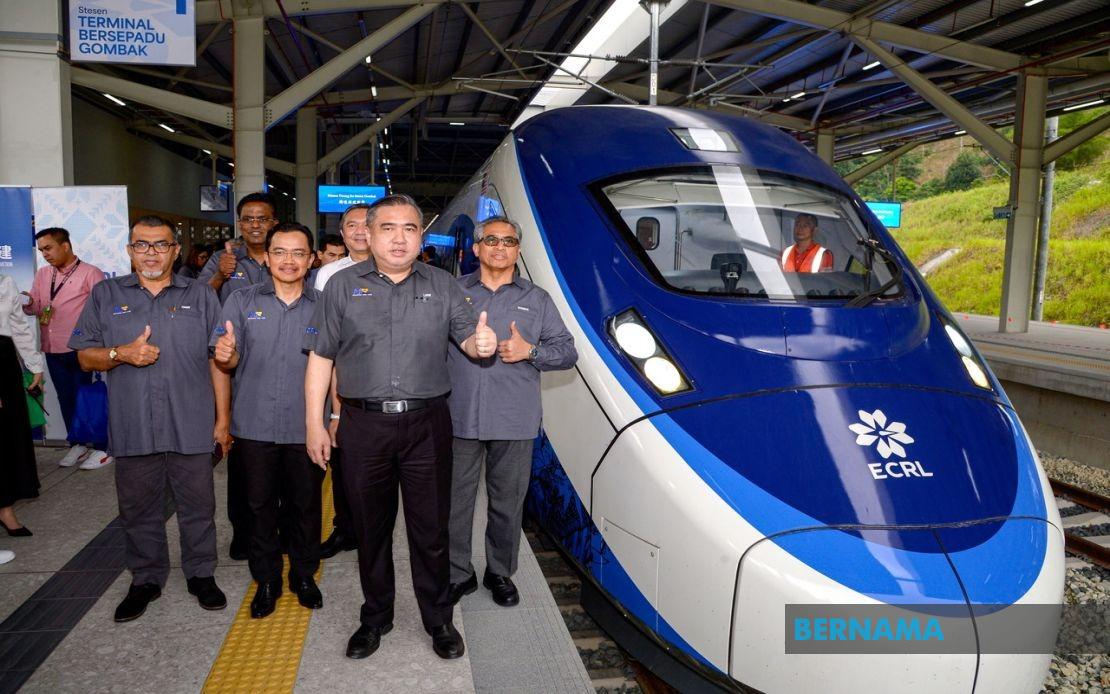
Transport Minister Anthony Loke Siew Fook has signalled plans to launch operations on the East Coast Rail Link Phase 1 segment connecting Kota Bharu to Gombak as early as December this year, a significant acceleration from the previously scheduled January 2027 commencement date. The revised timeline represents a dramatic shift in project expectations, bringing the long-awaited rail corridor substantially closer to operational reality for commuters across Kelantan and Selangor.
The feasibility of achieving this accelerated schedule rests heavily on the successful execution of critical testing phases currently underway, particularly the System Integration Testing and Fault-Free Run procedures. Loke emphasized that the acceleration initiative does not constitute a compromise on operational safety, a concern that naturally arises when major infrastructure projects attempt to compress timelines. Rather, the ministry is working to streamline regulatory and certification processes wherever possible without diminishing the rigour of safety verification protocols.
Malaysia Rail Link Sdn Bhd and primary contractor China Communications Construction Company Ltd have been tasked with driving the expedited timeline. The Transport Ministry is simultaneously collaborating with the Land Public Transport Agency to identify efficiencies within the testing and certification framework. Typically, these verification processes consume two to three months, but regulatory authorities are examining whether this duration can be reasonably compressed without sacrificing the comprehensive nature of safety assessments that such major transportation infrastructure demands.
Loke's confidence in acceleration stems from extensive preliminary testing already completed in China before the trains were shipped to Malaysia. The locomotives and rolling stock have undergone factory-level evaluations, reducing the scope of domestic testing while maintaining comprehensive quality assurance. The System Integration Testing, which commenced this month, will verify the seamless operation of interconnected systems including electrical infrastructure and signalling mechanisms that are fundamental to safe railway operations.
Following successful system integration testing, the Fault-Free Run phase is scheduled to commence in September. This critical procedure requires each train set and electric locomotive to traverse approximately 8,000 kilometres under direct Land Public Transport Agency supervision. During the Fault-Free Run, trains operate under genuine field conditions without carrying passengers, allowing authorities to validate that operational safety and reliability standards align with established requirements and legal frameworks. This real-world testing represents an indispensable final validation stage before any revenue service commencement.
The project overall has achieved 95.08 per cent completion as of July for Phase 1, indicating substantial construction and infrastructure work is substantially finished. This advanced completion status provides the foundation for the accelerated testing and commissioning timeline. The successful coordination between Malaysian authorities and Chinese contractors suggests the technical collaboration has achieved sufficient momentum to support the compressed schedule.
Phase 2 of the East Coast Rail Link, which will extend services from Gombak southward to Port Klang, remains on track for December 2027 completion with operations anticipated to commence in January 2028. This phased approach allows for revenue operations to begin on the initial Kota Bharu-Gombak segment while final construction and commissioning work continues on the southern extension. For Malaysia's transportation network, this represents a transformative addition once fully operational, providing a high-speed rail alternative that can significantly reduce journey times and vehicular congestion on existing corridors.
Loke reiterated emphatically that no safety verification processes will be circumvented despite the acceleration drive. His comment that both government authorities and the public share heightened sensitivity to railway safety underscores the critical importance of maintaining uncompromised safety standards on any new transportation infrastructure. The compressed timeline aims to achieve operational commencement without eliminating any mandatory testing or regulatory approval stages.
The December target carries considerable implications for Malaysian commuters and the broader Southeast Asian transportation landscape. Successful acceleration and operational launch would validate the ongoing Malaysian-Chinese infrastructure partnership while demonstrating that major projects can be delivered on accelerated timelines when coordination and regulatory efficiency improve. Conversely, any slippage would perpetuate the perception of infrastructure project delays that have historically characterized major Malaysian development initiatives.
For the Klang Valley and northern corridor economies, the rail link represents crucial connectivity that should ease congestion, reduce transportation costs for commuters, and potentially catalyse economic development in previously underserved areas. The prospect of December operations would deliver tangible benefits to workers commuting between Kelantan and the Selangor employment centres, representing a meaningful quality-of-life improvement and contributing to broader national development objectives.
The project's acceleration also reflects evolving government priorities and commitment to infrastructure modernization under current political leadership. The visible progression and push toward tangible operational commencement demonstrate responsiveness to public expectations for completed projects rather than perpetual construction phases. Success in delivering the Kota Bharu-Gombak service would establish positive momentum for Phase 2's eventual completion and strengthen confidence in subsequent major infrastructure announcements.
Stakeholder coordination has clearly intensified, with high-level involvement from the Chief Secretary to the Government, Chinese Ambassador representation, and direct engagement from transport ministry leadership. This elevated administrative attention signals the political importance attached to the project's timely execution. The December target, while ambitious, appears to be grounded in technical assessments of current progress rather than purely aspirational timeline-setting.

