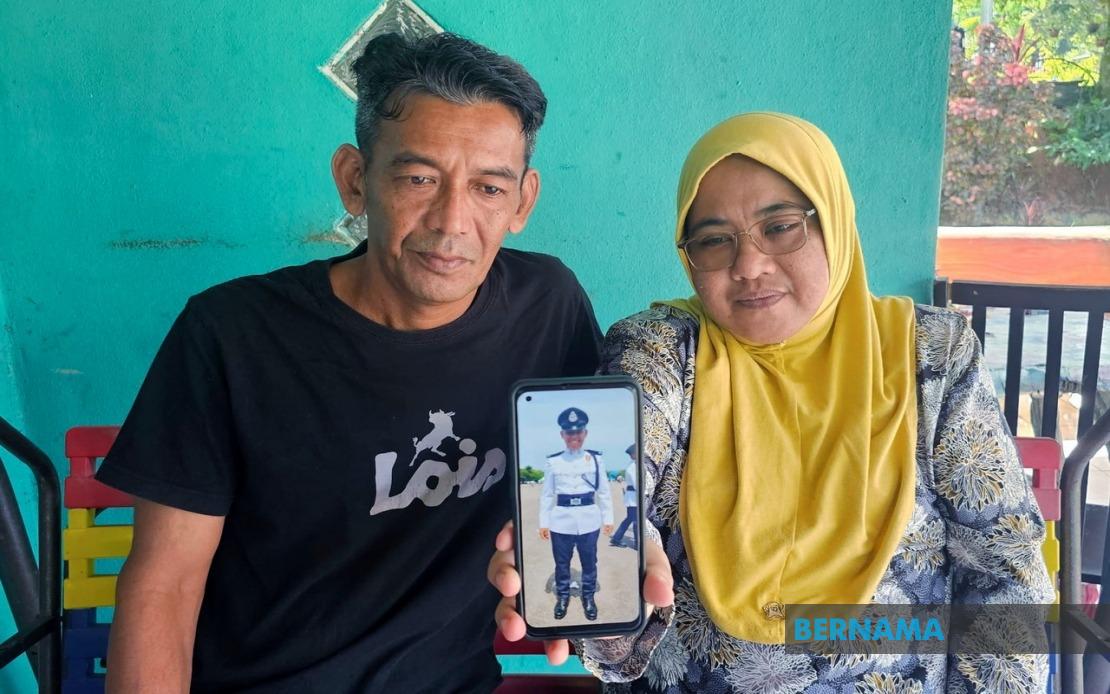
The anticipated homecoming of Constable Muhammad Raimi Ismarubee has ended in tragedy, transforming what should have been a joyful family reunion into profound grief for his parents in Dungun, Terengganu. The 26-year-old officer, who worked at Weston Police Station in Beaufort, Sabah, was believed to have been fatally electrocuted while on duty on August 6, shocking his family who had been eagerly awaiting his arrival later in the month. His father Ismarubee Ismail, 51, and mother Nor Azila Zakaria, 46, learned of their son's death through a phone call from a friend, a devastating blow that came just hours after Muhammad Raimi had messaged them about a successful drug arrest operation.
The circumstances surrounding the fatal incident reveal a workplace safety concern that extends beyond a single tragedy. Muhammad Raimi and two of his colleagues—Corporal Chiu Teck Siong, 40, and Lance Corporal Mohamad Nur Hafiz Ibrahim, 29—died after coming into contact with electrical current while attempting to move a metal pole used for harvesting coconuts outside the Weston Police Station near Sekolah Kebangsaan Weston. The use of such equipment near a police station raises questions about proper safety protocols and the oversight of operational procedures, particularly when officers are tasked with maintenance or utility-related work outside their regular policing duties.
For Ismarubee Ismail, the shock of losing his son was compounded by the cruel timing. The family had been planning Muhammad Raimi's homecoming since June, when the constable expressed his desire to take leave and return to Terengganu. Unable to immediately secure affordable flight tickets from Sabah, he had postponed setting specific dates while continuing his duties. His last visit home had been in January, making the anticipated reunion particularly significant for the close-knit household. On August 6, just hours before his fatal electrocution at 6 pm, Muhammad Raimi had shared news of a successful drug arrest via WhatsApp messaging—evidence of a dedicated officer engaged in operational work, unaware that those would be among his final communications with his family.
Muhammad Raimi's story reflects the reality of many Malaysian police officers stationed far from home in challenging postings. Since joining the force in September 2024, he had been based away from his family in Terengganu, navigating the balance between professional commitment and personal bonds. His dedication extended beyond his police duties; colleagues and family alike viewed him as a conscientious young man who took his responsibilities seriously. The incident highlights the unseen pressures and occupational risks that police personnel face across the country, particularly those working in distant stations where resources and safety infrastructure may be stretched thin.
Beyond his uniform, Muhammad Raimi was remembered as a devoted family member whose priorities reflected maturity beyond his years. His mother recalled that he had plans to become engaged to a woman from Sabah in the coming year, but characteristically deferred his personal milestones until his youngest sibling completed the Sijil Pelajaran Malaysia examination. This decision underscored his commitment to supporting his family's educational aspirations. He consistently sent money home each month and personally purchased necessities for his siblings' studies, including computers, demonstrating a selflessness that made his sudden loss all the more poignant for those who depended on his support.
The financial and emotional impact of Muhammad Raimi's death reverberates through his household structure. As the second of three children, he had assumed a quasi-protective role despite his youth, ensuring that his siblings' educational needs were met and that his parents received regular financial contributions. His father Ismarubee works as a laborer in Felda Kerteh 2, a settlement where many families rely on consistent income streams. The loss of Muhammad Raimi's monthly contributions represents not merely a financial hardship but also the severing of a lifeline that enabled his younger sibling to continue studies without interruption. The timing of his death—before his intended engagement and family expansion—underscores the abruptness with which tragedy can dismantle carefully constructed family plans.
The multiple fatalities in this single incident compound the tragedy and demand scrutiny of workplace safety standards within the Royal Malaysia Police. That three officers died simultaneously under virtually identical circumstances—electrocution while handling a metal pole—suggests systemic issues rather than isolated human error. Questions arise regarding whether the equipment was properly insulated, whether the area was adequately assessed for electrical hazards, and whether officers received appropriate safety training and oversight when assigned non-routine tasks. For police families across Malaysia, particularly those with relatives stationed in remote locations, this incident resurrects concerns about duty-of-care protocols that extend beyond conventional policing operations.
The immediate response to Muhammad Raimi's death involved arrangements to repatriate his remains to Terengganu for burial. His family made the difficult decision to lay him to rest at the Felda Kerteh 2 Muslim Cemetery on August 7, allowing grieving relatives and community members to pay their respects in the settlement where his family has deep roots. The speed of these arrangements reflects both Islamic burial practices and the family's need for closure, yet the finality of his funeral underscores the permanence of loss. Nor Azila's accounts of her son's character and intentions—his upcoming engagement, his protective regard for his younger sibling, his consistent financial support—paint a portrait of a young life rich with promise, now extinguished.
The incident at Weston Police Station serves as a grim reminder of occupational hazards that extend beyond the typical understanding of police work. While officers are trained to handle dangerous criminal situations and personal security threats, deaths resulting from workplace electrocution raise different questions about prevention, training, and institutional responsibility. The fact that three officers died in the same incident within minutes suggests that standard safety protocols, if they existed, were either inadequate or not enforced. For Malaysian police personnel and their families, this tragedy underscores the need for comprehensive safety audits across all police stations, particularly those in remote areas where emergency response times may be longer and infrastructure oversight potentially less stringent.
Muhammad Raimi Ismarubee's death represents a loss that extends well beyond individual tragedy. His family loses a son, brother, and financial anchor. The Weston Police Station loses three experienced officers. The wider Malaysian police force loses officers in their productive years. And the nation faces uncomfortable questions about whether its institutions adequately protect those who serve on its behalf. As his parents mourn the son who would never return home for that long-anticipated holiday, the memory of his dedication—to his profession, his family, and his siblings' education—stands as both a testament to his character and an indictment of the systems that failed to keep him safe while performing his duties.

