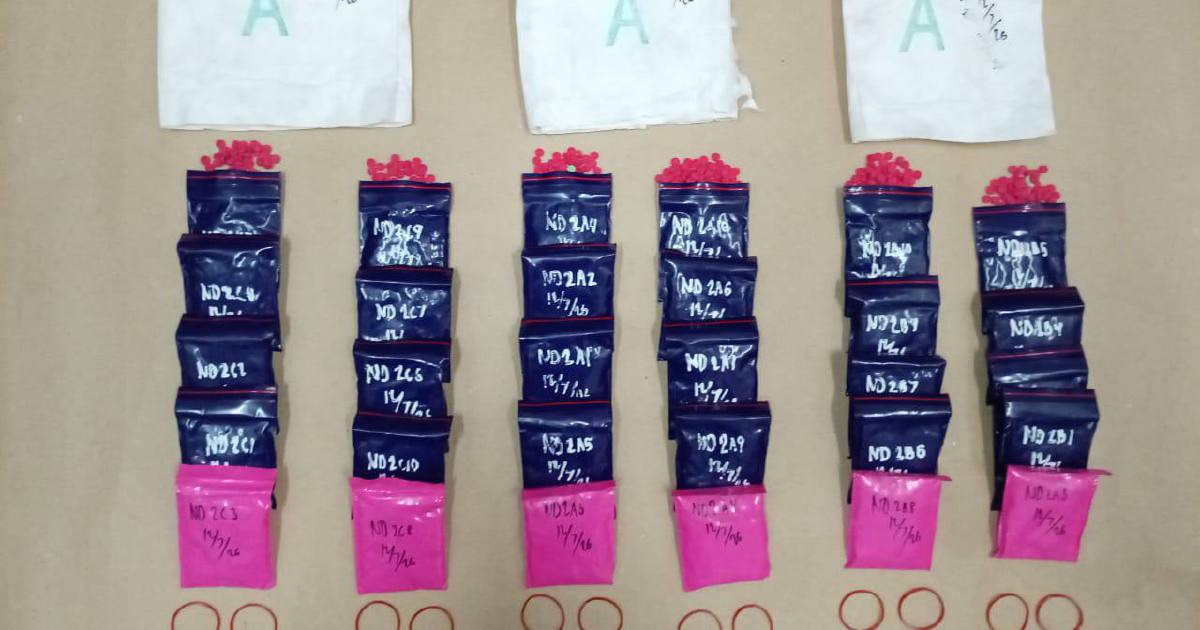
Authorities in Kelantan have detained a 35-year-old tow truck agent after uncovering a substantial cache of methamphetamine tablets during a roadside operation near Wakaf Bharu. The apprehension, which took place on Jalan Kubang Batang in the Tumpat district, marks another significant intervention against synthetic drug trafficking in Malaysia's northeastern region.
The seizure of 6,000 yaba pills, with an estimated street value of RM60,000, represents a considerable volume of illegal narcotics. Yaba, a potent stimulant combining methamphetamine and caffeine, has become increasingly prevalent across Southeast Asia in recent years, with traffickers exploiting its compact form and high profitability to move the substance across international borders and within domestic markets.
The discovery during the vehicle inspection underscores ongoing police efforts to combat drug distribution networks that exploit Malaysia's extensive road infrastructure. Tow truck services, while legitimate in most cases, have occasionally been misused as cover for illicit activities, allowing suspects to move freely across regions under the guise of vehicle recovery operations. This particular case highlights vulnerabilities that law enforcement agencies continue to address through intelligence-driven operations and enhanced checkpoint protocols.
Kelantan, situated along established trafficking corridors connecting Thailand to Malaysia and onward to Singapore, remains a critical focus for narcotics enforcement. The state's geographic position and porous border areas have historically attracted drug syndicates seeking to distribute contraband throughout the peninsula. Recent operations by state and federal authorities have intensified, reflecting growing concern over methamphetamine prevalence among younger demographics and its association with violent crime and social instability.
The arrest follows a pattern of significant seizures across northern states this year. These operations suggest either increased enforcement capability or shifting trafficking tactics as criminal networks attempt to avoid detection by employing courier systems and ostensibly legitimate business fronts. The tow truck agent's alleged involvement indicates how conventional occupations continue to serve as convenient cover for illicit operations, requiring sustained vigilance from regulatory authorities and law enforcement agencies.
Yaba's popularity as a trafficking commodity stems from multiple factors: its high profit margins relative to weight, prolonged effects compared to other stimulants, and established demand networks throughout the region. The pills are manufactured primarily in clandestine laboratories operating in Myanmar and other border areas, then smuggled southward through established supply chains. Malaysian traffickers play a critical middleman role, receiving shipments from northern sources and distributing them throughout the peninsula and to Singapore, contributing to a regional epidemic of synthetic drug abuse.
The estimated RM60,000 valuation reflects current street prices, though actual market value fluctuates based on location, purity, and local supply conditions. In frontier areas nearer Thailand, prices typically run lower; in urban centres like Kuala Lumpur and Selangor, yaba commands premium prices. The substantial quantity recovered indicates this operation targeted mid-level distribution rather than street-level sales, suggesting the suspect may have occupied a significant position within a larger trafficking hierarchy.
Investigating authorities will likely pursue multiple lines of inquiry: identifying the source of the shipment, tracing recipients within Malaysia, and determining the extent of the suspect's involvement in broader criminal operations. Such investigations frequently uncover additional suspects, warehousing locations, and financial trails leading to higher-level organisers. The information derived from this apprehension may contribute to intelligence networks combating transnational drug operations across Southeast Asia.
This seizure arrives amid intensified regional cooperation against methamphetamine trafficking. ASEAN member states have increased information sharing and joint operations targeting manufacturing facilities and trafficking routes. Malaysia's participation in these initiatives has yielded notable results, though the sheer volume of contraband entering the country annually—often through sea routes, remote border crossings, and concealment methods of increasing sophistication—indicates that enforcement capacity continues to lag behind supply capacity.
The broader implications extend beyond the individual arrest. Each significant seizure provides forensic evidence, witness testimony, and operational intelligence that enhance understanding of trafficking methodologies. Authorities analysing seized yaba have detected varying compositions and purity levels, suggesting multiple manufacturing sources and distribution networks operating in parallel. This fragmentation complicates enforcement strategy, requiring differentiated approaches targeting both high-volume kingpins and opportunistic smaller operators.
For Malaysian readers, this case exemplifies the persistent challenge of synthetic drug control despite years of enforcement effort. The involvement of a seemingly ordinary service provider reminds the public that criminal networks infiltrate various sectors, often targeting individuals in positions offering mobility and minimal scrutiny. Families and communities remain frontline defences against drug abuse, with awareness and reporting mechanisms proving essential complements to police operations.

