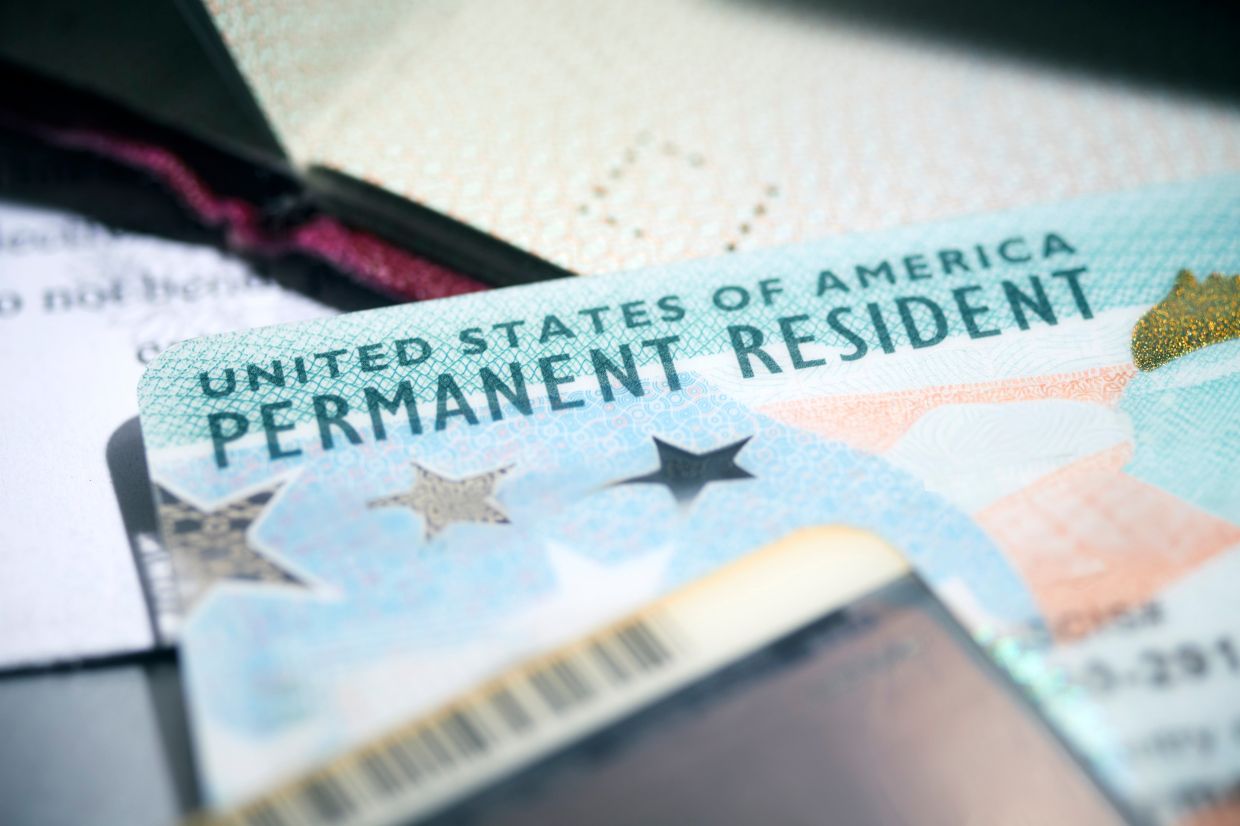
The United States has effectively frozen immigrant visa processing at its embassies and consulates globally, instructing diplomatic staff to retrain on a more rigorous "public charge" assessment that determines whether applicants might become dependent on government assistance. The measure arrives amid broader tightening of immigration policy and follows a federal court's rejection of a separate visa ban targeting 75 countries on similar reasoning. For Malaysia and Southeast Asian nationals pursuing green cards through family sponsorship or the diversity visa lottery, the freeze signals a more restrictive environment ahead.
The public charge doctrine itself is not novel in American immigration law. Consular officers have long weighed standard factors including applicant age, physical and mental health, family composition, financial resources, educational attainment, professional skills and employment prospects when assessing likelihood of reliance on public benefits. What distinguishes the current push is a directive to deploy these criteria with substantially greater rigour. In specific instances, officers now have discretion to require public charge bonds, a financial instrument that functions as insurance against future government assistance claims. The State Department has instructed visa adjudicators to apply these standards "comprehensively and consistently" across all posts.
Sarah Pierce, director of social policy at the Washington-based think tank Third Way and formerly an analyst at US Citizenship and Immigration Services, characterises the rollout as unnecessarily disruptive. The administration has opted for maximum enforcement intensity rather than phased implementation that might have allowed applicants time to strengthen their cases. Charles Kuck, an immigration attorney based in Atlanta who has represented over 100 individuals against administration policies, notes that training materials emphasise denial under public charge grounds, fundamentally altering how officers approach case adjudication. The shift carries particular weight for family-based applicants, who now face substantially higher barriers, and for diversity lottery visa claimants, who represent a significant portion of non-employment-based immigration.
Cancelled interview appointments do not automatically void previously approved immigration petitions or invalidate priority dates filed years earlier. The State Department has suspended scheduling only, not revoked underlying approvals. However, Pierce warns that the genuine injury lies in administrative delay. Applicants have arranged flights, liquidated assets, undergone medical examinations and made irrevocable life decisions based on scheduled interview dates. The department has provided no timeline for resuming normal scheduling, leaving thousands in limbo. Diversity visa holders face particular temporal pressure since these visas must be distributed by September 30, the US fiscal year deadline, or they expire entirely.
The freeze applies exclusively to green card interviews conducted at overseas diplomatic posts. Employment-based visas such as the H-1B, student visas, and tourist visa windows remain unaffected at present. However, legal experts note that the statutory authority for public charge determinations could theoretically extend to non-immigrant categories as well. Kuck observes that while implementation currently targets immigrant visa holders, the legal framework permits broader application. Pierce notes that much of the H-1B policy agenda remains prospective—the proposed US$103,000 visa fee has not yet taken effect, and the proposed lottery system poses no immediate difficulty for those already selected. Nevertheless, the trajectory suggests tightening across multiple visa categories.
For family-based applicants abroad awaiting consular processing, the exposure is acute. Historically, a properly completed I-864 Affidavit of Support from a qualifying sponsor proved sufficient for approval in most family cases, absent unusually grave concerns. Consular officers retained limited discretion to probe further. That baseline assumption has shifted. Officers now possess instruction to interrogate family composition, health status, and financial circumstances with heightened scepticism. Pierce cautions that while the new approach does not constitute a formal blanket ban, aggressive implementation risks functioning as one for particular population segments—notably those with modest income, larger families, or health vulnerabilities.
Kuck identifies an administrative vacuum as the core danger. The statute governing public charge lacks granular guidance, creating space for inconsistent application across posts and officers. An applicant denied in one country might obtain approval elsewhere, depending on individual adjudicator interpretation. This unpredictability amplifies anxiety and reduces applicants' ability to strengthen their cases meaningfully. For those whose interviews have been cancelled, Kuck advises remaining in home countries unless they hold valid work authorisation permitting return. Most cancellation recipients lack such status and face genuine risk if they travel during the freeze.
Consular officers do not possess unilateral authority to override prior USCIS approvals. Should an officer identify fraud, material factual changes, or clear administrative error, the file returns to USCIS for reconsideration. Pierce emphasises that applicants should thoroughly understand what documentation was filed in their names and resist speculating when officers raise unfamiliar points. Family-based petitions prove difficult to overturn because spousal or parent-child relationships either exist or do not. Employment-based petitions encounter greater scepticism during returns to USCIS, though many previously rejected cases ultimately obtain reapproval.
For individuals already holding lawful status—green card holders or those on valid temporary visas—international travel now carries elevated risk. Kuck advises against overseas trips absent genuine emergencies, since return may require securing a new visa at a consulate applying heightened public charge standards. Pierce offers identical counsel, noting that an approved O-1 visa petition provides insufficient protection to justify consular processing abroad. Applicants should carry proof of status including green cards, I-94 arrival records paired with I-797 approval notices, or employer letters. Maintaining duplicate copies accessible to family ensures documentation availability if original documents are lost or misplaced during travel.
Workers entering on employment visas should carry recent pay stubs and letters from employers confirming position and salary. Individuals without lawful status—including those on 240-day extensions following H-1B expiration, those with only pending green card petitions, or those awaiting asylum decisions—must not travel internationally. Kuck observes that the administration has markedly intensified immigration enforcement volume and aggressiveness, raising stakes for administrative mistakes that previously might have been navigated successfully. New arrivals have experienced contraction of duration of status grants, shifting from open-ended authorisation to fixed dates typically spanning four years, plus a reduced 30-day grace period compared to the previous 60-day standard. Collectively, these shifts signal a substantially constricted immigration system requiring careful navigation.

