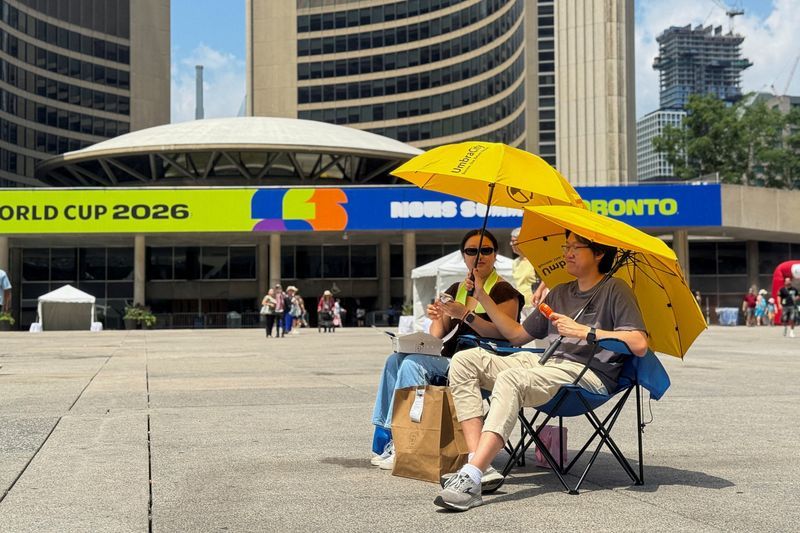
Thousands of football enthusiasts gathering in Toronto for the Portugal versus Croatia World Cup round of 32 fixture on Thursday face potentially dangerous conditions as the city battles an intense heat wave. Environment Canada has issued an official warning for the region, with temperatures expected to exceed 35 degrees Celsius, and the added humidity pushing the apparent temperature to around 40 degrees Celsius. The combination of intense heat and a tournament atmosphere has prompted city authorities to issue detailed guidance on how spectators can safely enjoy the match without jeopardising their health.
Michelle Murti, the City of Toronto's medical officer of health, emphasised the critical importance of preventive measures during the scorching conditions. She advised fans not to wait until thirst develops before consuming fluids, recommending continuous water intake throughout the day. Murti particularly highlighted the dehydrating effects of alcohol, urging supporters to moderate their consumption during the high-temperature period. The guidance reflects medical concern about the cumulative stress that heat places on the human body, especially when combined with outdoor activities and the excitement of watching live sports.
Beyond the Portugal-Croatia encounter, Toronto Stadium has become the focal point of the tournament's fan experience in Canada. As the smallest venue hosting World Cup matches, it will host its final game on Thursday, marking the conclusion of the city's involvement in the competition. Throughout the tournament, Toronto has organised an extensive programme of public viewing zones and fan gatherings, transforming the city into a hub for international football enthusiasts. The municipality's investment in fan infrastructure, including misting stations positioned strategically around popular gathering spots like Nathan Phillips Square, demonstrates the city's commitment to balancing celebration with public health safety.
Weather forecasters have warned that thunderstorms pose an additional complication to Thursday's festivities. The possibility of electrical storms could force the cancellation of planned outdoor viewing parties and fan zones, adding uncertainty to arrangements that thousands of supporters have already made. This dual threat—extreme heat coupled with the risk of sudden weather disruption—has complicated contingency planning for organisers who must simultaneously accommodate large crowds and protect spectator safety.
Canada has experienced unusually volatile weather patterns extending across multiple provinces ahead of Wednesday's Canada Day national holiday. The extreme conditions represent part of a broader meteorological pattern affecting the nation from coast to coast, with regions experiencing everything from flooding to dangerous heat indices. This broader context highlights how Toronto's specific weather challenge fits into a larger climate pattern impacting Canadians during a significant national celebration period.
At Nathan Phillips Square, the city's iconic public space, visitors have already begun seeking relief through the municipality's heat mitigation infrastructure. The misting stations installed by the city have become focal points for crowds attempting to lower their body temperatures in the oppressive conditions. Megan Rennie, a Toronto resident observing the scene, expressed concern not only for herself but for the athletes competing under these harsh circumstances. Her observation that she anticipated needing to leave the match early due to the heat intensity reflects the genuine challenge posed by the environmental conditions.
Visiting supporters from other nations similarly grappled with the unexpected severity of Toronto's weather. Laura Albarez, who travelled from Colombia specifically to attend matches, found the heat particularly overwhelming. Her commentary on the availability of drinking water and her tentative plans to venture out only during cooler evening hours illustrates how individual spectators have begun adjusting their schedules and expectations in response to the heat warning.
For Malaysian and Southeast Asian readers accustomed to tropical climates, Toronto's current conditions present an interesting contrast. While heat and humidity are familiar phenomena throughout the region, the combination of spectator gathering in open spaces without the standard tropical infrastructure—such as widespread natural shade and integrated water systems—creates distinct hazards. The Canadian city's approach to managing this emergency, through misting stations and public health guidance, offers perspective on how different regions address similar climate challenges with varying degrees of preparedness.
The Portugal-Croatia match carries particular significance within the World Cup tournament structure, as a round of 32 knockout fixture determines which nation advances toward the latter stages. The coincidence of this elimination match with Toronto's heat emergency has created a unique circumstance where atmospheric conditions may influence not only spectator experience but potentially the performance of athletes competing in oppressive conditions. Environment Canada's continued monitoring and updated forecasts will likely shape final preparations and potentially influence attendance patterns as the match date approaches.
The city's comprehensive response—combining medical guidance, infrastructure investment, and weather monitoring—demonstrates the complexity of hosting major international sporting events in an era of climate variability. Toronto's experience managing this particular convergence of factors provides lessons relevant to other cities hosting major events while confronting environmental challenges. The Portugal-Croatia fixture, ultimately, may be remembered as much for the atmospheric battle outside the stadium as for the sporting contest unfolding within it.

