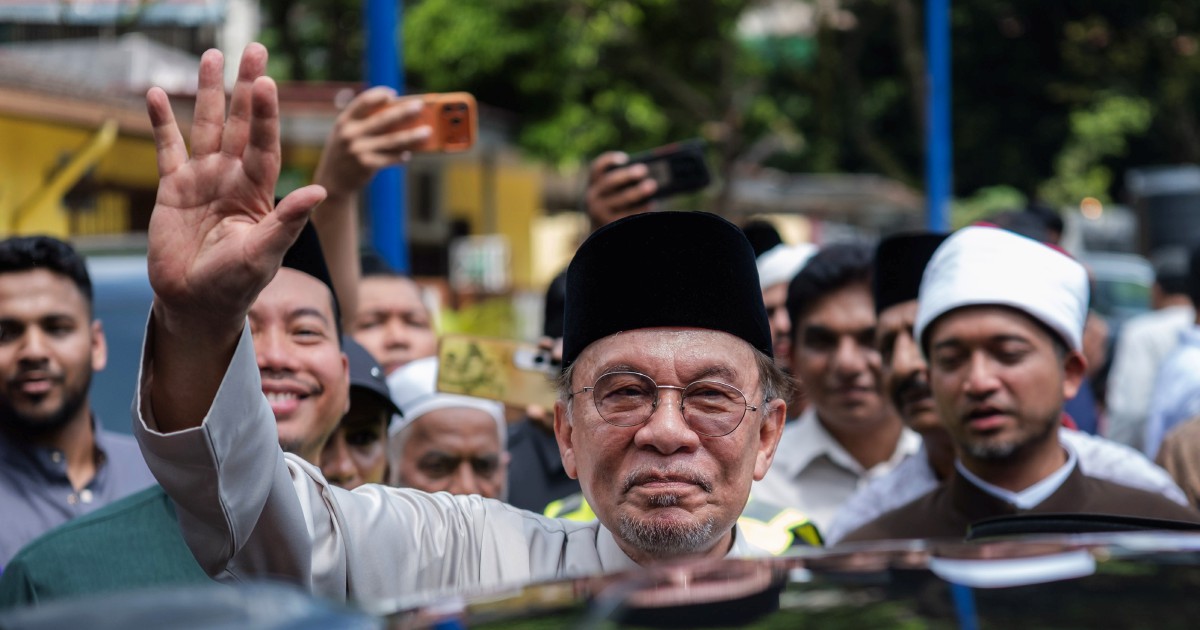
The Johor state election campaign enters a decisive phase this weekend as the country's highest-ranking political figures prepare to flood the state with competing campaign events and public addresses. Among those descending on Johor Baru and surrounding constituencies are Prime Minister Anwar Ibrahim and Deputy Prime Minister Zahid Hamidi, signalling the national political stakes involved in what is fundamentally a state-level contest. Their presence underscores how pivotal Johor remains in Malaysia's fractious political landscape, where control of the southern peninsula's most economically significant state translates directly into federal leverage and positioning ahead of the next general election.
The escalation in high-level political activity reflects the tightening race dynamics and suggests that none of the major coalitions regard Johor as a foregone conclusion. Campaign rallies and ceramahs—the town hall-style public forums central to Malaysian electoral persuasion—are now multiplying across the state, with each political bloc attempting to mobilise its supporters and persuade wavering voters through the oratory and symbolic authority of national leaders. The concentration of top-tier political talent arriving for a single weekend signals recognition that the race remains genuinely competitive, particularly given Johor's recent voting patterns and demographic shifts that have altered historical political alignments.
Johor's significance to Malaysian politics extends well beyond state administration. As the country's second-largest state by population and the economic engine of the southern region, control of the state government influences resource distribution, infrastructure development, and commercial policy across a territory crucial to Malaysia's port operations, manufacturing base, and cross-border trade with Singapore. The state has traditionally served as a power base for major political figures, and electoral performance here often predicts or shapes subsequent movements in national politics. Parties performing unexpectedly well in Johor gain momentum and legitimacy for broader national campaigns, while those underperforming face internal questions about strategy and credibility.
The weekend campaign surge represents a compressed but intensive push to reach voters in the final days before polling. Ceramahs allow leaders to speak directly to constituents, address concerns specific to local constituencies, and generate the momentum and media attention that can influence last-minute voting decisions. The format also permits politicians to contextualise state-level issues within broader national narratives—economic management, corruption concerns, religious governance, and interethnic relations—thereby connecting Johor voters' immediate concerns to the wider political competition.
Anwar Ibrahim's personal involvement reflects the federal government's stake in retaining or expanding its influence in Johor, while Zahid Hamidi's participation highlights the competing interests within the opposition coalition. The simultaneous campaigns by figures from different political blocs demonstrate how fractionalised Malaysian politics has become, with no single coalition commanding overwhelming support across the state. This competitive environment has intensified rhetoric and made campaign events higher-stakes affairs, as each side seeks to consolidate its base while winning over swing voters who may determine tight constituency races.
For Malaysian voters and regional observers, the Johor election serves as a significant barometer of public sentiment regarding the federal government's performance and economic management. Inflation pressures, cost of living concerns, and inflation expectations have dominated recent public discourse, and how voters in Johor respond may indicate whether the federal administration has successfully communicated its economic achievements or whether dissatisfaction with economic conditions outweighs political gains from other policy areas. The state's diverse electorate—encompassing urban professionals, industrial workers, agricultural communities, and middle-class suburbs—offers a microcosm of broader Malaysian voter attitudes.
The arrival of competing national leaders also underscores the limited local autonomy in Malaysian state elections, where federal political machinery and national figures frequently dominate campaigns. While state chief minister candidates and local party leaders conduct constituency-level outreach, the presence of federal prime minister and deputy prime minister signals that decision-making authority and resource allocation centre on national politics. This dynamic can frustrate voters seeking to focus on state-specific governance issues such as infrastructure, state finances, and local development priorities, which become overshadowed by national political contestation.
The campaign intensity this weekend will likely include multiple simultaneous events across different constituencies, with leaders attempting to cover maximum ground and reach diverse demographic segments. Urban constituencies will host different messaging than rural areas, while constituencies with large Tamil or Orang Asli populations may receive targeted communications addressing community-specific concerns. This segmented approach reflects sophisticated campaign strategy but also highlights how modern Malaysian elections operate through overlapping and sometimes contradictory messages depending on the audience.
The convergence of national political leadership on Johor also carries implications for Southeast Asian regional politics, as Malaysia's domestic electoral outcomes influence the country's policy priorities and international positioning. A government secured in Johor with a strengthened mandate could pursue more assertive regional economic policies, while an opposition advance might signal different domestic political constraints affecting Malaysia's engagement with neighbours. For international investors and traders monitoring the Malaysian political environment, the Johor election outcome provides important signals about policy stability and the relative influence of different ideological tendencies within Malaysian governance.

