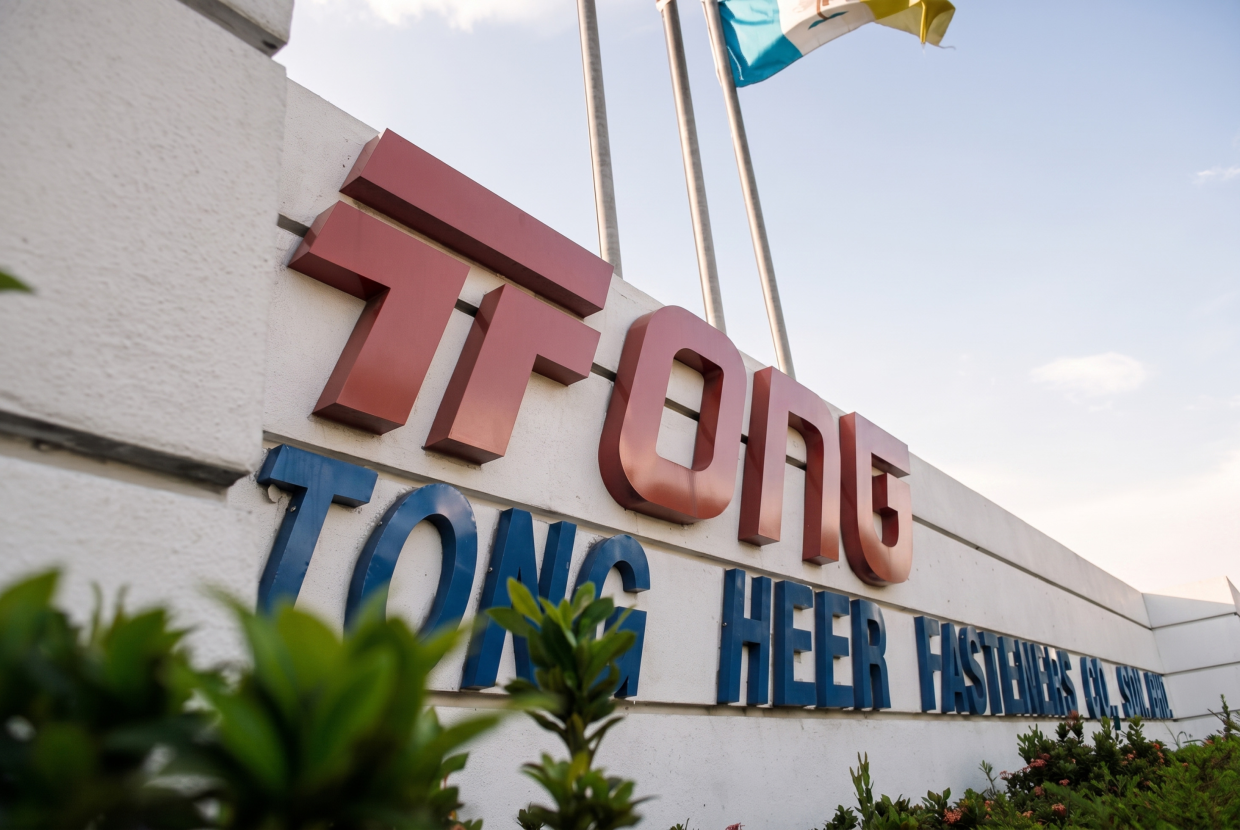
Two major shareholders of Tong Herr have jointly initiated a proposal to delist the stainless steel fastener manufacturer from Bursa Malaysia, offering minority shareholders RM2.55 per share in what represents a substantial premium to recent trading levels. Allrich Corp and Richard Holdings Ltd, which together with their associated parties control approximately 74.5% of the company's issued shares, filed the proposal with Bursa Malaysia this week, setting the stage for what would be a significant corporate restructuring in Malaysia's manufacturing sector.
The offer price of RM2.55 translates to a 34.2% uplift from Tong Herr's last closing price of RM1.90, providing shareholders with a compelling reason to accept the buyout. When measured against the volume-weighted average price over the period through August 5, 2026, the offer represents a 41.7% premium to the RM1.80 closing price recorded on that date. These premiums are notably generous by Malaysian standards and signal the controlling shareholders' determination to acquire full ownership of the company without protracted negotiations.
Allrich Corp holds the larger stake at 39.68% of Tong Herr, while Richard Holdings Ltd owns 31.95%, with their combined holding supplemented by shares held by associated persons and persons acting in concert. Together these entities command 114.38 million shares, a decisive majority that substantially exceeds the minimum thresholds required for a delisting. This concentration of ownership suggests the controlling shareholders have long desired to streamline the company's structure and eliminate the regulatory burdens associated with maintaining a public listing.
The privatisation strategy will be executed through a selective capital reduction and repayment mechanism, a legal framework that allows listed companies to return capital to shareholders while fundamentally altering their equity structure. Through this SCR process, Tong Herr will effectively compress its shareholder base, eliminating minority holders who accept the offer while consolidating ownership among the major players. The mechanism provides an orderly path to delisting compared to alternative approaches, though it requires substantial shareholder and judicial approval.
The controlling shareholders articulated a business case centred on operational flexibility and the elimination of listing-related costs. By removing Tong Herr from public markets, the company can redirect the financial and managerial resources currently devoted to regulatory compliance, quarterly reporting, board committee administration and investor relations toward business development and market expansion. For a manufacturer in the competitive fasteners and aluminium extrusion sectors, this flexibility could prove meaningful, allowing rapid pivots in strategy without the scrutiny and procedural delays inherent in public company governance.
A critical justification focuses on Tong Herr's chronically thin trading liquidity, a persistent problem that undermines the core rationale for public listing. The company has recorded an average daily trading volume of merely 21,075 shares over the preceding three years, representing just 0.05% of its free float. This anaemic trading reflects the reality that with nearly three-quarters of shares locked in with controlling shareholders, only a sliver of equity freely exchanges hands, rendering the public market increasingly irrelevant as a price-discovery mechanism or exit vehicle for most shareholders. The selective capital reduction essentially formalises what the market has long signalled—that Tong Herr's listing provides little practical benefit to most stakeholders.
The privatisation path also addresses a legitimate concern for remaining shareholders who have found themselves unable to realise their investments at attractive prices. By offering RM2.55 per share through the SCR, the controlling shareholders create an orderly exit mechanism at a substantial premium, effectively compensating minority holders for the illiquidity they have endured. This contrasts sharply with scenarios where passive shareholders remain trapped in illiquid positions indefinitely, watching their capital erode through inflation and opportunity cost. The premium thus compensates for years of poor trading conditions.
The proposal faces regulatory hurdles that, while surmountable given the controlling interest, remain non-trivial. Tong Herr requires approval from non-interested shareholders via special resolution at an extraordinary general meeting, with the threshold set at a simple majority in terms of shareholder numbers but a substantial 75% of voting value from non-interested parties. Furthermore, no more than 10% in value of votes from non-interested shareholders can dissent, meaning the controlling shareholders must navigate some degree of minority acceptance even with their dominant position. The High Court must also confirm the reduction of capital, adding a judicial review layer.
Tong Herr's independent directors, representing the interests of minority shareholders and other stakeholders, must now deliberate on whether to recommend the proposal or reject it. Their assessment will weigh whether the RM2.55 offer represents fair value given the company's earnings profile, asset backing and growth prospects, or whether minority shareholders stand to gain substantially more by remaining listed and pursuing alternative strategies. This deliberation period will likely prove contentious, with independent valuers potentially commissioned to benchmark the offer against comparable transactions and intrinsic value estimates.
The company itself is principally engaged in manufacturing and distributing stainless steel fasteners, aluminium extrusions and related industrial products, serving markets throughout Malaysia and the region. The fasteners sector, while unglamorous, provides steady demand from automotive, construction, electrical and machinery manufacturers. Aluminium extrusions similarly serve diverse industrial customers. Both segments operate on modest margins but benefit from essential, recurring demand. Whether these characteristics support a 34% premium or justify remaining listed depends substantially on growth trajectories and competitive positioning—details the independent directors will scrutinise.
For Malaysian investors and the broader market, this proposal signals a broader trend whereby controlling shareholders in smaller-cap, thinly-traded stocks increasingly conclude that maintaining a public listing no longer justifies the regulatory overhead and compliance costs. The privatisation wave reflects structural changes in Malaysia's capital markets, where retail participation has shifted toward larger-cap, higher-volume securities and passive index funds, leaving smaller listings stranded with minimal natural demand. Tong Herr's situation exemplifies this market evolution and may presage similar privatisation proposals from other controlling shareholders facing similar constraints.
The outcome will hinge on minority shareholder voting behaviour and independent director recommendations. Should the special resolution obtain required approval, the High Court confirmation, and Bursa Securities approval for delisting, Tong Herr will join the roster of companies exiting public markets. The announcement will be closely watched by other controlling shareholders evaluating similar privatisation strategies, as it will provide a precedent for how Malaysian regulators and courts treat such proposals and how minority shareholders respond to generous premiums.

