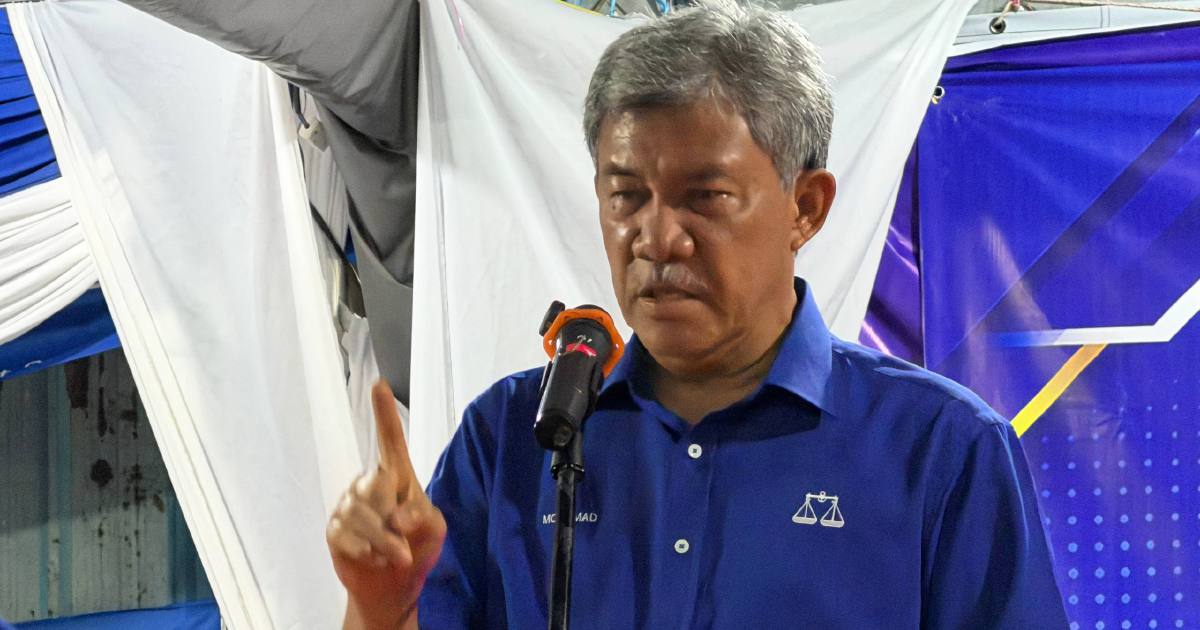
Datuk Seri Mohamad Hasan, the Barisan Nasional chairman in Negri Sembilan, has issued a direct appeal to voters to resist narratives that invoke the royal institution when casting their votes in the forthcoming state elections. Speaking in Rembau, he underscored the importance of maintaining focus on substantive political issues rather than allowing speculation surrounding the monarchy to influence electoral decisions in the 16th Negri Sembilan polls.
The warning reflects growing concern among political observers about the increasing tendency to intertwine discussions of Malaysia's constitutional monarchies with electoral politics. In recent years, narratives linking electoral outcomes to potential constitutional implications involving the royal institution have become more prevalent in state-level campaigns, particularly as voters prepare for competitive contests. Tok Mat's intervention suggests the BN machinery is concerned that such speculation could complicate its messaging or alienate sections of the electorate who view such framings as inappropriate.
For Malaysian politics, the broader context matters considerably. Negri Sembilan has historically occupied a distinctive position due to its unique Undang Undang, or elected sultanate system, which differs from the hereditary monarchy structures found in other states. This constitutional particularity has occasionally been fodder for political narratives, making the state a potential flashpoint for discussions about the relationship between electoral outcomes and the monarchy. Tok Mat's statement appears designed to establish a clear boundary: campaign discourse should concentrate on policy, governance, and economic management rather than constitutional speculation.
The timing of this cautionary message is significant. As campaigns intensify and various factions mobilise supporters, the temptation to deploy sensitive cultural and institutional narratives as campaign tools invariably increases. By publicly urging restraint, the BN leader is positioning his coalition as the custodian of institutional respect and constitutional propriety—a framing that carries particular weight in a state where the monarchy, while elected rather than hereditary, remains deeply embedded in the political and social fabric.
Electoral politics in Negri Sembilan have been notably competitive, with both BN and opposition coalitions competing vigorously for voter support. The state's socioeconomic profile—comprising both urban centres and rural constituencies with distinct priorities—requires candidates and parties to articulate clear policy positions on issues ranging from economic diversification to infrastructure development. Tok Mat's warning implicitly argues that substantive engagement on these matters should dominate campaign discourse.
The appeal also touches on a broader regional concern across Southeast Asia about the relationship between democratic institutions and traditional constitutional monarchies. Malaysia's experience, with its federal system balancing strong state rulers alongside a constitutional monarch, presents particular sensitivities. Any attempt to weaponise discussion of the monarchy during elections risks delegitimising both the electoral process and the institution itself. Tok Mat's intervention acknowledges this risk and seeks to inoculate the campaign against it.
From a voter perspective, the message carries practical implications. Negri Sembilan electors face a choice based on which coalition or party is best positioned to deliver on development priorities, public services, and economic opportunities. The introduction of narratives speculating about what a particular electoral outcome might mean for the state's royal institution introduces uncertainty and distraction from these primary considerations. Tok Mat is essentially advising voters to ignore such tangential speculation and focus on concrete governance questions.
The warning may also reflect internal coalition dynamics within BN itself. In a political environment where various parties and interests jostle for position and influence, ensuring that campaigns remain focused and disciplined becomes crucial. By drawing a clear line against institutional narratives, Tok Mat is attempting to prevent fringe actors from muddying BN's broader messaging strategy or compromising the coalition's carefully cultivated image as custodian of institutional stability.
It remains to be seen whether opposition parties will heed similar restraint or whether they might attempt to deploy such narratives as part of their electoral strategy. The fact that Tok Mat felt compelled to issue this warning suggests that speculation linking electoral outcomes to the monarchy is already circulating in some form—whether through social media, informal networks, or preliminary campaign rhetoric. By going on record against such narratives, the BN leader is establishing a benchmark for responsible campaign conduct.
For international observers tracking Malaysian politics, this episode illuminates the complex equilibrium between democratic contestation and respect for constitutional institutions. The fact that a major political figure must explicitly warn against weaponising discussion of the monarchy indicates that such temptations exist within the political landscape. Negri Sembilan voters, as the ultimate arbiters in the 16th state election, will ultimately determine whether campaigns remain anchored in substantive policy discussion or drift toward constitutional speculation.

