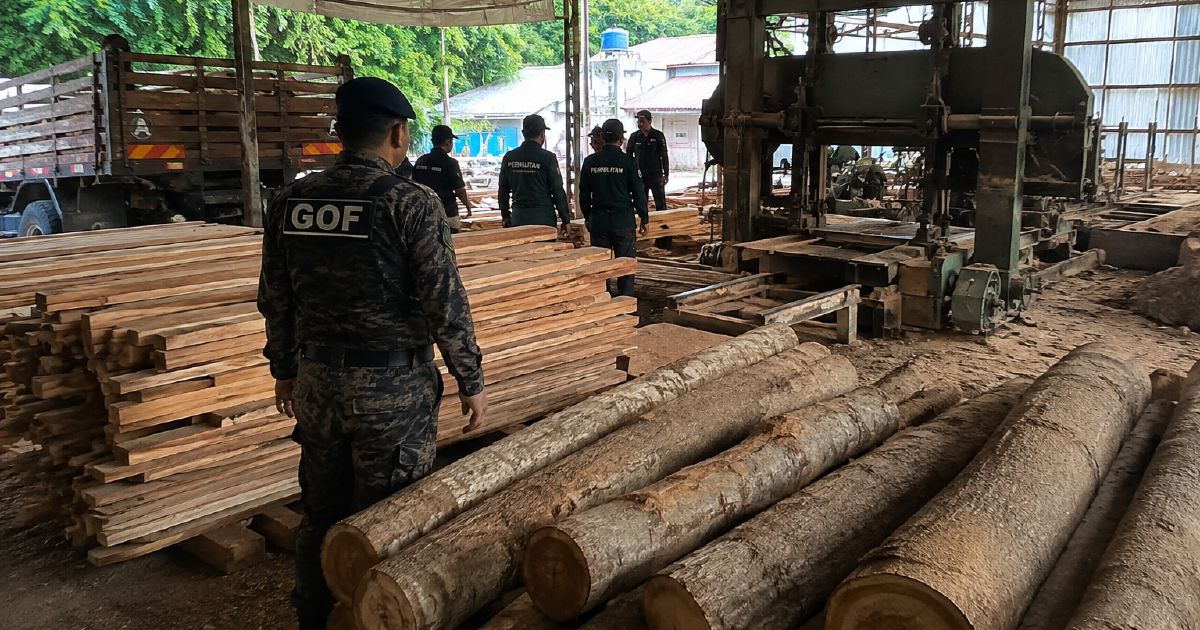
Enforcement authorities have intensified their crackdown on illegal timber operations in Terengganu, with the General Operations Force (GOF) executing a significant raid on a sawmill facility in Kuala Berang. The operation resulted in the confiscation of timber stocks and processing equipment collectively valued at RM640,510, alongside the arrest of a 20-year-old individual suspected of involvement in the enterprise.
The action represents part of ongoing federal and state efforts to combat unlicensed logging and timber processing activities across the country. Terengganu, situated along the east coast of peninsular Malaysia, has historically been a focal point for timber-related enforcement due to its substantial forest coverage and the prevalence of both legal and illicit logging operations in the region.
Details regarding the specific location and operational history of the facility have not been fully disclosed, but the scale of confiscated materials suggests a significant operation. The seized items included processed and unprocessed timber, along with industrial machinery essential for cutting, milling, and finishing lumber. Such equipment typically commands considerable resale value, making it a target for seizure in enforcement actions aimed at dismantling illegal supply chains.
The arrest of the 20-year-old suspect marks a critical development in the investigation. While authorities have not yet released information regarding additional co-conspirators or the suspected ownership structure of the business, the individual's apprehension signals that investigative work has progressed beyond initial surveillance. The suspect remains in custody pending further interrogation and potential charges under relevant timber and forestry regulations.
Malaysia's approach to timber law enforcement has evolved considerably over the past two decades, driven partly by domestic environmental concerns and international pressure regarding sustainable forest management. The Terengganu raid exemplifies the multi-agency coordination now characteristic of these operations, with the GOF—a specialized paramilitary unit typically engaged in border security and counter-insurgency—being deployed for resource-oriented enforcement tasks alongside civilian forestry officers.
Illegal sawmill operations pose multifaceted challenges to authorities. Beyond the direct loss of government timber royalties and taxation revenues, unregulated processing facilitates the laundering of illegally harvested wood into commercial supply chains. The practice undermines legitimate timber operators who comply with licensing requirements and environmental management standards, distorting market dynamics and disadvantaging ethical businesses competing for market share.
The confiscated equipment's estimated value reflects the profitability that drives such illicit enterprises. Processing machinery capable of handling substantial timber volumes typically costs between RM50,000 and RM200,000 per unit, and many operations maintain multiple pieces of equipment. Recovery of these assets during raids serves both punitive and preventative functions—removing infrastructure that facilitates future violations while generating evidence for prosecution.
From a regional perspective, the seizure carries implications beyond Terengganu. Southeast Asia remains a critical timber source for global markets, and Malaysia's domestic enforcement posture influences transnational supply networks. Several neighbouring countries have expressed concerns about timber smuggling rings that exploit inconsistent enforcement standards across borders, making operations like the Kuala Berang raid part of a broader regional security conversation.
The investigation's progress will likely determine whether additional charges emerge, potentially under the Forestry Act 1984 or the Penal Code, depending on whether criminal conspiracy or organised crime legislation applies. Prosecutors will need to establish whether the operation obtained timber through illegal felling or purchased materials from unlicensed harvesters, a distinction that affects both the severity of charges and the scope of related investigations.
State authorities in Terengganu have historically advocated for enhanced resources to combat resource-based crime, and operations like this one demonstrate the effectiveness of dedicated enforcement units when properly deployed. However, enforcement remains sporadic across the country, with rural and remotely situated facilities sometimes receiving less intensive monitoring than those closer to urban centres and major transport corridors.
The broader context involves Malaysia's commitment to sustainable forestry targets and international forestry certification schemes that require demonstrable compliance with operational regulations. Illegal sawmills create complications for legitimate operators seeking third-party certification, as the presence of unregulated competition and laundered timber can compromise the credibility of verified sustainable sources.
Looking forward, the outcome of this case—including charges filed, court proceedings, and any asset forfeiture—will signal enforcement priorities to potential offenders. The substantial value of seized materials may also support arguments for enhanced penalties under timber laws, particularly if policymakers determine that current sanctions insufficiently deter illegal operations.

