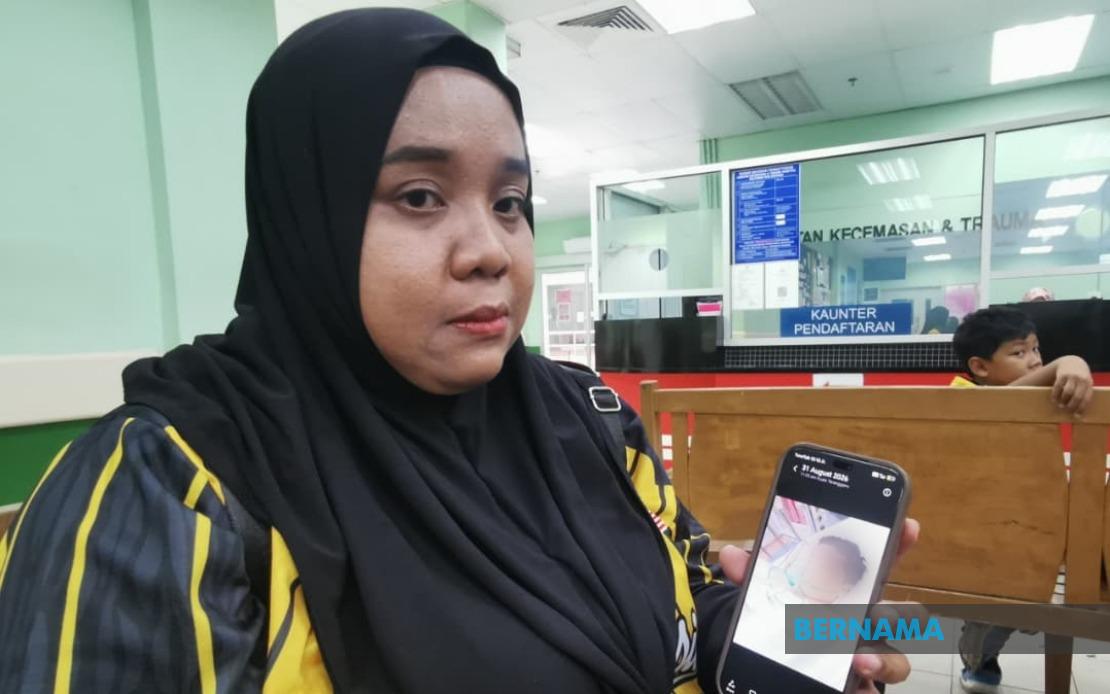
An accident involving a young child marred celebrations of Malaysia's independence in Kuala Terengganu on Sunday when a three-year-old boy's foot was struck by a tow vehicle during the 2026 National Day parade. The incident, which took place at approximately 9.45 am outside Wisma Persekutuan, left the child requiring immediate medical attention and hospital observation, though fortunately initial assessments revealed no fractures.
The boy, Che Ku Muhammad Khairul Amir Che Ku Mohd Khairul Azlan, was attending the parade with his family when the mishap occurred. According to his mother, Puteri Anis Athirah Wan Rosli, 36, from Cendering, the chain of events unfolded when the tow vehicle—which was transporting a boat belonging to the Fire and Rescue Department—came to a stop near the government building. At that moment, her seven-year-old daughter moved forward to capture photographs of the parade spectacle, with her younger brother following closely behind in excitement.
Firefighters operating the vehicle, recognizing a potential safety risk from the child's proximity to the moving equipment, attempted to guide the boy away from the immediate vicinity. However, during this repositioning effort, the youngster lost his footing and fell into the path of the tow vehicle, resulting in his foot being run over. The incident underscores the unpredictable nature of crowd management at large public gatherings, where young children can quickly find themselves in hazardous situations despite adult supervision and professional intervention.
Emergency responders acted swiftly to provide assistance. Police reached the scene promptly, coordinating the evacuation of the injured child and ensuring safe passage for the ambulance transporting him to medical care. The boy arrived at the Emergency Department of Sultanah Nur Zahirah Hospital (HSNZ) at approximately 10.15 am, where medical staff conducted thorough assessments including radiological imaging to rule out fractures or internal injuries.
The prognosis, while serious, has proven reassuring for the family. X-ray examinations did not reveal any broken bones, a significant relief given the potential severity of such an accident. Nevertheless, medical professionals determined that continued observation was necessary to monitor for delayed complications or inflammation. The child remained hospitalized for ongoing assessment and care, with doctors maintaining vigilance for any changes in his condition.
Particularly notable is the measured response from the boy's mother, who refrained from assigning blame to the firefighters or emergency personnel involved. Puteri Anis Athirah acknowledged the difficult position faced by the personnel managing the equipment and recognized that the incident represented an unfortunate accident rather than negligence. She expressed gratitude toward law enforcement agencies for their rapid mobilization and professional handling of the emergency, describing how police escorts facilitated the swift transport of her son to hospital, potentially minimizing delays that could have complicated his treatment.
This sentiment reflects an important cultural understanding: the distinction between accountability and compassion in emergency situations. While investigations must proceed to establish precise circumstances and identify any gaps in safety protocols, the family's perspective suggests a pragmatic approach that acknowledges human error and the inherent risks present in crowded public events, particularly those involving moving vehicles and excited children.
Kuala Terengganu district police chief ACP Azli Mohd Noor confirmed the incident and noted that a formal investigation was underway to establish the exact sequence of events and determine whether any procedural improvements might prevent similar occurrences in future parades. Such investigations are standard protocol following accidents at public gatherings and serve to identify systemic vulnerabilities rather than necessarily assign personal culpability.
The incident serves as a reminder for families attending large public celebrations to maintain heightened vigilance regarding children's movements and proximity to vehicles, particularly those used to transport heavy equipment or boats. Parents and guardians navigating crowded parade routes face the challenge of balancing their children's engagement with the festivities against the very real risks posed by moving machinery and large crowds. Educational initiatives emphasizing crowd safety at public events might help reduce such incidents, as could clearer demarcation of safe viewing areas separated from equipment transport routes.
For the broader Malaysian public, the accident highlights the importance of robust emergency response infrastructure at national celebrations. The swift intervention by police and medical services, combined with the availability of nearby hospital facilities, ensured that what could have been a tragedy was managed effectively. This underscores the value of maintaining well-coordinated emergency protocols at major public events, with clear communication channels between event organizers, security personnel, emergency services, and medical facilities.
Moving forward, event organizers and the fire and rescue services may examine whether additional safety briefings for crowds or enhanced supervision protocols in areas where equipment is stationary could reduce child-related incidents. Such preventive measures need not impede celebrations but rather should complement them, creating environments where families can participate safely in national commemorations. The resilience demonstrated by the affected family and the professional response from authorities suggest that while accidents may occur, proper preparation and compassionate management can mitigate their impact.

