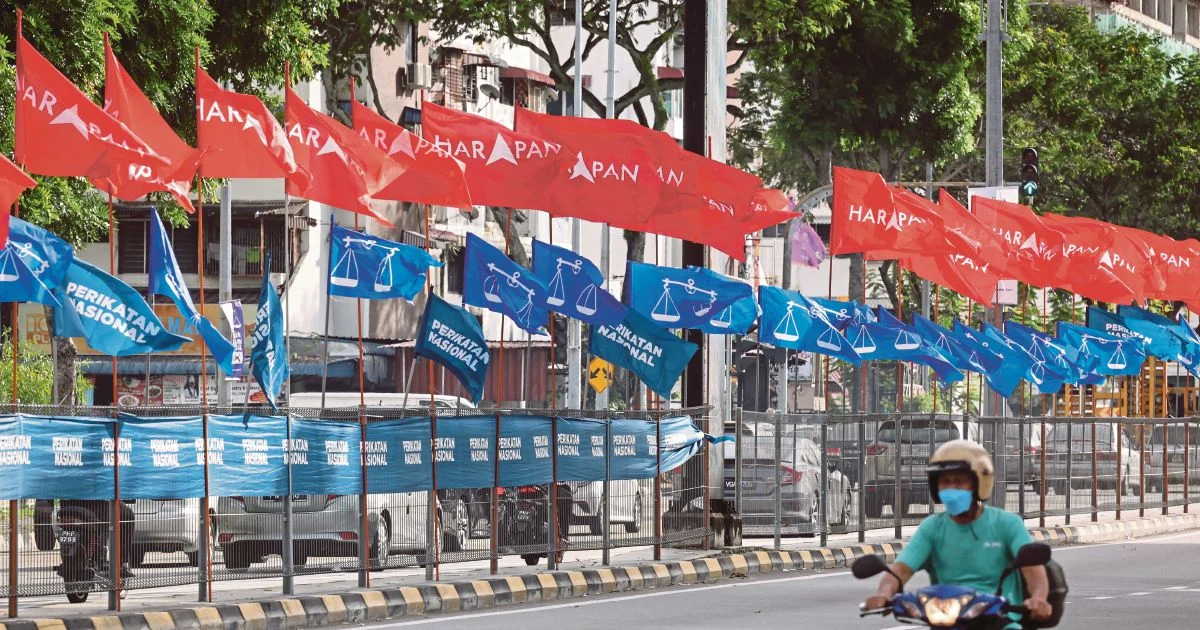
The upcoming Johor state election will feature an unprecedented level of competition, with Barisan Nasional, Pakatan Harapan and Perikatan Nasional each fielding candidates in 33 of the 56 state seats. This concentration of three-way contests across nearly 60 per cent of constituencies represents a significant shift in Malaysian electoral dynamics and underscores the fractured nature of contemporary state politics in Malaysia's southernmost peninsula state.
For Barisan Nasional, maintaining dominance in Johor remains crucial to its broader political narrative. The coalition has traditionally dominated the state, leveraging both its organizational machinery and deep roots in local communities. However, the emergence of credible challenges from both Pakatan Harapan and Perikatan Nasional signals that voters in Johor are increasingly willing to consider alternatives, particularly if the governing coalition is perceived as complacent or disconnected from local concerns.
Pakatan Harapan's aggressive positioning in 33 seats reflects its ambitions to build on recent momentum in other states and establish itself as a viable national alternative. The coalition's strategy of contesting so many constituencies suggests confidence in its ability to appeal to Johor voters, particularly in urban areas where anti-establishment sentiment has grown and among younger demographics seeking policy innovation on cost-of-living pressures and economic opportunities.
Perikatan Nasional's substantial presence across a third of all constituencies indicates that the coalition has successfully consolidated its support base following the 2022 general election. With considerable strength in rural constituencies and Malay-Muslim majority areas, Perikatan Nasional presents a genuine obstacle to Barisan Nasional's traditional vote-gathering strategies and complicates the electoral calculus for both major coalitions.
The prevalence of three-way contests carries profound implications for how votes translate into parliamentary representation. In such fragmented contests, winning candidates may secure power with significantly reduced vote shares compared to traditional two-way competitions, potentially allowing candidates with weak majority support to claim victory. This dynamic means that the coalition capturing the most seats might do so despite securing a minority of the total votes cast across all constituencies—a phenomenon that testing in other democracies has shown can undermine the perceived legitimacy of election outcomes.
For Johor specifically, this electoral landscape reflects deeper structural changes within Malaysian politics. The state has historically served as a political barometer for the nation, and the intensity of competition in 33 seats suggests that residents across diverse communities are genuinely uncertain about which coalition best represents their interests. This uncertainty extends beyond simple partisan affiliation to encompass fundamental questions about governance, economic management, and the direction of state development.
The concentration of three-way contests in particular constituencies indicates sophisticated strategic positioning by all three coalitions. Campaign resources will inevitably concentrate in these 33 seats, potentially leaving the remaining 23 constituencies with less intensive contests. Voters in uncontested areas or constituencies where one coalition holds overwhelming advantages may feel their electoral participation matters less, potentially suppressing turnout and affecting the overall legitimacy of the election process.
Campaign messaging across these three-way contests will likely emphasize differentiation and contrast, with each coalition attempting to carve out distinct terrain. Barisan Nasional will probably stress stability and experience, Pakatan Harapan will highlight reform and transparency, while Perikatan Nasional may emphasize communal interests and resistance to what it portrays as excessive liberal agendas. Such messaging battles will generate significant media coverage and shape broader public discourse in Johor throughout the campaign period.
The three-way contests also create tactical opportunities for coalition partners within each bloc. For instance, Pakatan Harapan comprises Democratic Action Party, Amanah, and People's Justice Party, and the coalition's decision-making around candidate selection and resource allocation across competing candidates from these member parties will influence voter perception of coalition unity. Similar dynamics apply to Barisan Nasional's component parties and their internal negotiation processes.
Historically, Johor elections have attracted significant national attention because the state's political trajectory often foreshadows national trends. If all three coalitions emerge as credible contenders in a third of constituencies, this may signal that Malaysian electoral politics has entered a more multipolar phase, challenging the bipolar structure that dominated thinking since the 2018 general election. Such fragmentation could reshape coalition-building strategies at federal level and create new possibilities for political realignment.
The extensive three-way competition also reflects voter sophistication and reduced party loyalty compared to previous generations. Johor residents increasingly appear willing to evaluate coalitions on performance and policy rather than inherited political affiliation, suggesting that campaigns emphasizing local service delivery and practical governance may prove more persuasive than appeals based on historical factors or abstract ideological positioning.
Electoral outcomes in these 33 contested seats will likely determine the composition and political complexion of the next Johor state government. If Barisan Nasional wins comfortably, it will reinforce its claim to be Malaysia's natural governing party despite national fragmentation. Conversely, if either Pakatan Harapan or Perikatan Nasional performs better than expected, it may indicate that Malaysian politics continues drifting toward greater unpredictability and coalition realignment, with profound implications for how the country manages governance and policy implementation across multiple levels.

