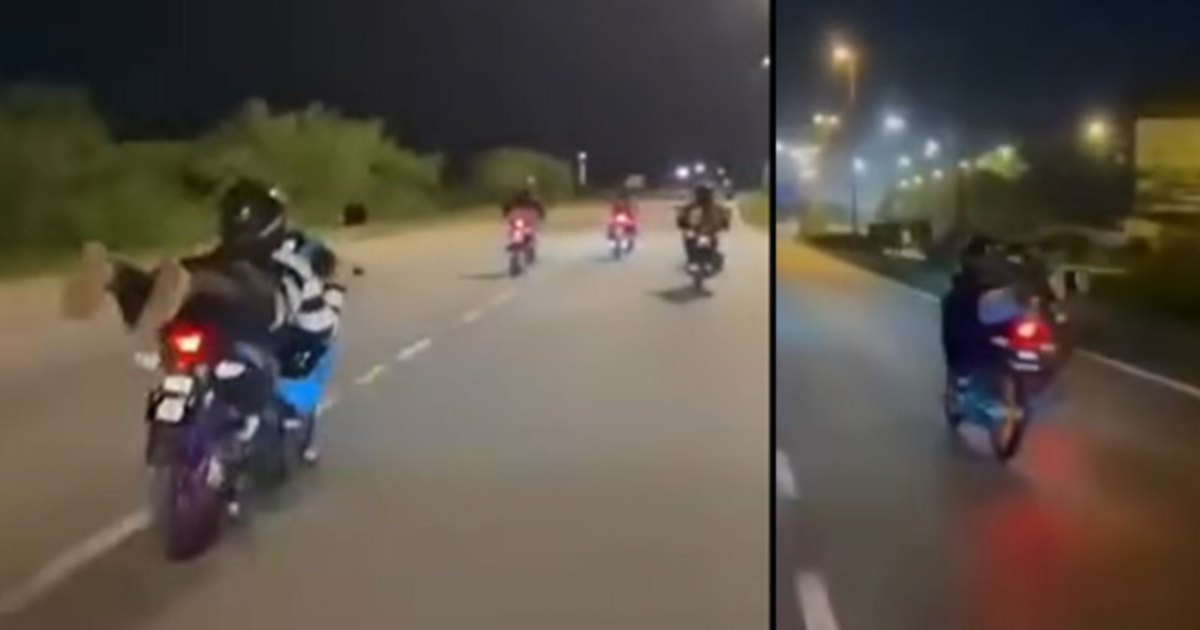
Three teenage girls arrested in Kuantan this week are under investigation following the circulation of videos showing them performing acrobatic stunts on moving motorcycles, a practice known colloquially as the 'Superman' manoeuvre. The incident occurred on Jalan Kuantan Bypass-Gebeng road, where the young riders stood upright on their seats while their bikes were in motion, a behaviour that quickly garnered attention across social media platforms.
The arrest marks an escalation in law enforcement action against increasingly dangerous traffic stunts that have proliferated on Malaysian roads in recent years. Such motorbiking displays, often choreographed for recording and online sharing, place not only the riders themselves at extreme risk but also endanger other road users who may encounter these vehicles without warning. The decision to detain the teenagers reflects growing official concern about how viral social media trends can translate into life-threatening behaviour on public roads.
These 'Superman' stunts represent a broader trend of traffic-related risk-taking that has become increasingly visible through social media documentation. The manoeuvre requires the rider to stand on the motorcycle seat while maintaining control of the handlebars, a feat that demands considerable skill but offers almost no margin for error. Any loss of balance, sudden braking, or collision would result in catastrophic consequences for the rider, potentially ejecting them across the road at high speed.
The incident highlights a recurring challenge for Malaysian authorities: the intersection between youthful experimentation, social media influence, and road safety. Young people increasingly view hazardous stunts as content-generation opportunities rather than serious safety violations, with the appeal of online virality often outweighing consideration of physical consequences. The visibility and validation provided by social media metrics—views, shares, comments—create powerful incentives to escalate the danger level of successive stunts.
From a legal standpoint, the arrest carries implications for how Malaysia's traffic laws apply to such incidents. Road traffic regulations prohibit unsafe riding practices, and authorities have various statutes available to prosecute riders engaged in dangerous manoeuvres. However, the prosecution of teenage offenders involves considerations of intent, culpability, and appropriate sentencing that may differ from cases involving adult riders.
The Kuantan Bypass-Gebeng corridor, where the incident took place, is a significant traffic artery connecting multiple municipalities. High-speed highway sections make this location particularly dangerous for acrobatic stunts, as the surrounding traffic moves at considerable velocity and sudden obstacles can prove catastrophic. The selection of such a busy thoroughfare for stunts compounds the recklessness, as the risk extends beyond the riders themselves.
This case arrives amid broader societal discussions about digital literacy and responsible online behaviour among teenagers. Educational institutions and parents increasingly grapple with how to communicate the real-world consequences of actions undertaken primarily for content creation. The gap between perceived and actual risk—what looks thrilling in a edited video clip versus the millisecond-by-millisecond reality of executing the stunt—remains a critical educational challenge.
Social media platforms themselves have faced criticism globally for inadequately moderating dangerous stunt content, and their algorithms occasionally amplify such material. In Malaysia's context, where internet penetration among young people is exceptionally high, the role of these platforms in normalising risky behaviour warrants continued scrutiny. The arrest of the Kuantan teenagers may prompt renewed conversations about platform responsibility and content moderation policies.
Enforcement agencies across Southeast Asia have similarly struggled with combating motorcycle stunting culture, which exists in various forms across the region. Thailand, Indonesia, and the Philippines have all recorded incidents involving dangerous riding for social media purposes, suggesting this phenomenon transcends national boundaries and reflects shared generational patterns in how digital natives engage with risk and validation.
The investigation into these three teenagers will likely determine the specific charges they face and whether their actions warrant prosecution under road traffic laws, anti-social behaviour statutes, or potentially reckless endangerment provisions. The outcome may set precedent for how similar incidents are handled prospectively in Malaysia. Depending on their ages and circumstances, the teenagers could face fines, community service, rider education programmes, or other corrective measures.
Parallel to enforcement action, road safety advocates emphasise the need for preventative approaches. This encompasses improved driver and rider education, particularly messaging that targets young people on risk perception, consequences of viral culture, and alternative ways to build online presence that do not jeopardise lives. Schools, motorcycle associations, and community groups increasingly cooperate to communicate these messages to teenagers before dangerous behaviour becomes established.
The arrest serves as a reminder that the consequences of 'going viral' extend beyond digital metrics; they manifest on physical roads with material injuries and fatalities. For Malaysian road safety authorities, cases like Kuantan represent opportunities to reinforce that public roads are shared spaces where individual risk-taking can jeopardise others, and that the temporary online recognition derived from dangerous stunts cannot justify the permanent injuries or deaths that frequently result.

