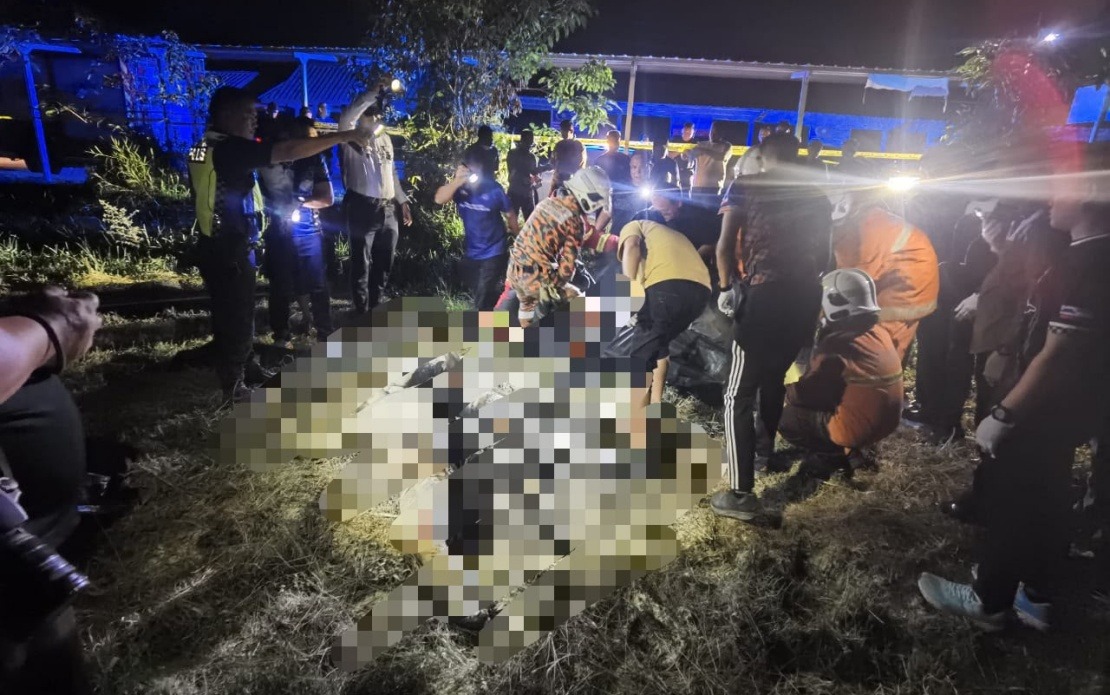
A tragic incident claimed the lives of three police officers in Beaufort, Sabah on the afternoon of August 6, with initial investigations pointing to electrocution as the suspected cause. The officers were found along Jalan Weston in Kampung Weston, approximately 28 kilometres from the town's fire station, triggering a swift emergency response from multiple agencies. The incident quickly gained widespread attention on social media, with several videos circulating online showing the three men lying on the road as members of the public gathered at the scene.
The Sabah Fire and Rescue Department received the distress call at 5:56 pm that day, immediately mobilising resources to address what appeared to be a life-threatening emergency. The Beaufort Fire and Rescue Station dispatched a Fire Rescue Tender with a team of seven personnel to investigate and provide assistance. Operations Commander PBK I Irwan Abdul assumed leadership of the response efforts, directing the initial assessment and rescue operations with support from officers with the Royal Malaysia Police and technicians from Sabah Electricity, whose expertise would prove crucial in managing the electrical hazard at the scene.
The rapid deployment of emergency services highlights the protocols in place across Sabah's frontline response agencies, though in this instance the arrival of responders came too late to prevent fatalities. The cooperation between the fire department, police force, and the electricity utility demonstrated standard operating procedures for handling incidents involving electrical hazards, where specialist knowledge from utility providers is essential for securing the affected area and determining exactly what transpired. The presence of Sabah Electricity personnel at the scene underscores the potential complexity of electrocution cases in areas where power distribution infrastructure may be aging or vulnerable to environmental stress.
At the time of initial reporting, the identities of the three deceased officers had not been disclosed as investigations remained in their early stages. Authorities withheld specific details about the victims' names, ranks, and units pending formal identification procedures and notification of next of kin. This measured approach to victim identification, while necessarily cautious from an administrative standpoint, left many questions unanswered for the concerned public and the wider police fraternity awaiting clarity about the incident.
The circumstances surrounding the electrocution also remained unclear in the hours immediately following the incident. Authorities have not yet determined whether the officers came into contact with a downed power line, faulty equipment, or some other electrical source along the roadside. Such details are crucial not only for understanding how the tragedy occurred but also for implementing preventative measures to ensure similar incidents do not recur in other parts of Sabah or Malaysia more broadly. The investigation would need to examine whether the electrical infrastructure in the area had been properly maintained and whether any warning signs or safety barriers had been in place.
The incident raises important questions about public safety in areas where police officers conduct their duties near electrical infrastructure. Officers responding to calls or conducting patrols may encounter hazardous electrical installations without immediately recognising the danger, particularly in rural or semi-rural settings where power distribution systems may not be as visibly marked or protected as in urban centres. This tragedy serves as a sobering reminder of the occupational hazards that law enforcement personnel face beyond the more commonly discussed risks associated with their work.
For Sabah and the broader Malaysian context, electrocution incidents involving multiple fatalities simultaneously remain relatively uncommon, making this event particularly significant from a public safety perspective. The incident occurred during daylight hours in what appeared to be a populated area, suggesting that the electrical hazard may have been unexpected or inadequately mitigated. Whether the officers were responding to a specific call, conducting routine duties, or encountered the hazard inadvertently would all be relevant details for the investigation team.
The Royal Malaysia Police would likely initiate its own internal inquiry alongside any external investigation, seeking to understand the full circumstances and determine whether any procedural improvements or additional safety briefings for officers working in areas with electrical infrastructure might be warranted. Such reviews following critical incidents are standard practice and serve to strengthen operational safety across the force. The incident may also prompt reviews of electrical safety protocols for public spaces throughout the state.
As investigations continue, authorities have indicated that updates on the incident will be provided as more information becomes available. The Sabah Fire and Rescue Department, working alongside police and electricity utility officials, would be conducting a thorough examination of the scene, analysing electrical systems, and compiling detailed findings. The results of these investigations will be crucial for determining accountability, if any, and for implementing corrective actions to prevent similar tragedies. The three officers' deaths represent a sobering loss for the police force and a reminder of the importance of workplace safety across all sectors of public service.

