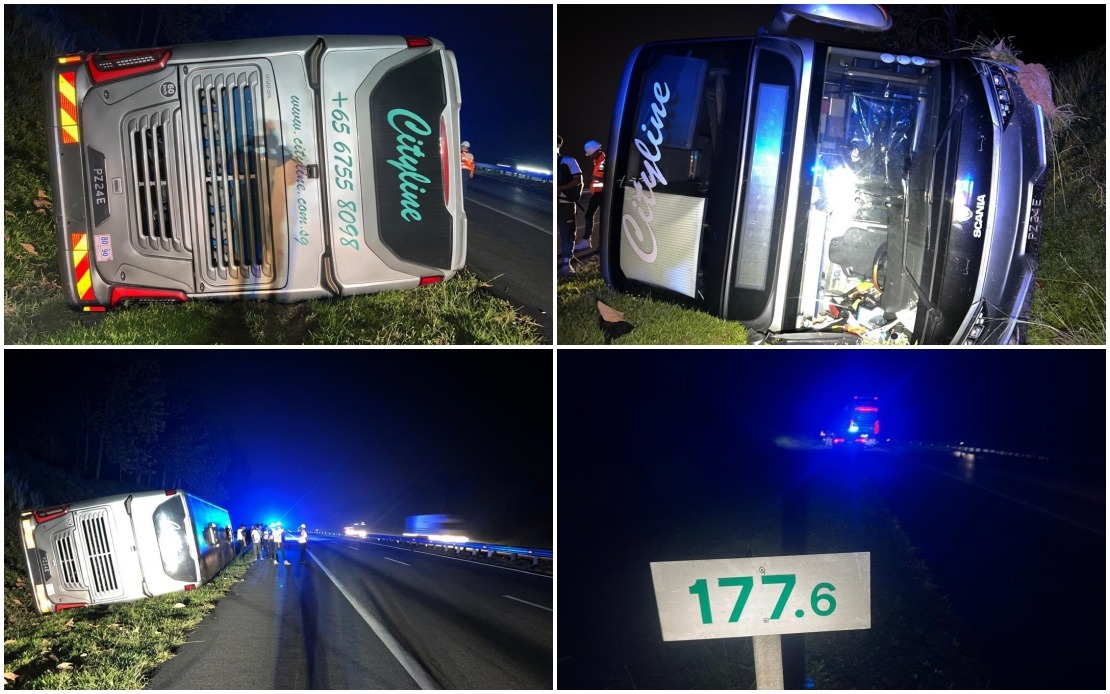
A tour bus carrying passengers from Singapore to Kuala Lumpur overturned on the North-South Expressway northbound in Jasin on Monday morning, leaving three people injured. The incident took place at Kilometre 177.6 of the highway at approximately 5 am, prompting a swift response from emergency services and police investigations into the circumstances surrounding the crash.
According to Jasin district police chief Supt Lee Robert, the three injured passengers comprised a 59-year-old Malaysian tour guide, a 62-year-old Singaporean tourist, and a 42-year-old British national. All three sustained injuries to their heads and legs and were transported to Jasin Hospital for medical treatment. The severity of their injuries has not been disclosed, though their transfer to a nearby hospital suggests the authorities took the incident seriously enough to warrant immediate hospitalisation.
The bus was operating as a commercial tour service with a total of 12 people on board, including the driver and the tour guide. The route from Singapore through Malaysia to the capital city is a common tourist itinerary, with the North-South Expressway serving as the primary arterial route connecting the two nations. Such cross-border tourism traffic is significant for Malaysia's tourism sector and demonstrates the importance of maintaining safe travel conditions on major highways.
According to Supt Lee Robert's statement, the sequence of events leading to the accident involved another vehicle ahead. The tour bus driver encountered a lorry that had reduced speed along the expressway. In attempting to avoid a collision with the slower-moving heavy vehicle, the bus driver made an evasive manoeuvre that inadvertently took the bus off the left side of the roadway. Once the vehicle left the designated lane, it lost stability and subsequently overturned, a common outcome when large passenger vehicles are subjected to sudden directional changes at highway speeds.
The incident raises questions about road safety protocols on Malaysia's expressway network and the challenges posed by mixed traffic conditions where vehicles of varying sizes and speeds share the same thoroughfare. Tour buses operating on long-distance routes encounter particular hazards, as drivers must manage passenger comfort while navigating congested stretches and reacting to unpredictable behaviour from other road users. The necessity for sudden avoidance manoeuvres indicates that highway conditions may not have been optimally safe at that moment.
The North-South Expressway is one of Malaysia's most heavily travelled routes, connecting Johor in the south with Kedah in the north. Daily traffic includes a significant proportion of heavy vehicles, tour buses, and private cars, creating a complex transportation environment. Accidents on this corridor have consequences not only for those immediately involved but also for traffic flow throughout the region, potentially affecting commerce and tourism operations that depend on reliable transit times.
Initial police investigations suggest that the primary causal factor was the defensive driving action taken by the bus operator rather than mechanical failure or reckless driving. However, the circumstances of why the lorry ahead had slowed down and whether adequate distance was maintained between the two vehicles remain part of the investigative process. Such investigations are crucial for determining whether driver error, mechanical issues, or contributing environmental factors played roles in the accident.
For Malaysian authorities overseeing road safety, such incidents underscore the ongoing challenges in managing expressway traffic and the necessity of ensuring that drivers receive adequate training in emergency manoeuvres. Tour bus operators in particular should maintain rigorous standards given their responsibility for multiple passengers, many of whom may be unfamiliar with Malaysian road conditions and driving styles.
The involvement of international tourists in this accident may prompt diplomatic communication between Malaysia, Singapore, and the United Kingdom regarding safety standards and passenger care. Travel agencies and tour operators in Singapore may review their route selections and vehicle maintenance requirements in response to this incident. For Malaysian tourism stakeholders, ensuring the safety of international visitors on domestic transport networks is essential to maintaining confidence in the country's tourism infrastructure.
Emergency response protocols in Jasin district appear to have functioned adequately, with medical facilities readily accessible and authorities responding promptly to the incident report. However, the incident reinforces the importance of continued investment in expressway safety infrastructure, including better signage, emergency lanes, and possibly enhanced monitoring systems to detect hazardous driving behaviours before accidents occur.

